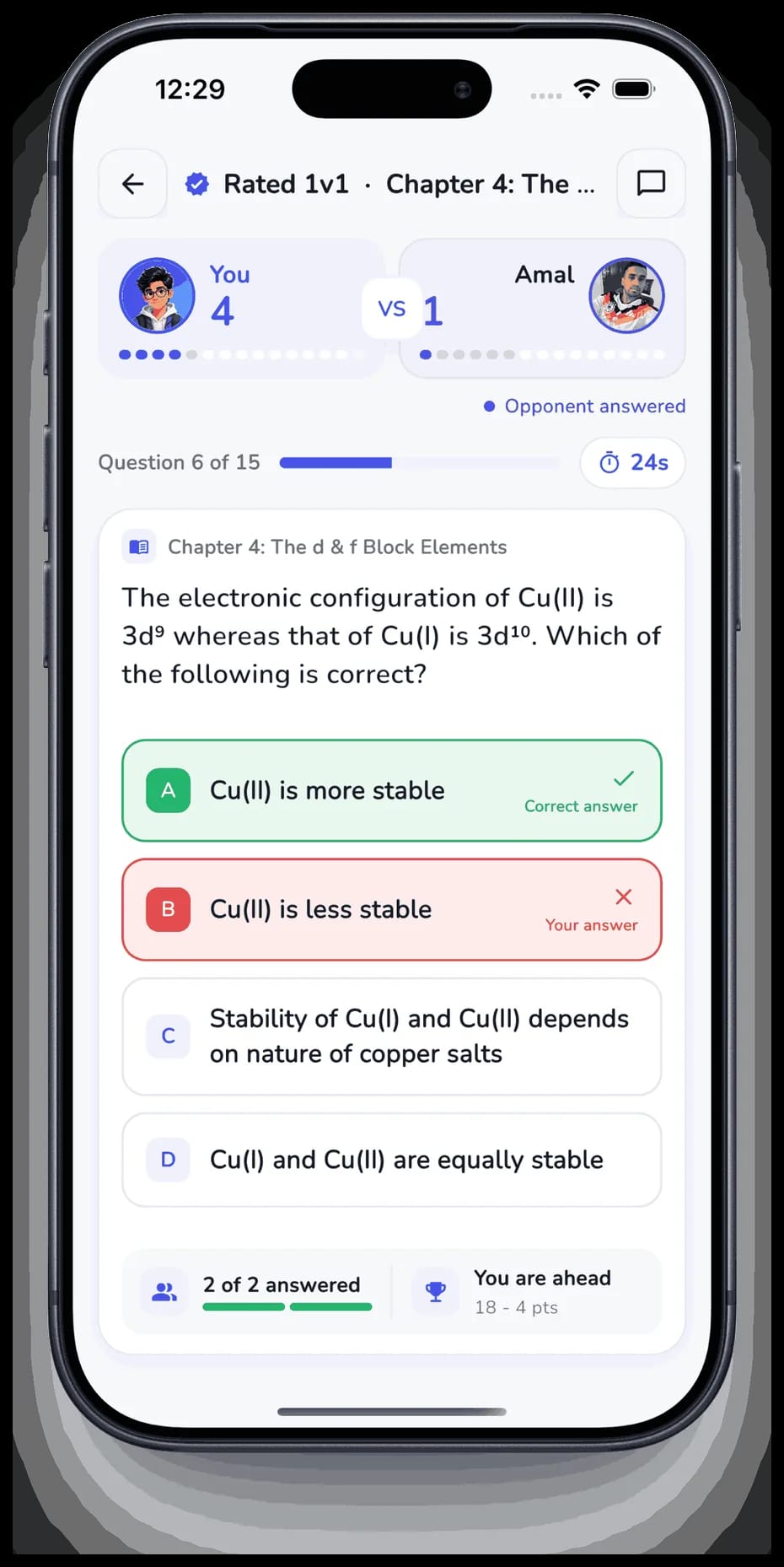

Avoid Costly Mistakes: Corpus Luteum Function MCQs Class 12 Biology

Avoid Costly Mistakes: Corpus Luteum Function MCQs Class 12 Biology

Understanding reproductive biology is crucial for Class 12 aspirants, and one of the most important topics within this chapter is the role of the corpus luteum. When studying Corpus Luteum Function MCQs Class 12 Biology, students often realize that this small yet powerful structure plays a major role in maintaining pregnancy and regulating the menstrual cycle. A clear conceptual understanding of Corpus Luteum Function MCQs Class 12 Biology can significantly improve performance in exams.

The corpus luteum is a temporary endocrine gland that forms in the ovary after ovulation. During the preparation of Corpus Luteum Function MCQs Class 12 Biology, it is essential to remember that this structure develops from the ruptured Graafian follicle. As ovulation occurs, the follicle transforms into the corpus luteum, which then begins secreting hormones, mainly progesterone.

In Corpus Luteum Function MCQs Class 12 Biology, progesterone is often highlighted as the key hormone responsible for maintaining the uterine lining. This hormone prepares the endometrium for implantation and supports early pregnancy. Without adequate progesterone, implantation may fail, making the role of the corpus luteum extremely critical in reproductive success. Students solving Corpus Luteum Function MCQs Class 12 Biology must focus on this hormonal function.

Another important concept frequently tested in Corpus Luteum Function MCQs Class 12 Biology is the lifespan of the corpus luteum. If fertilization does not occur, the corpus luteum degenerates into a structure called the corpus albicans. This degeneration leads to a decrease in progesterone levels, triggering menstruation. Therefore, understanding this transformation is essential when preparing for Corpus Luteum Function MCQs Class 12 Biology.

In contrast, if fertilization takes place, the corpus luteum continues to function. While practicing Corpus Luteum Function MCQs Class 12 Biology, aspirants should note that the hormone human chorionic gonadotropin (hCG), secreted by the developing embryo, maintains the corpus luteum. This allows continued progesterone production, ensuring that the uterine lining remains intact for the developing embryo. This concept is frequently asked in Corpus Luteum Function MCQs Class 12 Biology.

The role of the corpus luteum extends beyond just hormone secretion. While studying Corpus Luteum Function MCQs Class 12 Biology, it is important to understand its regulatory function in the menstrual cycle. The presence of progesterone inhibits further ovulation by preventing the release of follicle-stimulating hormone (FSH) and luteinizing hormone (LH). This feedback mechanism is a common theme in Corpus Luteum Function MCQs Class 12 Biology.

From an exam perspective, Corpus Luteum Function MCQs Class 12 Biology often focus on identifying the origin, function, and fate of the corpus luteum. Aspirants should clearly differentiate between corpus luteum and corpus albicans. This distinction is vital when answering Corpus Luteum Function MCQs Class 12 Biology, as it reflects understanding of both structure and function.

Another key point emphasized in Corpus Luteum Function MCQs Class 12 Biology is the temporary nature of this gland. Unlike permanent endocrine glands, the corpus luteum exists only for a short duration unless pregnancy occurs. This transient characteristic is often tested in Corpus Luteum Function MCQs Class 12 Biology, making it an important concept to remember.

In addition, Corpus Luteum Function MCQs Class 12 Biology may also include questions on hormonal imbalance. If the corpus luteum fails to produce sufficient progesterone, it can lead to reproductive issues such as early pregnancy loss. Understanding such clinical relevance enhances conceptual clarity while preparing Corpus Luteum Function MCQs Class 12 Biology.

To master this topic, aspirants should focus on diagrams, hormone interactions, and sequence of events after ovulation. Regular practice of Corpus Luteum Function MCQs Class 12 Biology helps reinforce these concepts and improves accuracy. By analyzing patterns in Corpus Luteum Function MCQs Class 12 Biology, aspirants can identify frequently asked areas and prepare more effectively.

Corpus Luteum Function MCQs Class 12 Biology:

1. Which process is initiated by FSH (Follicle Stimulating Hormone)?

a) Degeneration of endometrium
b) Growth of Graafian follicle
c) Maturation of spermatozoa
d) Secretion of progesterone
Answer: b
Explanation: FSH stimulates the growth and development of ovarian follicles, including the Graafian follicle.


2. Match the following:

Seminal fluid – Corpus spongiosum
Prostate gland – Membranous urethra
Ejaculatory duct – Clitoris
Erectile tissues – Fructose

a) (a) – (iv)
b) (b) – (v)
c) (c) – (i)
d) (d) – (ii)
Answer: a
Explanation: Seminal fluid contains fructose (energy source), mainly from seminal vesicles.


3. Which structure secretes the glycoprotein fertilizin?

a) Ovum
b) Ovary
c) Sperm
d) Testis
Answer: a
Explanation: Fertilizin is secreted by the ovum to help sperm binding.


4. Correct match of accessory glands with functions:

a) Seminal vesicles – energy; Prostate – neutralizes acidity; Cowper’s – lubrication
b) Seminal vesicles – neutralizes acidity; Prostate – energy
c) Seminal vesicles – lubrication; Cowper’s – energy
d) Incorrect combinations
Answer: a
Explanation: Seminal vesicles provide fructose; prostate neutralizes acidity; Cowper’s gland lubricates.


5. Function of fimbriae:

a) Release ovum
b) Endometrium changes
c) Corpus luteum development
d) Collect ovum
Answer: d
Explanation: Fimbriae help capture the ovum after ovulation.


6. Accessory ducts in females:

a) Oviduct, uterus, vagina
b) Oviduct, ovaries
c) Ovaries, mammary glands
d) Ovaries, uterus
Answer: a
Explanation: These form the reproductive passage in females.


7. Primary follicles at puberty:

a) 3000–30,000
b) 30,000–60,000
c) 60,000–80,000
d) 1,50,000–1,60,000
Answer: c
Explanation: Around 60,000–80,000 follicles remain at puberty.


8. Incorrect gland-function match:

a) Skene’s gland – wrong pairing
b) Prostate – correct
c) Bartholin – correct
d) All correct
Answer: a
Explanation: Skene’s gland pairing given is incorrect.


9. Organ devoid of glands:

a) Uterus
b) Vagina
c) Vulva
d) Oviduct
Answer: b
Explanation: Vagina lacks glands; lubrication is from surrounding glands.


10. Corpus luteum is found in:

a) Brain
b) Ovary
c) Liver
d) Eyes
Answer: b
Explanation: It forms in ovary after ovulation.


11.Stem Cells – Assertion & Reason

Assertion (A): Stem cells are undifferentiated cells capable of self-renewal.
Reason (R): Stem cells do not exhibit cellular potency.

a) Both (A) and (R) are correct and (R) explains (A)
b) Both (A) and (R) are correct but (R) does not explain (A)
c) (A) is correct but (R) is incorrect
d) (A) is incorrect but (R) is correct

Answer: c

Explanation:
The assertion is correct because stem cells can self-renew. However, the reason is incorrect because stem cells do exhibit cellular potency (ability to differentiate into different cell types). Hence, (A) is true but (R) is false.


12. Skene’s gland homologous to:

a) Seminal vesicle
b) Prostate
c) Cowper gland
d) Sebaceous
Answer: b
Explanation: Skene’s gland is homologous to prostate.


13. Placental Hormone – Somatomammotropin

Assertion (A): Increased levels of glucose and amino acids circulate in the blood of pregnant women.
Reason (R): Somatomammotropin secreted by the placenta is antagonistic to insulin.

a) Both (A) and (R) are correct and (R) explains (A)
b) Both (A) and (R) are correct but (R) does not explain (A)
c) (A) is correct but (R) is incorrect
d) (A) is incorrect but (R) is correct

Answer: a

Explanation:
Both statements are correct. Placental somatomammotropin (hPL) reduces insulin sensitivity, leading to higher glucose and amino acid levels in maternal blood. This ensures nutrient supply to the fetus. Hence, (R) correctly explains (A).


14. Corpus luteum formed in:

a) Ovary
b) Testis
c) Mammary gland
d) Uterus
Answer: a
Explanation: It forms from Graafian follicle after ovulation.


15. Female gland analogous to prostate:

a) Bartholin gland
b) Clitoris
c) Bulbourethral
d) None
Answer: d
Explanation: Actually Skene’s gland is analogous (not listed).


16. Inner uterine layer:

a) Endometrium
b) Myometrium
c) Fallopian tube
d) Perimetrium
Answer: a
Explanation: Endometrium is inner glandular layer.


17. Entry of vessels in ovary:

a) Hilus
b) Zona pellucida
c) Antrum
d) Graafian follicle
Answer: a
Explanation: Hilus is the entry point.


18. Match the Following (Correctly Structured)

Column I
A. Mons pubis
B. Antrum
C. Trophectoderm
D. Nebenkern

Column II

  1. Embryo formation
  2. Sperm structure
  3. Female external genitalia
  4. Graafian follicle cavity

a) A-3, B-4, C-1, D-2
b) A-3, B-4, C-2, D-1
c) A-1, B-3, C-4, D-2
d) A-4, B-3, C-2, D-1

Answer: a

Explanation:

  • Mons pubis → female external genitalia
  • Antrum → cavity of Graafian follicle
  • Trophectoderm → forms part of embryo/placenta
  • Nebenkern → mitochondrial structure in sperm

19. Hormonal Sequence in Gametogenesis

Arrange the following hormones in correct sequence of action during spermatogenesis:

A. Androgen action on spermatogenesis
B. GnRH secretion from hypothalamus
C. LH secretion from pituitary
D. FSH action on spermiogenesis
E. Gonadotropin release (FSH & LH)

a) B → E → C → A → D
b) B → C → E → D → A
c) E → B → C → A → D
d) B → D → E → C → A

Answer: a

Explanation:
Correct sequence:

  • GnRH (B) from hypothalamus
  • Gonadotropins (E) released (FSH & LH)
  • LH (C) stimulates Leydig cells
  • Androgens (A) promote spermatogenesis
  • FSH (D) supports spermiogenesis via Sertoli cells

20. Incorrect statement:

a) LH → androgens
b) FSH → Sertoli cells
c) LH → ovulation
d) LH & FSH decrease in follicular phase
Answer: d
Explanation: They increase during follicular phase.


21. Correct about sperm:

a) Acrosome pierces egg
b) Lysin dissolves egg envelope
c) Sensory function
d) No function
Answer: b
Explanation: Enzymes dissolve egg coverings.


22. Second maturation division:

a) Before ovulation
b) After sperm entry
c) After fusion
d) In follicle
Answer: b
Explanation: Completed after fertilization.


23. Yolk affects:

a) Fertilization
b) Zygote formation
c) Cleavage pattern
d) Blastomeres
Answer: c
Explanation: Yolk influences cleavage.


24. Spermatogenesis sequence:

a) Spermatogonia→spermatid→spermatocyte
b) Spermatocyte→spermatogonia
c) Spermatogonia→spermatocyte→spermatid→sperm
d) Random
Answer: c
Explanation: Correct developmental order.


25. Identify P,Q,R,S:

a) Primary→Secondary→Spermatid→Sperm
b) Wrong sequence
c) Reverse
d) Mixed
Answer: a
Explanation: Standard spermatogenesis stages.


26. Chromosome number primary spermatocyte:

a) Same as spermatid
b) Same as spermatogonium
c) Half
d) Same as secondary
Answer: b
Explanation: Both are diploid (2n).


27. Similar set:

a) Corpus luteum–Graafian follicle
b) Sebum–sweat
c) Bundle of His–pacemaker
d) Vitamin mismatch
Answer: a
Explanation: Related ovarian structures.


28. Graafian follicle labeling:

a) Wrong
b) Wrong
c) Correct labeling
d) Wrong
Answer: c
Explanation: Matches follicle structure correctly.


29. Region p and q:

a) Mitosis-primary
b) Meiosis-secondary
c) Mitosis-secondary
d) Meiosis-primary
Answer: c
Explanation: Spermatogonia divide mitotically to form secondary cells.


30. Enlarged spermatogonia becomes:

a) Spermatid
b) Spermatogonium
c) Sperm
d) Primary spermatocyte
Answer: d
Explanation: Enlarged spermatogonia → primary spermatocyte.

Corpus Luteum Function MCQs Class 12 Biology

Conclusion on Corpus Luteum Function MCQs Class 12 Biology

In conclusion, the corpus luteum plays a central role in female reproductive physiology. A thorough understanding of its structure, function, and hormonal regulation is essential for academic success. Consistent practice of Corpus Luteum Function MCQs Class 12 Biology not only strengthens knowledge but also builds confidence in solving complex questions. Therefore, mastering Corpus Luteum Function MCQs Class 12 Biology is a key step toward excelling in Class 12 Biology examinations.

Leave A Comment