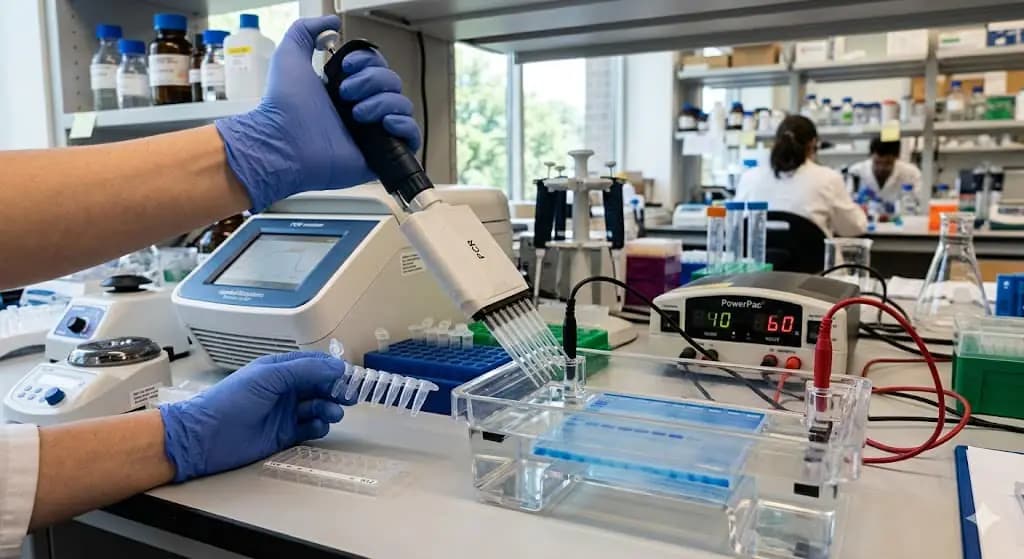
For biology aspirants preparing for board examinations, NEET, and other competitive entrance tests, PCR and Gel Electrophoresis MCQs PDF is one of the most valuable resources for mastering biotechnology and molecular biology concepts. These topics are considered highly important because they are directly connected with DNA amplification, DNA analysis, forensic science, genetic engineering, and recombinant DNA technology. Many aspirants search for PCR and Gel Electrophoresis MCQs PDF to improve conceptual understanding and strengthen preparation for objective examinations. Since biotechnology-related questions are frequently repeated in competitive exams, regular practice with PCR and Gel Electrophoresis MCQs PDF helps aspirants improve both accuracy and confidence.
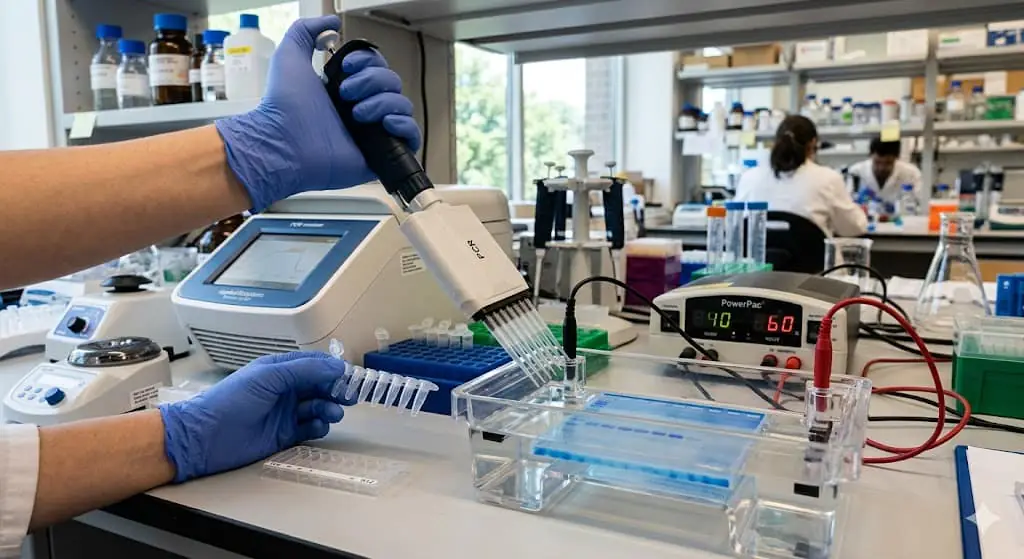
Polymerase Chain Reaction, commonly known as PCR, is a molecular technique used to amplify a specific segment of DNA into millions of copies. Aspirants often use PCR and Gel Electrophoresis MCQs PDF to understand the major steps of PCR, including denaturation, annealing, and extension. The process requires primers, nucleotides, template DNA, and Taq polymerase enzyme. Because PCR plays an important role in biotechnology, medicine, and forensic science, aspirants preparing with PCR and Gel Electrophoresis MCQs PDF gain a stronger understanding of modern biological applications. PCR is widely used in disease diagnosis, DNA fingerprinting, genetic mutation analysis, and research laboratories, making PCR and Gel Electrophoresis MCQs PDF extremely useful for exam-oriented preparation.
Another important concept included in PCR and Gel Electrophoresis MCQs PDF is the role of Taq polymerase. This thermostable enzyme was isolated from the bacterium Thermus aquaticus and can withstand the high temperatures required during PCR cycles. Many aspirants repeatedly revise this concept through PCR and Gel Electrophoresis MCQs PDF because questions about Taq polymerase are common in competitive biology exams. Understanding why PCR requires repeated heating and cooling cycles also becomes easier when aspirants regularly practice using PCR and Gel Electrophoresis MCQs PDF resources.
Gel electrophoresis is another major biotechnology technique covered extensively in PCR and Gel Electrophoresis MCQs PDF study material. This technique is used to separate DNA fragments based on their size by passing them through agarose gel under an electric field. Smaller DNA fragments move faster and travel farther compared to larger fragments. Aspirants preparing through PCR and Gel Electrophoresis MCQs PDF often revise concepts such as agarose gel, DNA migration, ethidium bromide staining, UV visualization, and elution. Because these concepts are highly scoring in NEET and board exams, PCR and Gel Electrophoresis MCQs PDF becomes an important practice resource for biology aspirants.
One major advantage of using PCR and Gel Electrophoresis MCQs PDF is that it combines theoretical understanding with objective problem-solving practice. Aspirants can quickly revise the complete process of DNA amplification and DNA separation while improving their speed in solving multiple-choice questions. Regular practice with PCR and Gel Electrophoresis MCQs PDF also helps aspirants identify weak concepts and improve memory retention. Since biotechnology chapters contain several technical terms, repeated revision through PCR and Gel Electrophoresis MCQs PDF helps aspirants remember scientific terminology more effectively.
DNA fingerprinting is another important topic associated with PCR and Gel Electrophoresis MCQs PDF. DNA fingerprinting uses PCR amplification and gel electrophoresis to identify individuals based on variations in DNA sequences. Aspirants often study VNTRs, probes, Southern blotting, and autoradiography using PCR and Gel Electrophoresis MCQs PDF resources. These concepts are important not only for examinations but also for understanding forensic science and criminal investigations. Practicing with PCR and Gel Electrophoresis MCQs PDF allows aspirants to develop a clearer understanding of how biotechnology techniques are applied in real-world situations.
The increasing importance of molecular biology and biotechnology in modern science has made PCR and Gel Electrophoresis MCQs PDF highly relevant for aspirants preparing for higher studies as well. These concepts are foundational for genetics, microbiology, medicine, and biomedical engineering. Aspirants who consistently revise using PCR and Gel Electrophoresis MCQs PDF often perform better because they become familiar with both conceptual and application-based questions. The organized structure of PCR and Gel Electrophoresis MCQs PDF also makes revision easier during the final stages of examination preparation.
Another reason why aspirants prefer PCR and Gel Electrophoresis MCQs PDF is the convenience of digital learning. PDF-based resources allow quick access to important biotechnology questions anytime and anywhere. Aspirants can revise diagrams, steps, enzyme functions, and molecular techniques efficiently using PCR and Gel Electrophoresis MCQs PDF study material. Continuous revision using PCR and Gel Electrophoresis MCQs PDF improves confidence and reduces confusion during exams.
PCR and Gel Electrophoresis MCQs PDF:
- A sequential expression of a set of human genes occurs when a steroid molecule binds to the:
A. Transfer RNA
B. Messenger RNA
C. DNA sequence
D. Ribosome
Answer: C. DNA sequence
Explanation:
The steroid hormone receptor protein complex activates sequential expression of genes by binding to a specific DNA sequence.
- The step following during DNA profiling in which DNA sample is subjected to restriction endonuclease is:
A. Hybridization
B. DNA isolation
C. DNA amplification
D. DNA fragmentation
Answer: D. DNA fragmentation
Explanation:
Restriction endonucleases cut DNA into fragments, so the next step is DNA fragmentation.
- The applications of DNA fingerprinting technique exclude:
A. To establish parentage in disputed cases
B. To study chromosomal types
C. To settle insurance claims
D. To study phylogeny of organisms
Answer: B. To study chromosomal types
Explanation:
DNA fingerprinting is mainly used in forensic science, paternity testing, and evolutionary studies, not for studying chromosomal types.
- DNA sequencing can be achieved by which of the following methods?
A. Dideoxynucleotide chain termination method of Sanger
B. Chemical degradation method of Maxam and Gilbert
C. Western blotting method
D. Both (A) and (B)
Answer: D. Both (A) and (B)
Explanation:
DNA sequencing can be performed using both Sanger sequencing and Maxam-Gilbert sequencing methods.
- On the basis of the Human Genome Project report, the human genome contains:
A. 30,000 genes
B. 1,00,000 genes
C. 60,000 genes
D. 5,000 genes
Answer: A. 30,000 genes
Explanation:
The Human Genome Project estimated that humans possess approximately 30,000 genes.
- The total number of nitrogenous bases in the human genome is estimated to be about:
A. 3.5 million
B. 35 thousand
C. 35 million
D. 3.1 billion
Answer: D. 3.1 billion
Explanation:
The human genome contains nearly 3.1 billion nitrogenous base pairs.
- Match the discoveries in List I with the scientists in List II:
| List I | List II |
|---|---|
| A. PCR technologies | 1. G Kohler and C Milstein |
| B. DNA fingerprinting | 2. McClintock |
| C. Hybridoma technology | 3. K Mullis |
| D. Jumping genes | 4. Alec Jeffreys |
A. 3 4 1 2
B. 1 2 3 4
C. 4 1 2 3
D. 2 3 4 1
Answer: A. 3 4 1 2
Explanation:
- PCR technologies → K Mullis
- DNA fingerprinting → Alec Jeffreys
- Hybridoma technology → G Kohler and C Milstein
- Jumping genes → McClintock
- Which of the following is correctly matched with the corresponding technology or discovery?
A. PCR technologies – K Mullis
B. DNA fingerprinting – Alec Jeffreys
C. Hybridoma technology – G Kohler and C Milstein
D. All of the above
Answer: D. All of the above
Explanation:
All the given scientists are correctly matched with their discoveries.
- VNTRs are used in:
A. Regulation of plant growth hormones
B. Increasing photosynthesis in desert plants
C. DNA fingerprinting
D. Protoplasmic culture
Answer: C. DNA fingerprinting
Explanation:
VNTRs (Variable Number Tandem Repeats) are important markers used in DNA fingerprinting.
- Which statement is not true regarding gel electrophoresis technique?
A. Bright orange coloured DNA bands are observed under UV light
B. Extraction of separated DNA fragments from gel is called elution
C. DNA fragments are stained using ethidium bromide
D. Chromogenic substrate gives blue coloured DNA bands on gel
Answer: D. Chromogenic substrate gives blue coloured DNA bands on gel
Explanation:
DNA bands appear bright orange under UV light after staining with ethidium bromide.
- The device that can remove particulate matter present in the exhaust from a thermal power plant is:
A. Catalytic converter
B. STP
C. Incinerator
D. Electrostatic precipitator
Answer: D. Electrostatic precipitator
Explanation:
Electrostatic precipitators remove over 99% of particulate matter from thermal plant exhaust.
- DNA polymorphism forms the basis of:
A. Translation
B. Genetic mapping
C. DNA fingerprinting
D. Both genetic mapping and DNA fingerprinting
Answer: D. Both genetic mapping and DNA fingerprinting
Explanation:
DNA polymorphism is useful in genetic mapping as well as DNA fingerprinting.
- In gel electrophoresis, what is the criterion for DNA fragments movement on agarose gel?
A. Larger fragments move farther
B. Smaller fragments move farther
C. Positively charged fragments move farther
D. Negatively charged fragments do not move
Answer: B. Smaller fragments move farther
Explanation:
Smaller DNA fragments move more rapidly and farther through agarose gel.
- Which of the following enzymes cut DNA molecule at specific nucleotide sequences?
A. Restriction endonuclease
B. DNA ligase
C. RNA polymerase
D. Exonuclease
Answer: A. Restriction endonuclease
Explanation:
Restriction enzymes cut DNA at specific recognition sequences.
- What forms the basis of DNA fingerprinting?
A. Relative amount of DNA in fingerprints
B. Satellite DNA with highly repeated short sequences
C. Relative proportions of purines and pyrimidines
D. DNA differences in blood and saliva
Answer: B. Satellite DNA with highly repeated short sequences
Explanation:
Satellite DNA containing repetitive sequences forms the basis of DNA fingerprinting.
-
Which is also called molecular glue?
A. DNA gyrase
B. DNA helicase
C. DNA ligase
D. DNA polymerase
Answer: C. DNA ligase
Explanation:
DNA ligase joins DNA strands together by forming phosphodiester bonds and is therefore called molecular glue.
- Identify the correct sequence of some steps of DNA fingerprinting from the options given.
A. Digestion of DNA by restriction endonuclease → Separation of DNA fragments by electrophoresis → Blotting of DNA fragments to nitrocellulose membrane → Hybridization with DNA probes → Detection by autoradiography
B. Digestion of DNA by restriction endonuclease → Separation of DNA fragments by electrophoresis → Hybridization with DNA probes → Blotting of DNA fragments to nitrocellulose membrane → Detection by autoradiography
C. Separation of DNA fragments by electrophoresis → Digestion of DNA by restriction endonuclease → Hybridization with DNA probes → Detection by autoradiography → Blotting
D. Digestion of DNA by restriction endonuclease → Blotting → Electrophoresis → Detection → Hybridization
Answer: A. Digestion of DNA by restriction endonuclease → Separation of DNA fragments by electrophoresis → Blotting of DNA fragments to nitrocellulose membrane → Hybridization with DNA probes → Detection by autoradiography
Explanation:
The correct sequence of DNA fingerprinting is:
- Digestion of DNA using restriction endonucleases
- Separation of fragments by gel electrophoresis
- Blotting onto nitrocellulose membrane
- Hybridization with labelled probes
- Detection through autoradiography
- Which one of the following pairs of terms/names mean one and the same thing?
A. Gene pool – genome
B. Codon – gene
C. Cistron – triplet
D. DNA fingerprinting – DNA profiling
Answer: D. DNA fingerprinting – DNA profiling
Explanation:
DNA fingerprinting and DNA profiling are synonymous terms.
- What is the first step in the Southern Blot technique?
A. Denaturation of DNA on the gel
B. Production of genetically identical cells
C. Digestion of DNA by restriction enzyme
D. Isolation of DNA from nucleated cells
Answer: D. Isolation of DNA from nucleated cells
Explanation:
The first step in Southern blotting is isolation of DNA from cells.
- Find out the right combination of primers in a PCR to amplify the DNA product.
A. Primers attached at both 5′ ends
B. Primers attached at both 3′ ends
C. One primer at 5′ end and another at 3′ end
D. Primers attached randomly
Answer: B. Primers attached at both 3′ ends
Explanation:
PCR primers are complementary to the 3′ ends of DNA strands and help in DNA amplification.
- PCR is associated with:
A. DNA cloning
B. Amplification of DNA
C. DNA selective replication
D. All of the above
Answer: D. All of the above
Explanation:
PCR is used in DNA amplification, cloning, and selective replication.
- Identify the chief enzyme involved in PCR technique.
A. Restriction enzyme
B. DNA ligase
C. Hydrolases
D. Taq polymerase
Answer: D. Taq polymerase
Explanation:
Taq polymerase is a thermostable enzyme used in PCR reactions.
- Thermal cycler is used in this reaction:
A. Radioactivity
B. Enzyme catalyzed reaction
C. Chemical reactions
D. PCR
Answer: D. PCR
Explanation:
Thermal cycler is an instrument used during PCR amplification.
- What are repetitive sequences in DNA and what is their nature?
A. Non-coding stretches of repeated DNA
B. Coding stretches with unique bases
C. Non-repetitive random sequences
D. Coding RNA sequences
Answer: A. Non-coding stretches of repeated DNA
Explanation:
Repetitive DNA sequences are generally non-coding and repeated many times.
- Select the correct sequence of steps in DNA fingerprinting involving Southern blot hybridization using radiolabelled VNTR as a probe.
I. Hybridization with radiolabelled VNTR probe
II. Isolation of DNA
III. Autoradiography
IV. Visualization of DNA bands
V. Digestion of DNA using restriction enzymes
VI. Gel electrophoresis and blotting
A. I → V → VI → II → III → IV
B. II → V → VI → I → III → IV
C. V → I → VI → III → IV → II
D. II → VI → V → I → III → IV
Answer: B. II → V → VI → I → III → IV
Explanation:
The proper order in DNA fingerprinting is:
- Isolation of DNA
- Digestion using restriction enzymes
- Gel electrophoresis and blotting
- Hybridization with radiolabelled VNTR probes
- Autoradiography
- Visualization of DNA bands.
- In Agarose gel electrophoresis representation, what do labels M and N represent?
A. M- Digested DNA bands, N- Undigested DNA bands
B. M- Hybridized DNA bands, N- Hybridized DNA bands
C. M- Largest DNA bands, N- Smallest DNA bands
D. M- Smallest DNA bands, N- Largest DNA bands
Answer: C. M- Largest DNA bands, N- Smallest DNA bands
Explanation:
Larger DNA fragments remain near the origin while smaller fragments move farther.
- Which technique is helpful to make DNA samples sufficient for DNA fingerprinting analysis if the collected samples are less than required quantity?
A. Electrophoresis
B. Chromatography
C. PCR
D. DNA probing
Answer: C. PCR
Explanation:
PCR amplifies DNA and helps generate sufficient DNA samples.
- During which step in DNA fingerprinting technique are labelled VNTR probes used?
A. During isolation of DNA
B. During digestion by restriction enzyme
C. During electrophoresis
D. During hybridization
Answer: D. During hybridization
Explanation:
Radiolabelled VNTR probes are used during hybridization to detect complementary DNA sequences.
- What does the term ‘probe’ refer to in genetic fingerprinting?
A. Radioactively labelled single stranded RNA molecule
B. Radioactively labelled single stranded DNA molecule
C. Radioactively labelled double stranded DNA molecule
D. Radioactively labelled double stranded RNA molecule
Answer: B. Radioactively labelled single stranded DNA molecule
Explanation:
A probe is a labelled single-stranded DNA used to detect complementary sequences.
- What was the main aim of the Human Genome Project?
A. To introduce new genes into humans
B. To remove disease causing genes
C. To compare different human DNA samples
D. To identify and sequence all genes in human DNA
Answer: D. To identify and sequence all genes in human DNA
Explanation:
The Human Genome Project aimed to identify and sequence the entire human genome.
Conclusion on PCR and Gel Electrophoresis MCQs PDF
In conclusion, PCR and Gel Electrophoresis MCQs PDF is an essential preparation resource for biology aspirants aiming to excel in board examinations and competitive entrance tests. The resource helps aspirants understand PCR amplification, Taq polymerase function, agarose gel electrophoresis, DNA fingerprinting, and biotechnology applications in a structured and exam-oriented manner. Regular practice using PCR and Gel Electrophoresis MCQs PDF improves conceptual clarity, strengthens objective-solving ability, and increases exam confidence. For aspirants seeking strong preparation in molecular biology and biotechnology, PCR and Gel Electrophoresis MCQs PDF remains one of the most effective revision tools available.
Related reading

Master 30 Agarose Gel Electrophoresis MCQs NEET - Ultimate Practice Questions to Boost Your Score
Master Agarose Gel Electrophoresis MCQs NEET with clear concepts, DNA separation techniques, biotechnology applications, exam-focused preparation for aspirants.
Powerful Allolactose and Repressor Molecular Biology MCQs with Answers for NEET JEE & CUET
Master lac operon concepts with Allolactose and Repressor Molecular Biology MCQs for NEET , JEE and Class 12 aspirants. Learn gene regulation easily and quickly