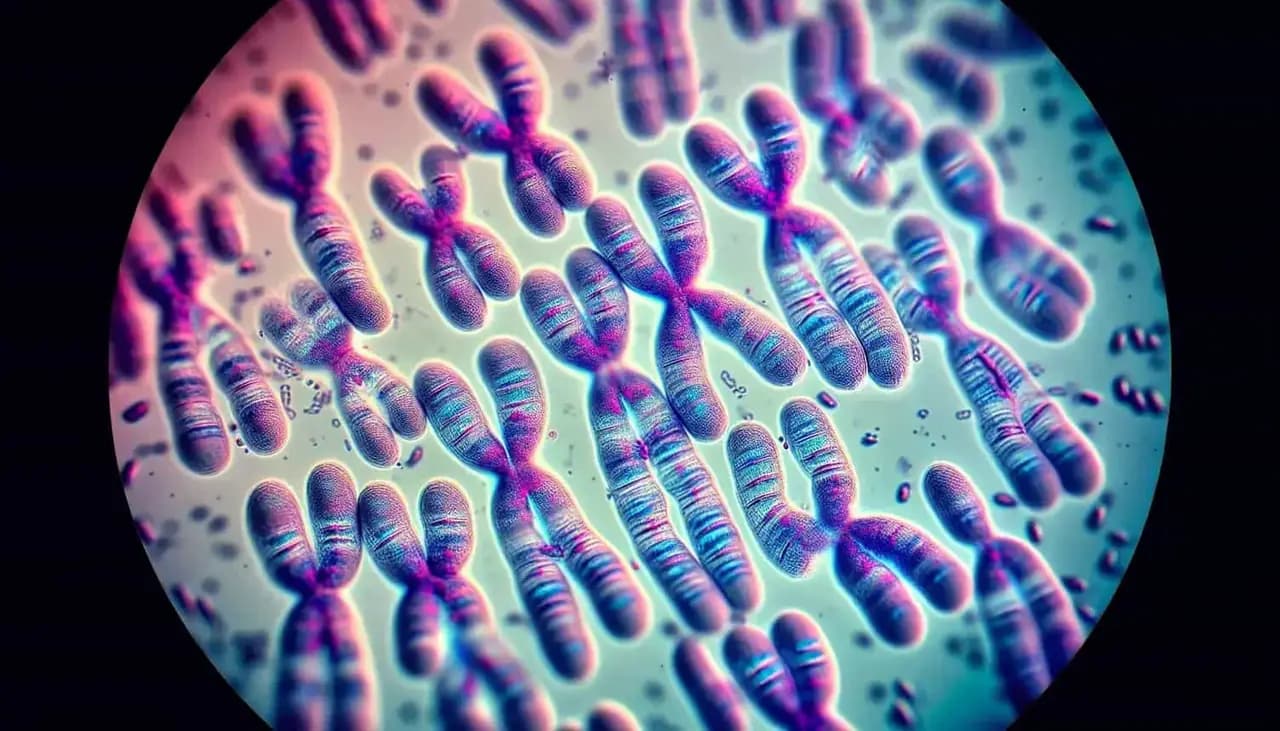
Genetics is one of the most concept-driven chapters in Class 12 Biology, and among its advanced topics, epistasis stands out as both important and frequently tested. To truly master this concept, aspirants often rely on Epistasis Inheritance Ratio MCQs Class 12 Biology with Answers as a focused and practical study approach. These MCQs help bridge the gap between theoretical understanding and exam-level application.
At its core, epistasis refers to the interaction between genes where one gene masks or modifies the expression of another gene at a different locus. This is why practicing Epistasis Inheritance Ratio MCQs Class 12 Biology with Answers becomes essential for recognizing patterns in modified Mendelian ratios. Unlike simple Mendelian inheritance, epistasis introduces variations such as 9:3:4, 12:3:1, 9:7, and 13:3 ratios.
Aspirants often find it difficult to remember these ratios, but consistent exposure to Epistasis Inheritance Ratio MCQs Class 12 Biology with Answers makes it easier to identify the type of gene interaction. For example, the 9:3:4 ratio represents recessive epistasis, where the homozygous recessive condition of one gene masks the effect of another gene. Similarly, dominant epistasis gives a 12:3:1 ratio, another frequently asked concept.
One of the biggest advantages of using Epistasis Inheritance Ratio MCQs Class 12 Biology with Answers is that it trains the brain to quickly analyze phenotypic ratios in exam questions. Instead of memorizing blindly, aspirants begin to associate each ratio with a specific gene interaction. This logical connection significantly improves accuracy during exams.
In addition, Epistasis Inheritance Ratio MCQs Class 12 Biology with Answers also reinforce the understanding of complementary genes, which follow a 9:7 ratio. In this case, two genes work together to produce a particular phenotype, and the absence of either results in a different outcome. This concept is commonly tested in both board exams and entrance tests like NEET and CUET.
Another important variation covered through Epistasis Inheritance Ratio MCQs Class 12 Biology with Answers is inhibitory gene interaction, which produces a 13:3 ratio. Here, one gene suppresses the expression of another dominant gene. Such questions often appear tricky, but regular practice helps aspirants recognize the pattern quickly.
Beyond ratios, Epistasis Inheritance Ratio MCQs Class 12 Biology with Answers also strengthen conceptual clarity about gene interactions at different loci. Aspirants learn how multiple genes can influence a single trait, which is a key step toward understanding complex inheritance patterns beyond simple dominance.
For competitive exams, time management is crucial, and practicing Epistasis Inheritance Ratio MCQs Class 12 Biology with Answers enhances speed in solving numerical and ratio-based problems. With repeated exposure, aspirants develop the ability to instantly identify the correct answer without lengthy calculations.
Moreover, Epistasis Inheritance Ratio MCQs Class 12 Biology with Answers help integrate multiple genetics concepts, including Mendelian inheritance, dihybrid crosses, and gene interaction. This interconnected understanding is extremely valuable in solving higher-order thinking questions.
Aspirants should also remember that epistasis is not limited to theoretical problems. Real-life examples, such as coat color in animals or flower color in plants, are often used in exam questions. Practicing Epistasis Inheritance Ratio MCQs Class 12 Biology with Answers ensures familiarity with these real-world applications.
Another benefit of Epistasis Inheritance Ratio MCQs Class 12 Biology with Answers is improved retention. When aspirants repeatedly solve questions based on the same concept, they are more likely to remember both the ratios and their meanings during exams.
To build confidence, aspirants should include Epistasis Inheritance Ratio MCQs Class 12 Biology with Answers in their daily revision routine. Even solving a small number of questions regularly can lead to significant improvement over time.
Epistasis Inheritance Ratio MCQs Class 12 Biology with Answers:
1. Out of a population of 800 individuals in F₂ generation, number of yellow wrinkled seeds?
A. 400
B. 800
C. 200
D. 150
Answer: D
Explanation: In dihybrid cross ratio 9:3:3:1, yellow wrinkled = 3/16 → (3/16 × 800) = 150.
2. Which genotype shows darkest kernel in wheat?
A. AAbb
B. AABb
C. AABB
D. AaBb
Answer: C
Explanation: More dominant alleles → darker phenotype → AABB is darkest.
3. Number of tall plants in F₂ (out of 16)?
A. 15
B. 13
C. 12
D. 7
Answer: C
Explanation: Tall is dominant → 3/4 of 16 = 12.
4. Non-parental types in 64 progeny?
A. 36
B. 4
C. 12
D. 24
Answer: D
Explanation: Recombinants = 6/16 → (6/16 × 64) = 24.
5. Recombinants out of 1280 progeny?
A. 240
B. 360
C. 480
D. 720
Answer: C
Explanation: 6/16 × 1280 = 480.
6. Correct statement about dihybrid cross:
A. Tightly linked genes show high recombination
B. Distant genes show less recombination
C. Loose linkage shows same recombination
D. Tightly linked genes show low recombination
Answer: D
Explanation: Closer genes → stronger linkage → less recombination.
7. Recombinants in 1280 progeny again:
A. 240
B. 360
C. 480
D. 720
Answer: C
Explanation: Same as Q5.
8. Match genetic ratios:
A. 5 4 3 2 1
B. 4 5 1 2 3
C. 1 2 4 3 5
D. 2 1 4 5 3
Answer: B
Explanation:
A–13:3, B–9:7, C–9:3:4, D–1:1:1:1, E–12:3:1.
9. Polygenic inheritance shown by:
A. Malthus
B. Gabon
C. Nilsson Ehle
D. None
Answer: C
Explanation: Nilsson Ehle experimentally proved polygenic inheritance.
10. Walter Sutton known for:
A. Genetic engineering
B. Totipotency
C. Quantitative genetics
D. Chromosomal theory
Answer: D
Explanation: He linked chromosomes with inheritance.
11. 9:7 ratio seen in:
A. Shepherd’s purse
B. Mouse coat
C. Fowl feathers
D. Pea flower
Answer: D
Explanation: Complementary genes → 9:7.
12. Yellow inflated pod %:
A. 100%
B. 56.25%
C. 18.75%
D. 9%
Answer: C
Explanation: 3/16 = 18.75%.
13. Gametes from AABbCC:
A. 3
B. 4
C. 9
D. 2
Answer: D
Explanation: Only one heterozygous pair → 2 gametes.
14. F₁ from dominant cross:
A. 15:1
B. 1:15
C. 1:13
D. All dominant
Answer: D
Explanation: All F₁ show dominant phenotype.
15. Pedigree conclusion:
A. Homozygous recessive
B. Y-linked
C. Homozygous dominant
D. Heterozygous
Answer: D
Explanation: Variation indicates heterozygosity.
16. Blood group + hair inheritance:
A. Dominance
B. Multiple alleles
C. Independent assortment
D. Incomplete dominance
Answer: C
Explanation: Traits assort independently.
17. Change in number of body parts:
A. Continuous variation
B. Discontinuous variation
C. Meristic variation
D. Substantive
Answer: C
Explanation: Countable structural variation.
18. Independent assortment proven by:
A. Back cross
B. Test cross
C. Monohybrid cross
D. Dihybrid cross
Answer: D
Explanation: Requires two traits.
19. 1:4:6:4:1 ratio shows:
A. Supplementary genes
B. Complementary genes
C. Polygenic inheritance
D. Pleiotropy
Answer: C
Explanation: Additive gene effect.
20. Gametes from AaBbCc:
A. 3
B. 8
C. 27
D. 64
Answer: B
Explanation: 2³ = 8 gametes.
21. Independent assortment states:
A. Genes separate independently
B. Mendel incomplete
C. Impossible
D. Wrong
Answer: A
Explanation: Genes assort independently during gamete formation.
22. Verified chromosomal theory:
A. Sutton
B. Mendel
C. Morgan
D. Correns
Answer: C
Explanation: Morgan used Drosophila.
23. Back cross is:
A. Dihybrid
B. Test cross
C. Cross with parent
D. Monohybrid
Answer: C
Explanation: Crossing F₁ with parent.
24. Polytene chromosomes found in:
A. Drosophila
B. Mouse
C. Pigeon
D. Elephant
Answer: A
Explanation: Giant chromosomes in larvae.
25. Chromosomes in mule:
A. 66
B. 33
C. 132
D. Variable
Answer: A
Explanation: Hybrid inherits chromosomes from both parents.
26. Chromosomal theory proposed by:
A. Hardy-Weinberg
B. Sutton & Boveri
C. Morgan
D. Watson
Answer: B
Explanation: First proposed theory.
27. Female X chromosome passes to:
A. Females only
B. Males only
C. Granddaughters
D. Both
Answer: D
Explanation: Females pass X to both offspring types.
28. The phenotypic ratio 9:7 is seen in:
A. Dominant epistasis
B. Recessivw epistasis
C. Complementary genes
D. Incomplete dominance
Answer: C
Explanation: Two genes work together,both dominant alleles are needed to express the trait.
29. Drosophila useful because:
A. Short life cycle
B. Parthenogenesis
C. Few offspring
D. Size
Answer: A
Explanation: Rapid reproduction aids study.
30. Balbiani rings found in:
A. Allosomes
B. Polytene chromosomes
C. Autosomes
D. Lampbrush
Answer: B
Explanation: Active transcription regions.
Conclusion on Epistasis Inheritance Ratio MCQs Class 12 Biology with Answers
In conclusion, Epistasis Inheritance Ratio MCQs Class 12 Biology with Answers serve as an essential tool for mastering one of the most important topics in genetics. They not only improve conceptual clarity but also enhance speed, accuracy, and confidence in solving exam questions.
Ultimately, consistent practice with Epistasis Inheritance Ratio MCQs Class 12 Biology with Answers can make a noticeable difference in exam performance, helping aspirants achieve better results in both board exams and competitive entrance tests.
Related reading

Boost Your Score with Powerful Genotype Phenotype Ratio MCQs Class 12 Biology Mendelian Genetics with Answers
PracticeGenotype Phenotype Ratio MCQs Class 12 Biology Mendelian Genetics with Answers. Boost concepts, master ratios, and prepare effectively for examinations.
Don't Miss These Ultimate High-Scoring Class 12 Biology Linkage Crossing Over Recombination Frequency MCQs with Answers PDF
Master genetics easily with Class 12 Biology Linkage Crossing Over Recombination Frequency MCQs with Answers PDF for quick revision, practice, and exam success.