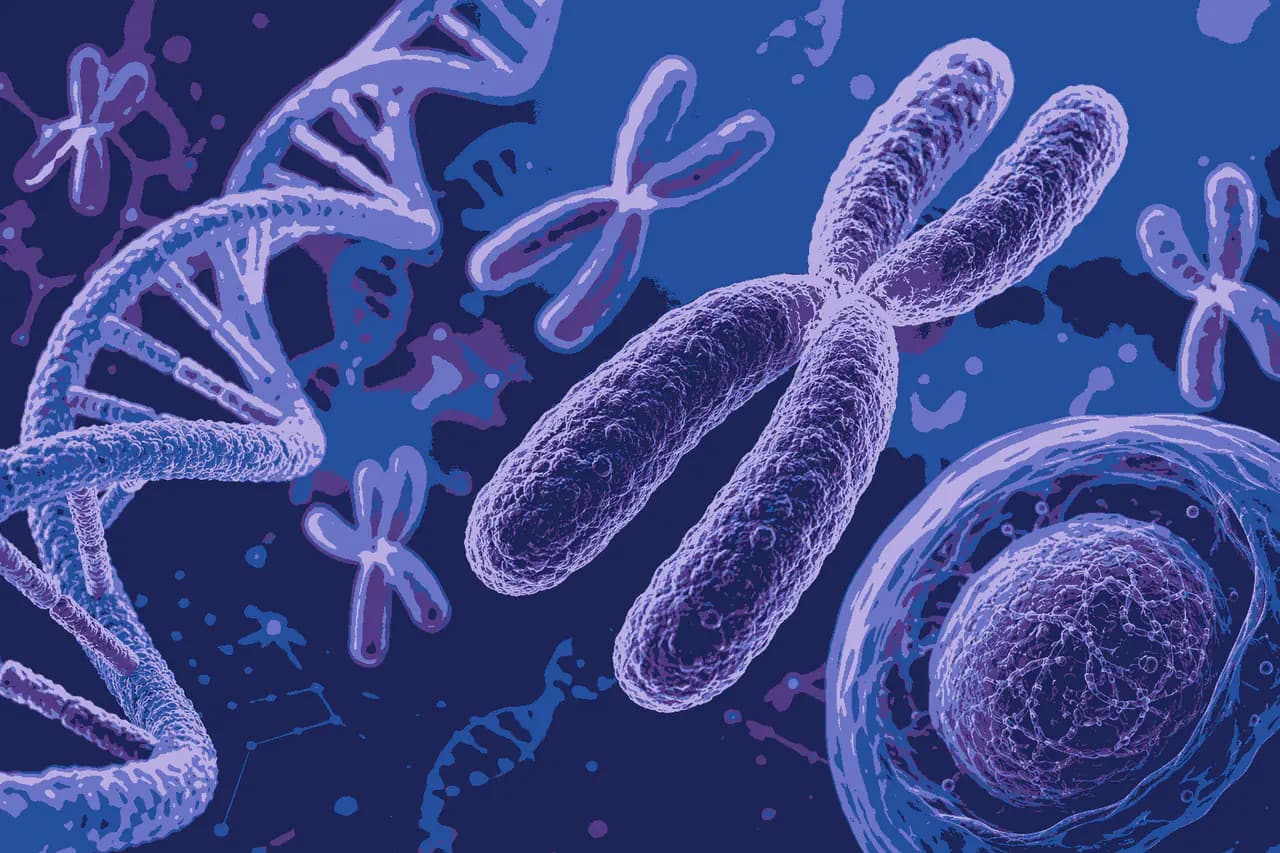
Alleles and Chromosomes MCQs Biology is one of the most important topics for aspirants preparing for board examinations and competitive entrance tests like NEET. A strong understanding of inheritance, genes, chromosomes, linkage, mutations, and Mendelian principles helps aspirants build a solid foundation in genetics. Alleles and Chromosomes MCQs Biology gives aspirants the opportunity to understand how traits are passed from one generation to another and how chromosomes carry genetic information inside living organisms. When aspirants regularly practice Alleles and Chromosomes MCQs Biology, they become more confident in solving conceptual and analytical genetics questions in examinations.
In genetics, alleles are alternative forms of the same gene that occupy the same position on homologous chromosomes. Chromosomes are thread-like structures present inside the nucleus and are made up of DNA and proteins. Alleles and Chromosomes MCQs Biology helps aspirants clearly understand the relationship between genes, alleles, and chromosomes. Aspirants often find genetics difficult because of terminology and complex inheritance patterns, but continuous revision through Alleles and Chromosomes MCQs Biology simplifies these concepts and improves accuracy.
Many important questions in Class 12 Biology are directly based on chromosome behavior, gene interaction, and patterns of inheritance, making Alleles and Chromosomes MCQs Biology highly valuable for preparation.Another reason why Alleles and Chromosomes MCQs Biology is important is that it strengthens conceptual clarity regarding dominant and recessive traits. Aspirants learn how heterozygous and homozygous conditions influence phenotypic expression and how chromosomes segregate during meiosis.
Alleles and Chromosomes MCQs Biology also improves the understanding of sex-linked inheritance, genetic disorders, and chromosomal abnormalities such as Down syndrome, Turner syndrome, and Klinefelter syndrome. These are frequently asked topics in examinations, and practicing Alleles and Chromosomes MCQs Biology regularly helps aspirants remember key points more effectively.
Many aspirants struggle with pedigree analysis and inheritance patterns because they require logical interpretation. Practicing Alleles and Chromosomes MCQs Biology trains aspirants to identify family inheritance trends and understand how genes move across generations. Aspirants also become familiar with concepts like linkage, crossing over, recombination, and mutations. Since genetics contains many application-based questions, Alleles and Chromosomes MCQs Biology becomes an excellent way to improve problem-solving ability and scientific reasoning. Aspirants preparing for competitive exams especially benefit from repeated exposure to these concepts through Alleles and Chromosomes MCQs Biology.
Chromosomes also play a central role in cell division and heredity. During mitosis and meiosis, chromosomes ensure accurate transfer of genetic information. Alleles and Chromosomes MCQs Biology helps aspirants understand how errors during chromosome segregation can lead to aneuploidy and genetic disorders. Questions related to autosomes, sex chromosomes, Barr bodies, and chromosomal mapping are common in Class 12 Biology, and Alleles and Chromosomes MCQs Biology gives aspirants the confidence to answer such questions correctly. With continuous practice, aspirants can easily identify differences between autosomal and sex-linked traits.
Another major advantage of Alleles and Chromosomes MCQs Biology is revision efficiency. Instead of memorizing lengthy theory repeatedly, aspirants can revise complete genetics chapters through objective questions. This improves speed, retention, and conceptual understanding simultaneously. Alleles and Chromosomes MCQs Biology also helps aspirants identify weak areas and focus more on difficult concepts. Since genetics is considered a high-weightage chapter in biology examinations, aspirants who regularly practice Alleles and Chromosomes MCQs Biology often perform better in tests and entrance examinations.
Modern biology and biotechnology are deeply connected to chromosome research and gene analysis. Topics such as recombinant DNA technology, genetic engineering, gene mapping, and DNA fingerprinting all rely on chromosome studies. Alleles and Chromosomes MCQs Biology introduces aspirants to these advanced biological concepts in a simplified way. It encourages analytical thinking rather than rote memorization. Aspirants who develop strong genetics fundamentals through Alleles and Chromosomes MCQs Biology are better prepared for higher studies in medicine, biotechnology, molecular biology, and life sciences.
Furthermore, Alleles and Chromosomes MCQs Biology improves exam temperament and time management. When aspirants solve multiple genetics questions regularly, they learn to quickly identify keywords, interpret diagrams, and eliminate incorrect options. This increases both speed and confidence during examinations. Since many competitive exams include assertion-reason questions, match-the-following, and case-based genetics questions, Alleles and Chromosomes MCQs Biology becomes an essential preparation tool for aspirants aiming for top scores.
30 Alleles and Chromosomes MCQs Biology:
1. What was the transforming principle of Pneumococcus as found out by Avery, MacLeod, and McCarty?
A. mRNA
B. DNA
C. Protein
D. Polysaccharide
Answer: B. DNA
Explanation: Avery, MacLeod, and McCarty proved that DNA is the transforming principle responsible for bacterial transformation.
2. What is the first step for genetically modifying an organism?
A. Amplification of the desired gene
B. Identification of DNA with desirable gene
C. Introduction of the DNA into the host
D. Maintenance of introduced DNA in the host
Answer: B. Identification of DNA with desirable gene
Explanation: The first step in genetic engineering is identifying the DNA containing the desired gene.
3. Match the following features with their actions and functions:
- Ori
- Selectable marker
- Cloning sites
- Cloning vectors
A. (A-i-S), (B-ii-R), (C-iii-Q), (D-iv-P)
B. (A-iii-P), (B-i-R), (C-iv-Q), (D-ii-S)
C. (A-ii-R), (B-iii-P), (C-i-S), (D-iv-Q)
D. (A-iv-Q), (B-ii-S), (C-iii-P), (D-i-Q)
Answer: B. (A-iii-P), (B-i-R), (C-iv-Q), (D-ii-S)
Explanation:
- Ori controls replication
- Selectable marker identifies transformants
- Cloning sites join foreign DNA
- Cloning vectors transfer genes
4. What did Avery et al.’s experiment on Streptococcus pneumoniae conclusively prove?
A. Live ‘R’ strain + DNA from ‘S’ strain + DNAase
B. Heat killed ‘R’ strain + DNA from ‘S’ strain + DNAase
C. Live ‘R’ strain + DNA from ‘S’ strain + RNAase
D. Live ‘R’ strain + denatured DNA from ‘S’ strain + protease
Answer: A. Live ‘R’ strain + DNA from ‘S’ strain + DNAase
Explanation: DNAase destroyed transformation, proving DNA is genetic material.
5. One gene-one enzyme relationship was established for the first time in:
A. Diplococcus pneumoniae
B. Neurospora crassa
C. Salmonella typhimurium
D. Escherichia coli
Answer: B. Neurospora crassa
Explanation: Beadle and Tatum established the one gene-one enzyme hypothesis using Neurospora crassa.
6. Most accepted proof that DNA is genetic material comes from the experiment of
A. F. Griffith
B. Hershey and Chase
C. Oswald Avery
D. Colin MacLeod and Maclyn McCarty
Answer: B. Hershey and Chase
Explanation: Hershey and Chase conclusively proved DNA is genetic material using bacteriophages.
7. Work of Beadle and Tatum on Neurospora crassa proved that
A. Replication of DNA is semi-conservative
B. Viruses have genetic material
C. Every gene is responsible for specific enzymes
D. Plant cells are totipotent
Answer: C. Every gene is responsible for specific enzymes
Explanation: Their experiments led to the one gene-one enzyme hypothesis.
8. Identify the enzyme that catalyses the step labelled ‘M’ in retrovirus replication.
A. RNA polymerase
B. DNA ligase
C. Reverse transcriptase
D. Recombinase
Answer: C. Reverse transcriptase
Explanation: Reverse transcriptase converts viral RNA into DNA.
9. In 1944, Avery, McCarty, and MacLeod isolated a substance from heat-killed virulent bacteria. This substance can be destroyed by:
A. DNAase
B. Protease
C. Lipase
D. Amylase
Answer: A. DNAase
Explanation: DNAase destroyed the transforming principle, confirming it was DNA.
10. Eukaryotic genes are monocistronic but are called split genes because
A. Introns are interrupted with mutons
B. They contain exons only
C. They contain introns only
D. Exons are interrupted by introns
Answer: D. Exons are interrupted by introns
Explanation: Split genes contain coding exons interrupted by non-coding introns.
11. In rDNA cloning, what helps identify and eliminate non-transformant E. coli cells?
A. Origin of replication
B. Selectable marker
C. Cloning site
D. Competent host
Answer: B. Selectable marker
Explanation: Selectable markers distinguish transformed from non-transformed cells.
12. The number of nitrogen base pairs in haploid human DNA and E. coli DNA respectively are
A. 4.6 × 10⁶ bp and 3.3 × 10⁹ bp
B. 4.6 × 10⁹ bp and 3.3 × 10⁶ bp
C. 3.3 × 10⁹ bp and 4.6 × 10⁶ bp
D. 3.3 × 10⁶ bp and 4.6 × 10⁹ bp
Answer: C. 3.3 × 10⁹ bp and 4.6 × 10⁶ bp
Explanation: Human haploid DNA contains 3.3 billion base pairs while E. coli contains 4.6 million.
13. The length of DNA in Escherichia coli is 4.6 × 10⁶ bp and human DNA is 3.3 × 10⁹ bp. What is the correct comparison?
A. 3.3 × 10⁹ bp and 4.6 × 10⁶ bp
B. 3.3 × 10⁶ bp and 4.6 × 10⁹ bp
C. 3.3 × 10⁹ bp and 4.6 × 10⁹ bp
D. 3.3 × 10⁶ bp and 4.6 × 10⁶ bp
Answer: A. 3.3 × 10⁹ bp and 4.6 × 10⁶ bp
Explanation: Human DNA is much larger than bacterial DNA.
14. The first artificial recombinant DNA was constructed using a native plasmid of
A. Salmonella typhimurium
B. Escherichia coli
C. Agrobacterium tumefaciens
D. Propionibacterium shermanii
Answer: A. Salmonella typhimurium
Explanation: Early recombinant DNA experiments used plasmids from Salmonella.
15. What is the chemical nature of chromatin?
A. Nucleic acids
B. Nucleic acid and histone proteins
C. Nucleic acids, histone and non-histone proteins
D. Nucleic acids and non-histone proteins
Answer: C. Nucleic acids, histone and non-histone proteins
Explanation: Chromatin contains DNA along with histone and non-histone proteins.
16. Alternate valency states of DNA bases are due to
A. Tautomerisational mutation
B. Analogue substitution
C. Point mutation
D. Frameshift mutation
Answer: A. Tautomerisational mutation
Explanation: Tautomeric shifts can alter base pairing patterns.
17. Genetic information is carried by long-chain macromolecules made up of
A. Amino acids
B. Nucleotides
C. Chromosomes
D. Enzymes
Answer: B. Nucleotides
Explanation: DNA and RNA are polymers of nucleotides.
18. What will be the gametic chromosome number if somatic cells have 40 chromosomes?
A. 10
B. 20
C. 30
D. 40
Answer: B. 20
Explanation: Gametes contain half the chromosome number of somatic cells.
19. Antiparallel strands of DNA mean that
A. One strand turns anticlockwise
B. Phosphate groups share same position
C. The strands run in opposite directions
D. One strand turns clockwise
Answer: C. The strands run in opposite directions
Explanation: One strand runs 5'→3' while the other runs 3'→5'.
20. What is a plasmid?
A. Small extrachromosomal circular self-replicating DNA
B. Bacteriophage
C. DNA found in mitochondria
D. DNA incorporated into bacterial chromosome
Answer: A. Small extrachromosomal circular self-replicating DNA
Explanation: Plasmids are circular DNA molecules used in cloning.
21. Indirect transfer of genetic material through bacteriophage is called
A. Transformation
B. Conjugation
C. Translation
D. Transduction
Answer: D. Transduction
Explanation: Transduction transfers DNA via bacteriophages.
22. Geneticists determine relative gene locations by
A. Using microscopes
B. Counting genes
C. Determining crossing over frequency
D. Exposing organisms to radiation
Answer: C. Determining crossing over frequency
Explanation: Gene mapping depends on recombination frequency.
23. Frederick Griffith used which bacterium in transformation experiments?
A. Salmonella typhimurium
B. Escherichia coli
C. Streptococcus pneumoniae
D. Bacillus thuringiensis
Answer: C. Streptococcus pneumoniae
Explanation: Griffith demonstrated transformation in pneumococcus bacteria.
24. What are autosomes?
A. Somatic chromosomes
B. Sexual chromosomes
C. Asexual chromosomes
D. Both (a) and (b)
Answer: A. Somatic chromosomes
Explanation: Autosomes are all chromosomes except sex chromosomes.
25. Why is DNA considered better genetic material than RNA?
A. Presence of thymine
B. DNA mutates faster
C. DNA is catalytic
D. DNA is labile
Answer: A. Presence of thymine
Explanation: Thymine improves DNA stability.
26. The prokaryotic genetic system consists of
A. DNA and histone
B. DNA and no histone
C. No DNA and histone
D. No DNA and no histone
Answer: B. DNA and no histone
Explanation: Prokaryotes lack true histone proteins.
27. What is not true about alleles?
A. Round and wrinkled genes are alleles
B. Only recessive alleles express in hybrids
C. Alleles occupy same loci on homologous chromosomes
D. Alternative forms of genes are alleles
Answer: B. Only recessive alleles express in hybrids
Explanation: Dominant alleles express in hybrids.
28. Laboratory-based alteration of DNA makeup is called
A. Genetic engineering
B. Recombinant DNA technique
C. Ethidium bromide staining
D. DNA electrophoresis
Answer: A. Genetic engineering
Explanation: Genetic engineering modifies DNA sequences artificially.
29. DNA stained with ethidium bromide under UV appears as
A. Bright blue bands
B. Yellow bands
C. Bright orange bands
D. Dark red bands
Answer: C. Bright orange bands
Explanation: Ethidium bromide fluoresces orange under UV light.
30. In gel electrophoresis, separated DNA fragments are visualized using
A. Ethidium bromide in UV radiation
B. Acetocarmine in UV radiation
C. Ethidium bromide in infrared radiation
D. Acetocarmine in bright blue light
Answer: A. Ethidium bromide in UV radiation
Explanation: Ethidium bromide binds DNA and fluoresces under UV light.
Conclusion on Alleles and Chromosomes MCQs Biology
Finally, Alleles and Chromosomes MCQs Biology is not just useful for scoring marks but also for understanding the biological basis of heredity and variation. Genetics explains why individuals resemble their parents yet remain unique. By practicing Alleles and Chromosomes MCQs Biology consistently, aspirants gain a deeper appreciation of how life functions at the molecular and chromosomal level. With proper revision, conceptual clarity, and continuous practice, Alleles and Chromosomes MCQs Biology can significantly improve biology performance and help aspirants excel in both board and competitive examinations.
Related reading
Powerful Allolactose and Repressor Molecular Biology MCQs with Answers for NEET JEE & CUET
Master lac operon concepts with Allolactose and Repressor Molecular Biology MCQs for NEET , JEE and Class 12 aspirants. Learn gene regulation easily and quickly
Master Chain Termination Codon MCQs Biology Class 12 - Powerful Questions with Accurate Answers for NEET
Practice Chain Termination Codon MCQs Biology Class 12 for NEET and board exams. Learn stop codons, translation termination , protein synthesis concepts easily.