Understanding human reproduction is a vital part of Class 12 Biology, and one of the most frequently tested concepts involves the acrosome and its enzymatic role. When preparing for exams, aspirants often come across Acrosome Enzyme Function MCQs for Class 12, which focus on the structure and function of the sperm cell. A strong conceptual grasp of Acrosome Enzyme Function MCQs for Class 12 helps aspirants confidently tackle questions related to fertilization.
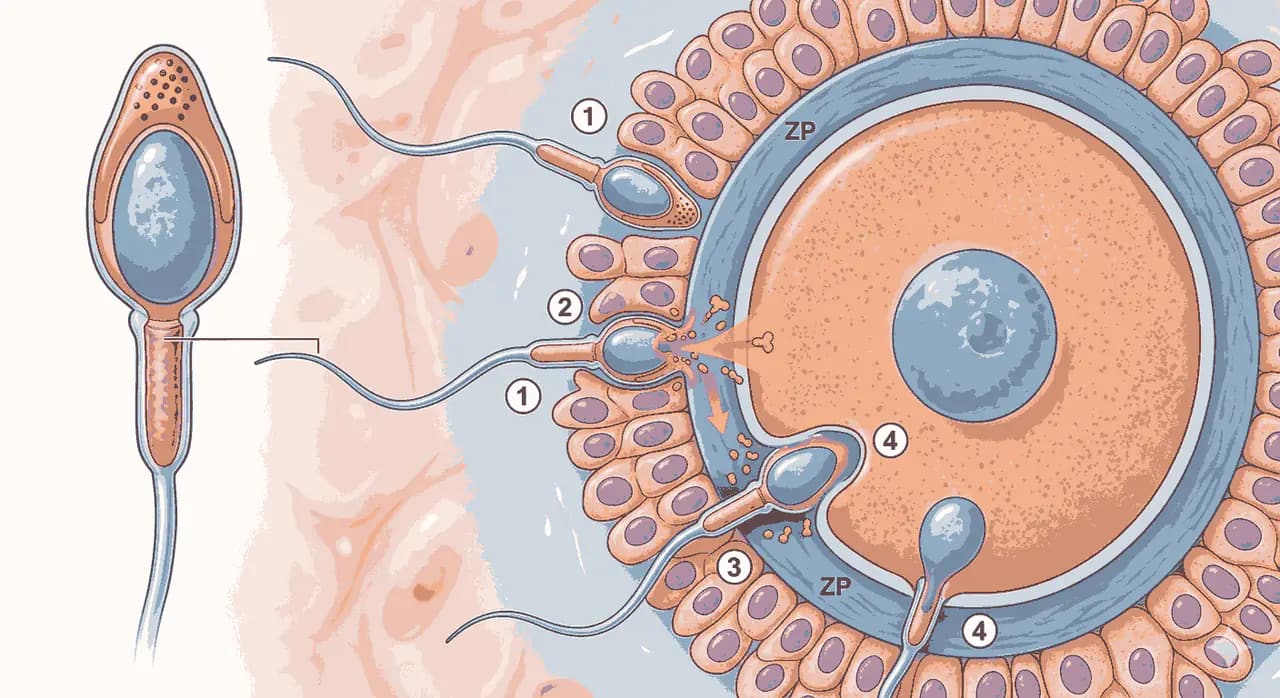
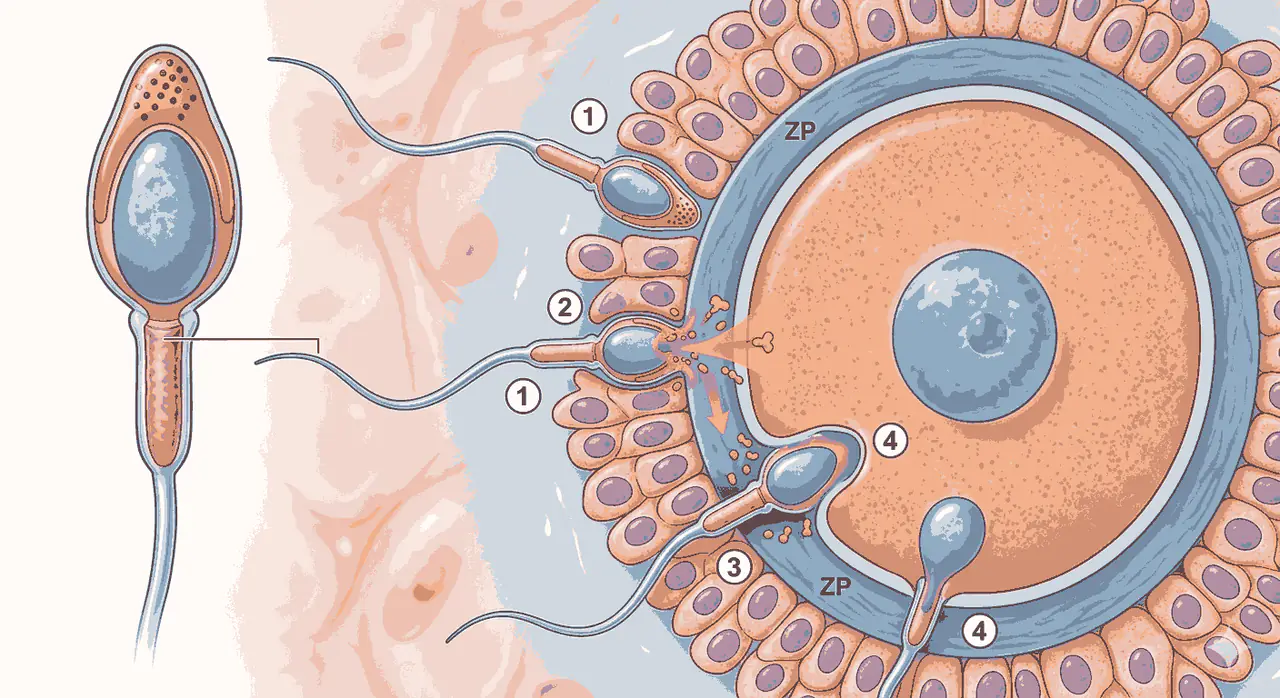
The acrosome is a cap-like structure located at the anterior end of the sperm head. While studying Acrosome Enzyme Function MCQs for Class 12, it is important to remember that the acrosome is derived from the Golgi apparatus during spermiogenesis. This developmental origin is often highlighted in Acrosome Enzyme Function MCQs for Class 12, making it an essential point for revision.
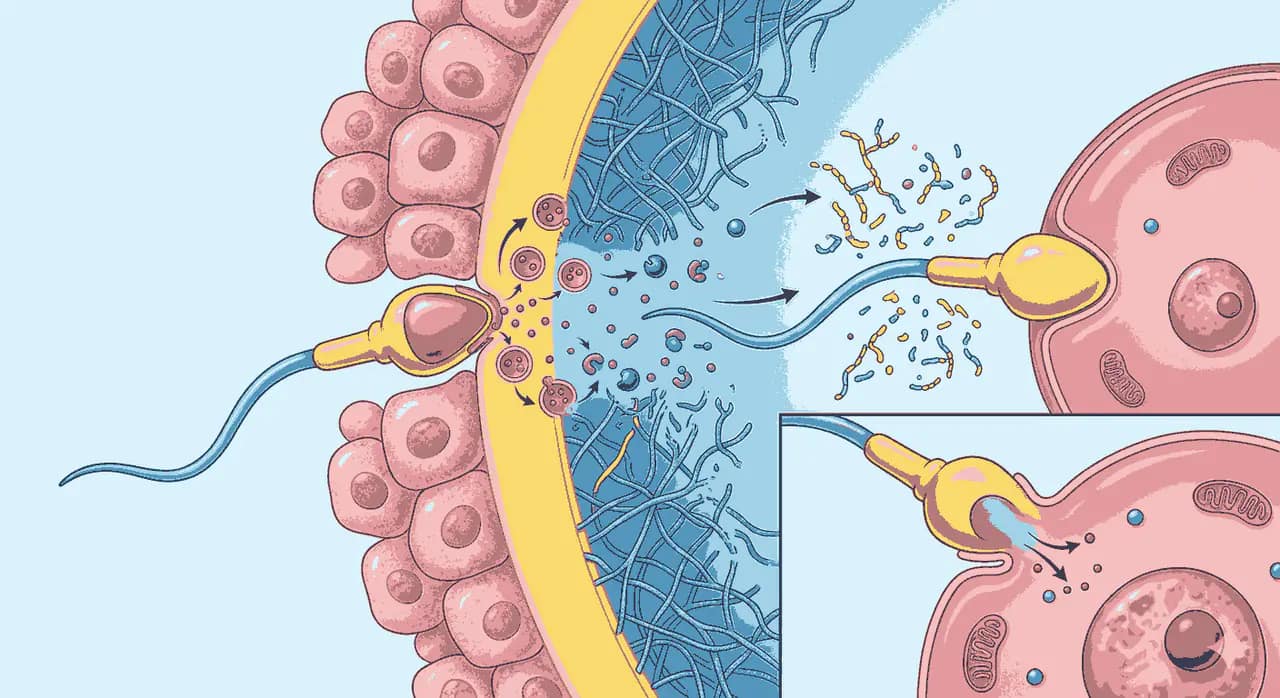
One of the primary roles of the acrosome is to facilitate fertilization. In Acrosome Enzyme Function MCQs for Class 12, aspirants learn that the acrosome contains hydrolytic enzymes such as hyaluronidase and acrosin. These enzymes are responsible for breaking down the protective layers surrounding the ovum, particularly the zona pellucida. This concept is repeatedly emphasized in Acrosome Enzyme Function MCQs for Class 12 because it explains how sperm successfully penetrates the egg.
The process by which the acrosome releases its enzymes is known as the acrosomal reaction. While practicing Acrosome Enzyme Function MCQs for Class 12, aspirants should understand that this reaction is triggered when the sperm comes into contact with the egg’s outer layer. The release of enzymes allows the sperm to dissolve the barriers and reach the plasma membrane of the ovum. This mechanism is central to many Acrosome Enzyme Function MCQs for Class 12.
Another key aspect covered in Acrosome Enzyme Function MCQs for Class 12 is the importance of enzyme activity. Without these enzymes, the sperm would be unable to penetrate the egg, making fertilization impossible. Therefore, the acrosome plays a crucial role in reproductive success. This functional significance is often tested in Acrosome Enzyme Function MCQs for Class 12, requiring aspirants to connect structure with function.
In addition to penetration, the enzymes also ensure species-specific fertilization. While studying Acrosome Enzyme Function MCQs for Class 12, aspirants may encounter questions related to compatibility between sperm and egg. The enzymes help recognize and bind to specific receptors on the zona pellucida, ensuring that fertilization occurs only between members of the same species. This specificity is a critical concept in Acrosome Enzyme Function MCQs for Class 12.
Another important point frequently addressed in Acrosome Enzyme Function MCQs for Class 12 is the relationship between the acrosome and sperm motility. Although motility is mainly controlled by the tail and mitochondria, the acrosome ensures that once the sperm reaches the egg, it can complete the fertilization process. This coordination between different sperm structures is often discussed in Acrosome Enzyme Function MCQs for Class 12.
From an exam perspective, Acrosome Enzyme Function MCQs for Class 12 typically focus on identifying the role of enzymes, the origin of the acrosome, and the process of fertilization. Aspirants should also be able to distinguish between structures like the nucleus, acrosome, and middle piece. Mastering these differences is essential for solving Acrosome Enzyme Function MCQs for Class 12 accurately.
Clinical relevance is another dimension of this topic. While revising Acrosome Enzyme Function MCQs for Class 12, aspirants should understand that defects in the acrosome or its enzymes can lead to infertility. If the acrosomal reaction fails, the sperm cannot penetrate the egg, preventing fertilization. Such real-world applications enhance understanding and are often reflected in Acrosome Enzyme Function MCQs for Class 12.
Acrosome Enzyme Function MCQs for Class 12:
1. What is the process called for conversion of spermatids into spermatozoa?
a) Spermiogenesis
b) Oogenesis
c) Sporogenesis
d) Spermatogenesis
Answer: a
Explanation: Spermiogenesis converts non-motile spermatids into motile spermatozoa.
2. Ratio of male to female gametes from primary sex cells?
a) 1 : 1
b) 1 : 3
c) 1 : 4
d) 4 : 1
Answer: d
Explanation: One male cell → 4 sperms; one female cell → 1 ovum.
3. Chromatids in secondary spermatocyte (2n=16)?
a) 8
b) 16
c) 24
d) 32
Answer: b
Explanation: Secondary spermatocyte has 8 chromosomes but 16 chromatids.
4. Stage of vitellogenesis in humans?
a) Oogonium
b) Ootid
c) Secondary oocyte
d) Primary oocyte
Answer: d
Explanation: Occurs in primary oocyte (diplotene stage).
5. Absence of acrosome affects:
a) Energy
b) Penetration of egg
c) Motility
d) Nutrition
Answer: b
Explanation: Acrosome enzymes help sperm penetrate egg.
6. After meiosis I, male germ cells form:
a) Spermatids
b) Spermatogonia
c) Primary spermatocytes
d) Secondary spermatocytes
Answer: d
Explanation: Meiosis I → secondary spermatocytes.
7. Ovary part acting as endocrine gland post ovulation:
a) Vitelline membrane
b) Graafian follicle
c) Stroma
d) Epithelium
Answer: b
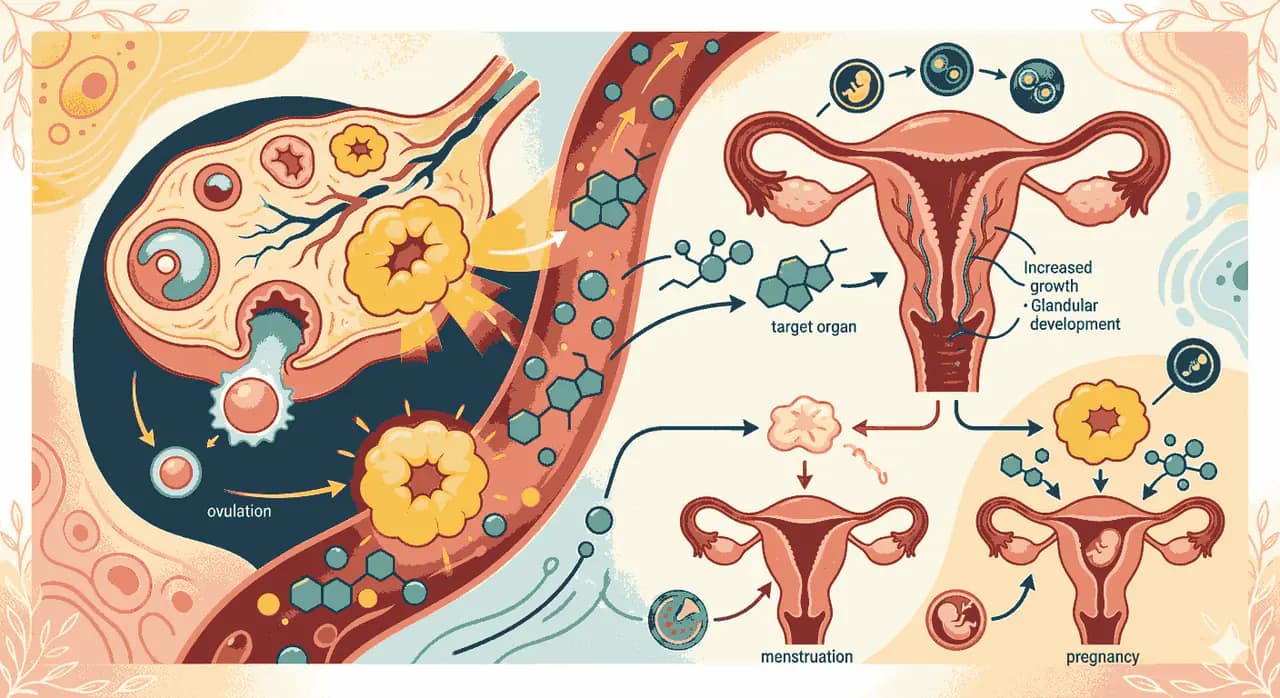
Explanation: Graafian follicle → corpus luteum.
8. Acrosome is formed by:
a) Nucleus
b) Golgi apparatus
c) Mitochondria
d) None
Answer: b
Explanation: Golgi forms acrosome.
9. Identify the complete and correct sequence in the passage of spermatozoa:
a) Seminiferous tubules → Rete testis → Vasa efferentia → Vas deferens → Epididymis → Ejaculatory duct → Urethra
b) Seminiferous tubules → Rete testis → Vasa efferentia → Epididymis → Vas deferens → Ejaculatory duct → Urethra → Vagina of female
c) Seminiferous tubules → Rete testis → Vasa efferentia → Epididymis → Urethra → Vagina of female
d) Seminiferous tubules → Rete testis → Vasa efferentia → Ejaculatory duct → Vagina of female
Answer: b
Explanation:
The correct pathway of sperm transport is:
Seminiferous tubules → Rete testis → Vasa efferentia → Epididymis → Vas deferens → Ejaculatory duct → Urethra → Female reproductive tract (vagina).
Option (b) is the most complete representation.
10. Absence of sperm is:
a) Oligospermia
b) Azoospermia
c) Phimosis
d) Impotence
Answer: b
Explanation: Azoospermia = no sperm.
11. Reduced sperm motility:
a) Oligospermia
b) Asthenospermia
c) Azoospermia
d) Polyspermy
Answer: b
Explanation: Motility defect.
12. Eggs produced in lifetime:
a) 40–50
b) 300–350
c) 400–500
d) 750–850
Answer: c
Explanation: Only ~400–500 ovulated.
13. Which of the following is not a case of epimorphosis?
a) Formation of sperms from small clumps of cells
b) Regeneration of tail in a lizard
c) Replacement of severed arm in starfish
d) Replacement of limb in salamander
Answer: a
Explanation: Epimorphosis involves regeneration through cell division (like lizard tail or salamander limb). Spermatogenesis is a reproductive process, not regeneration.
14. In human zygote, the male sex is determined by whether:
a) Mother gets good nutrition
b) Father is stronger than mother
c) Strength of male chromosome
d) Required composition of chromosomes
Answer: d
Explanation: Sex is determined by sperm chromosome (X or Y). XY → male, XX → female.
15. Enzyme present in sperm acrosome to dissolve egg membrane is:
a) Sperm lysin
b) Ovolysin
c) Spermatogenolysin
d) Spermatocymin
Answer: a
Explanation: Sperm lysin helps dissolve zona pellucida for fertilization.
16. The ploidy of secondary spermatocytes is:
a) n
b) 2n
c) 3n
d) 4n
Answer: a
Explanation: After meiosis I, chromosome number is reduced to haploid (n).
17. The ovum of human female has autosomes:
a) 22
b) 22 pairs
c) 23 pairs
d) 44 pairs
Answer: a
Explanation: Ovum contains 22 autosomes + 1 X chromosome.
18. In human beings, if spermatozoa are not ejaculated, then:
a) They are inactivated within seminal vesicles
b) They are permanently stored in cauda epididymis
c) They are permanently stored in caput epididymis
d) They are reabsorbed in vas deferens
Answer: d
Explanation: Unused sperms are broken down and reabsorbed.
19. Unequal cytoplasmic division occurs in:
a) Multiplication phase of oogenesis
b) Maturation phase of spermatogenesis
c) Multiplication phase of spermatogenesis
d) Maturation phase of oogenesis
Answer: d
Explanation: Oogenesis involves unequal division to retain cytoplasm in ovum.
20. Human sperms become motile at pH:
a) 4.5–5.0
b) 6.0–6.5
c) 7.5–8.5
d) 4.0–4.5
Answer: b
Explanation: Slightly alkaline medium favors sperm motility.
21. Which portion of sperm contains enzymes?
a) Neck
b) Middle piece
c) Tail
d) Acrosome
Answer: d
Explanation: Acrosome contains enzymes for egg penetration.
22. Which of the following undergoes spermiogenesis?
a) Spermatids
b) Spermatogonia
c) Primary spermatocytes
d) Secondary spermatocytes
Answer: a
Explanation: Spermatids transform into spermatozoa.
23. The anterior portion of sperm head is covered by:
a) Acrosome
b) Antrum
c) Sertoli cells
d) Enzymes
Answer: a
Explanation: Acrosome is a cap-like structure aiding fertilization.
24. Each secondary spermatocyte produces:
a) Four haploid spermatids
b) One haploid spermatid
c) Two haploid spermatids
d) Two diploid spermatids
Answer: c
Explanation: Meiosis II produces 2 spermatids per secondary spermatocyte.
25. Structure observed by Henking:
a) X body
b) Autosome
c) Y chromosome
d) Nucleolus
Answer: a
Explanation: X-body later identified as X chromosome.
26. Which of the following has haploid chromosomes?
a) Oogonia
b) Primary oocyte
c) Secondary oocyte
d) Primary spermatocyte
Answer: c
Explanation: Secondary oocyte is haploid after meiosis I.
27. First event during egg development:
a) Induction
b) Differential growth
c) Polarity
d) Gastrulation
Answer: c
Explanation: Polarity establishes embryo axis.
28. Sperms formed from 4 primary spermatocytes:
a) 1
b) 4
c) 16
d) 32
Answer: c
Explanation: Each primary spermatocyte → 4 sperm → total 16.
29. Polar bodies are produced during formation of:
a) Sperm
b) Oogonium
c) Spermatocytes
d) Secondary oocyte
Answer: d
Explanation: Polar bodies form during oogenesis due to unequal division.
30. Spermatids are formed from:
a) Growth of spermatogonia
b) Formation of spermatogonia
c) Primary spermatocytes through meiosis
d) Oogonia through meiosis
Answer: c
Explanation: Meiosis in primary spermatocytes leads to spermatids.
Conclusion on Acrosome Enzyme Function MCQs for Class 12
In conclusion, the acrosome is a highly specialized structure that plays a vital role in fertilization. Its enzymes are essential for breaking down barriers and ensuring successful fusion of gametes. A thorough understanding of these concepts is crucial for scoring well in exams. By consistently practicing and analyzing Acrosome Enzyme Function MCQs for Class 12, aspirants can strengthen their conceptual clarity and improve their performance. Ultimately, mastering Acrosome Enzyme Function MCQs for Class 12 is a key step toward excelling in Class 12 Biology.
Related reading
Common Traps Revealed: Acrosome Enzyme Function MCQs Biology Class 12 For Competitive Exams
Master Acrosome Enzyme Function MCQs Biology Class 12 with clear concepts on acrosome structure , enzyme action, and fertilization to help aspirants score high .
Avoid Costly Mistakes: Corpus Luteum Function MCQs Class 12 Biology
Master Corpus Luteum Function MCQs Class 12 Biology with clear concepts on progesterone, menstrual cycle, pregnancy support for better exam preparation accuracy