
- Keneitsino Lydia
- May 19, 2026
Powerful Allolactose and Repressor Molecular Biology MCQs with Answers for NEET JEE & CUET
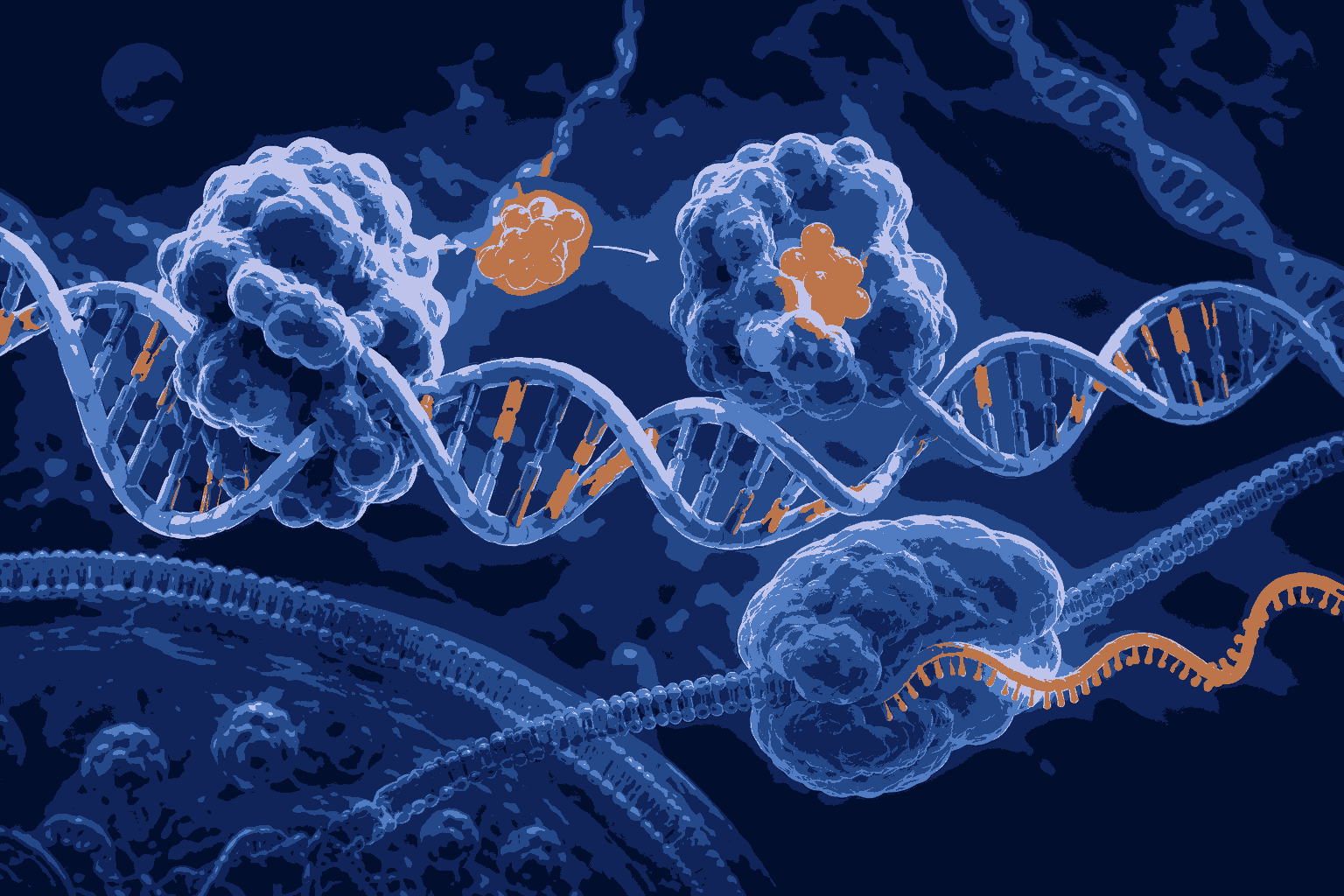
The lac operon contains structural genes, an operator, a promoter, and a regulator gene. In the absence of lactose, the repressor protein binds to the operator and prevents RNA polymerase from transcribing the structural genes. This is why Allolactose and Repressor Molecular Biology MCQs are useful for learning negative regulation. When lactose is present, some of it is converted into allolactose, which acts as an inducer. This makes Allolactose and Repressor Molecular Biology MCQs important for understanding inducible operons.
Allolactose binds to the repressor protein and changes its shape. As a result, the repressor can no longer bind effectively to the operator region. RNA polymerase then moves along the DNA and transcribes the lac structural genes. Aspirants practicing Allolactose and Repressor Molecular Biology MCQs can clearly understand how allolactose indirectly activates gene expression. This topic also explains why the lac operon remains off when lactose is absent and turns on when lactose is available.
A strong understanding of Allolactose and Repressor Molecular Biology MCQs helps aspirants connect molecular biology with real cellular regulation. The three important structural genes of the lac operon are lac Z, lac Y, and lac A. Lac Z codes for beta-galactosidase, lac Y codes for permease, and lac A codes for transacetylase. These facts are frequently revised through Allolactose and Repressor Molecular Biology MCQs because they are commonly tested in objective biology exams.
Another reason why Allolactose and Repressor Molecular Biology MCQs are important is that they help aspirants understand the difference between inducer, repressor, operator, and promoter. The inducer is allolactose, the repressor is produced by the regulator gene, the operator is the DNA region where the repressor binds, and the promoter is the site where RNA polymerase binds. Regular practice with Allolactose and Repressor Molecular Biology MCQs improves clarity in these terms and reduces confusion during exams.
In molecular biology, the lac operon is considered a classic example of gene regulation. Allolactose and Repressor Molecular Biology MCQs often focus on how the repressor blocks transcription and how allolactose removes this block. Aspirants should remember that allolactose does not directly bind to DNA. Instead, it binds to the repressor protein and prevents it from attaching to the operator. This is a key concept in Allolactose and Repressor Molecular Biology MCQs.
The role of glucose is also important in lac operon regulation. Even when lactose is present, high glucose levels can reduce lac operon activity through catabolite repression. Aspirants preparing through Allolactose and Repressor Molecular Biology MCQs should understand that gene expression is controlled not only by the presence of lactose but also by the energy status of the cell. This makes the lac operon a powerful example of efficient cellular control.
For examination preparation, Allolactose and Repressor Molecular Biology MCQs help aspirants revise high-yield points quickly. Questions may ask about the role of allolactose, the binding site of the repressor, the function of the operator, or the products of lac structural genes. Practicing Allolactose and Repressor Molecular Biology MCQs improves memory retention and helps aspirants answer tricky questions with confidence.
The topic also supports understanding of broader gene regulation mechanisms. Once aspirants understand Allolactose and Repressor Molecular Biology MCQs, they can better understand repressible operons, inducible systems, transcription factors, and gene expression control in different organisms. This makes the concept useful not only for Class 12 Biology but also for advanced biotechnology and genetics preparation.
Allolactose and Repressor Molecular Biology MCQs:
- Number of structural genes in lac operon is _________.
A. 1
B. 2
C. 3
D. 4
Answer: C. 3
Explanation:
The lac operon contains three structural genes: lac Z, lac Y, and lac A.
- Jacob and Monod proposed the operon concept. The operon concept is applicable for:
A. All prokaryotes and some eukaryotes
B. All prokaryotes and all eukaryotes
C. All prokaryotes and some protozoans
D. All eukaryotes and some prokaryotes
Answer: A. All prokaryotes and some eukaryotes
Explanation:
The operon concept mainly explains gene regulation in prokaryotes.
- In E. coli, during lactose metabolism, repressor binds to:
A. Regulator gene
B. Operator gene
C. Structural gene
D. Promoter gene
Answer: B. Operator gene
Explanation:
The repressor binds to the operator region and blocks transcription.
- Select the correct statement about the operon.
A. 1, 2 and 3 are correct
B. 1 and 2 are correct
C. 2 and 4 are correct
D. 1 and 3 are correct
Answer: C. 2 and 4 are correct
Explanation:
In absence of lactose, the repressor binds the operator region and prevents transcription.
- Match the following genes of the Lac operon with their respective products:
(A) I-gene
(B) Z-gene
(C) A-gene
(D) Y-gene
A. (iii) Repressor, (i) β-galactosidase, (ii) Permease, (iv) Transacetylase
B. (iii) Repressor, (i) β-galactosidase, (iv) Transacetylase, (ii) Permease
C. (iv) Transacetylase, (iv) Transacetylase, (i) Repressor, (ii) Permease
D. (i) β-galactosidase, (iii) Repressor, (iii) Repressor, (iv) Transacetylase
Answer: B
Explanation:
I-gene → Repressor
Z-gene → β-galactosidase
A-gene → Transacetylase
Y-gene → Permease
- What does ‘lac’ refer to in the lac operon?
A. Lactose
B. Lactase
C. Lac insect
D. The number 1,00,000
Answer: A. Lactose
Explanation:
The lac operon controls lactose metabolism in bacteria.
- An environmental agent which triggers transcription from an operon is called:
A. Depressor
B. Controlling element
C. Regulator
D. Inducer
Answer: D. Inducer
Explanation:
An inducer activates transcription in an operon.
- Identify A, B and C.
A. (A) Elongation, (B) Termination, (C) Initiation
B. (A) Initiation, (B) Termination, (C) Elongation
C. (A) Initiation, (B) Elongation, (C) Termination
D. (A) Termination, (B) Elongation, (C) Initiation
Answer: B
Explanation:
Sigma factor helps initiation, rho factor helps termination, and elongation occurs during protein synthesis.
- Identify the correct statement.
A. Capping means addition of adenylate residues at 5′ end
B. Y-gene encodes transacetylase
C. In eukaryotes structural genes are interrupted by coding sequences
D. Lac operon has two regulatory genes and three structural genes
Answer: C
Explanation:
Eukaryotic genes contain exons and introns.
- When lactose is absent, the ‘i’ gene of lac operon continues to produce repressor mRNA because it is:
A. A non-coding gene
B. An operator gene
C. A constitutive gene
D. A structural gene
Answer: C. A constitutive gene
Explanation:
The i-gene continuously produces repressor protein.
- The Lac Operon is turned on when allolactose binds to:
A. Promoter site
B. Operator site
C. mRNA
D. Repressor protein
Answer: D. Repressor protein
Explanation:
Allolactose inactivates the repressor and allows transcription.
- Which of the following pairs is incorrect?
A. Theory of catastrophism – George Cuvier
B. Theory of biogenesis – Louis Pasteur
C. Cosmozoic theory – Aristotle
D. Theory of origin of life – Oparin
Answer: C
Explanation:
Cosmozoic theory was proposed by Richter.
- What was the ratio of methane, ammonia, and hydrogen in Stanley Miller’s experiment?
A. 3 : 1 : 2
B. 2 : 1 : 2
C. 1 : 2 : 1
D. 5 : 4 : 1
Answer: B. 2 : 1 : 2
Explanation:
Miller used methane, ammonia, and hydrogen in this ratio.
- Which important gas was absent during the formation of Earth?
A. Oxygen
B. Hydrogen
C. Nitrogen
D. Carbon dioxide
Answer: A. Oxygen
Explanation:
Primitive Earth lacked free oxygen.
- Approximately how many billion years ago did abiogenesis occur?
A. 1.2 billion
B. 1.5 billion
C. 2.5 billion
D. 3.5 billion
Answer: D. 3.5 billion years ago
Explanation:
Abiogenesis is believed to have occurred around 3.5 billion years ago.
- Who first experimentally refuted spontaneous generation?
A. Spallanzani
B. Von Helmont
C. Redi
D. Pasteur
Answer: C. Redi
Explanation:
Francesco Redi disproved spontaneous generation experimentally.
- Where is life thought to have originated?
A. Air
B. Water
C. Land
D. All of these
Answer: B. Water
Explanation:
Life is believed to have originated in water.
- Why is it considered difficult to create life artificially?
A. We cannot match God’s creativity
B. Molecular organization is complex and not fully known
C. All modes of life are not fully known
D. Most modes are known except a few
Answer: B
Explanation:
The complexity of molecular organization prevents artificial creation of life.
- When was Darwin’s book “Origin of Species” published?
A. 1809
B. 1859
C. 1885
D. 1871
Answer: B. 1859
Explanation:
Darwin published “Origin of Species” in 1859.
- Formation of similar structures in embryos represents:
A. Biogenetic law
B. Adaptive radiation
C. Mutation
D. Natural selection
Answer: A. Biogenetic law
Explanation:
Embryonic similarities reflect evolutionary history.
- Who conducted experiments proving biochemical origin of life?
A. Miller and Urey
B. Darwin
C. Lamarck
D. Weismann
Answer: A. Miller and Urey
Explanation:
Miller and Urey demonstrated synthesis of organic molecules.
- “Ontogeny repeats phylogeny” is part of:
A. Recapitulation theory
B. Darwin’s theory
C. Lamarck’s theory
D. Weismann’s theory
Answer: A. Recapitulation theory
Explanation:
The theory states embryonic stages reflect evolutionary history.
- Who gave the theory about embryo evolution?
A. Darwin
B. Lamarck
C. Haeckel
D. Dobzhansky
Answer: C. Haeckel
Explanation:
Haeckel proposed the biogenetic law.
- Believers in spontaneous generation assumed that:
A. Organisms arise only from similar organisms
B. Organisms arise only from air
C. Organisms arise from non-living matter
D. Organisms always arise from air
Answer: C
Explanation:
Spontaneous generation proposed life originates from non-living matter.
- Which compound was not found in the Miller-Urey experiment?
A. Amino acids
B. Urea
C. Nucleic acid
D. Lactic acid
Answer: C. Nucleic acid
Explanation:
Nucleic acids were not synthesized in the experiment.
- The category of molecules produced by the Miller-Urey experiment was:
A. Organic polymers
B. Inorganic polymers
C. Organic monomers
D. Inorganic monomers
Answer: C. Organic monomers
Explanation:
Simple organic compounds like amino acids were produced.
- The results of Miller’s experiment were discussed in the book “The Planets” written by:
A. Sayere
B. Harold Urey
C. Huxley
D. Stanley
Answer: B. Harold Urey
Explanation:
Harold Urey discussed the experiment and primitive Earth atmosphere.
- The theory of pangenesis was rejected due to acceptance of:
A. Spallanzani’s theory
B. Richter’s theory
C. Cuvier’s theory
D. Weismann’s germplasm theory
Answer: D. Weismann’s germplasm theory
Explanation:
Weismann proposed inheritance through germ cells.
- Microspheres, primitive protobionts, possess a membrane of:
A. Lipid and proteins
B. Lipid
C. Carbohydrates
D. Fats
Answer: A. Lipid and proteins
Explanation:
Fox’s microspheres resembled primitive cell membranes.
- Who termed ancient oceanic water rich in organic compounds as “Hot dilute soup” or “Prebiotic soup”?
A. Haldane
B. Von Helmont
C. Redi
D. Louis Pasteur
Answer: A. Haldane
Explanation:
J.B.S. Haldane proposed the concept of prebiotic soup.
Conclusion on Allolactose and Repressor Molecular Biology MCQs
In conclusion, Allolactose and Repressor Molecular Biology MCQs are highly valuable for aspirants who want to master the lac operon and gene regulation. The topic explains how allolactose acts as an inducer, how the repressor controls transcription, and how cells respond to lactose availability. Regular revision of Allolactose and Repressor Molecular Biology MCQs strengthens conceptual clarity, improves exam confidence, and helps aspirants understand one of the most important models in molecular biology.