
- Keneitsino Lydia
- May 14, 2026
Ultimate 30 Replication Transcription Translation MCQs PDF to Boost Your NEET Score
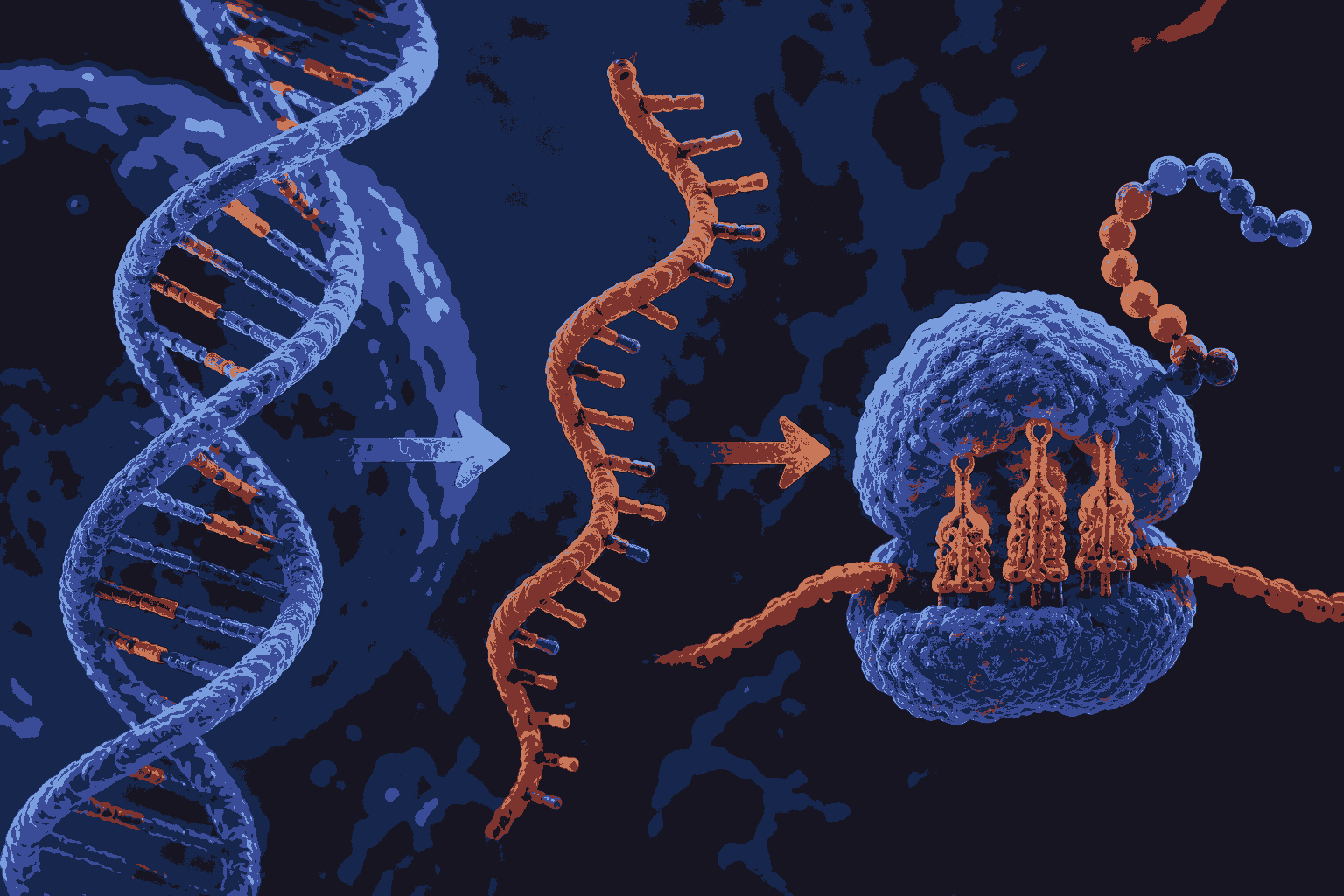
The topic Replication Transcription Translation MCQs PDF is one of the most important areas in molecular biology for aspirants preparing for NEET, board examinations, and other competitive biology entrance tests. Understanding the complete flow of genetic information from DNA to RNA to proteins is essential, and practicing Replication Transcription Translation MCQs PDF regularly helps aspirants strengthen both conceptual clarity and problem-solving ability. Since these molecular processes form the foundation of genetics and biotechnology, Replication Transcription Translation MCQs PDF are highly valuable for mastering Class 12 Biology.
When aspirants study the molecular basis of inheritance, they often find the concepts of DNA replication, RNA transcription, and protein translation interconnected and challenging. This is where Replication Transcription Translation MCQs PDF become extremely useful because they simplify complex biological mechanisms into understandable and application-oriented learning. By solving Replication Transcription Translation MCQs PDF, aspirants can improve their understanding of DNA polymerase, RNA polymerase, ribosomes, codons, anticodons, Okazaki fragments, promoters, and termination factors.
One of the biggest advantages of practicing Replication Transcription Translation MCQs PDF is improved conceptual retention. DNA replication involves semiconservative replication, leading and lagging strands, helicase activity, and enzyme coordination. Many examination questions directly focus on these mechanisms, making Replication Transcription Translation MCQs PDF an excellent preparation tool. Aspirants who regularly solve Replication Transcription Translation MCQs PDF generally develop stronger analytical thinking and better accuracy during examinations.
The transcription process is another critical concept covered extensively in Replication Transcription Translation MCQs PDF. During transcription, genetic information stored in DNA is copied into RNA by RNA polymerase enzymes. Questions based on coding strands, template strands, promoters, terminators, and RNA processing frequently appear in NEET and board exams. Therefore, practicing Replication Transcription Translation MCQs PDF helps aspirants avoid confusion and understand transcription in both prokaryotes and eukaryotes more effectively.
Translation is equally important because it represents the final step in protein synthesis. Ribosomes, tRNA, codons, amino acid activation, and peptide bond formation are repeatedly asked in competitive examinations. Regular practice of Replication Transcription Translation MCQs PDF enables aspirants to understand the role of initiation codons, stop codons, and elongation factors in protein synthesis. Since many NEET questions involve matching sequences or identifying translation mechanisms, Replication Transcription Translation MCQs PDF become highly beneficial for exam-oriented preparation.
Another major benefit of solving Replication Transcription Translation MCQs PDF is faster revision. Molecular biology contains numerous enzymes, structures, and terminologies that can become difficult to revise quickly before examinations. However, practicing Replication Transcription Translation MCQs PDF allows aspirants to revise multiple concepts in a short time while also identifying weak areas that require more attention. This makes Replication Transcription Translation MCQs PDF a highly effective revision strategy for last-minute preparation.
For aspirants preparing for NEET, assertion-reason questions and statement-based questions are extremely common. Topics such as semiconservative replication, reverse transcription, RNA splicing, transcription units, and translation initiation are frequently tested. Continuous practice with Replication Transcription Translation MCQs PDF improves logical reasoning and boosts confidence in handling tricky questions. Many aspirants also use Replication Transcription Translation MCQs PDF to strengthen time management during mock tests and practice sessions.
The importance of Replication Transcription Translation MCQs PDF also extends beyond examinations because these concepts form the basis for advanced studies in genetics, biotechnology, molecular medicine, and bioinformatics. Aspirants who thoroughly understand these molecular processes generally find higher-level biology easier to learn. Solving Replication Transcription Translation MCQs PDF not only improves marks but also builds a stronger scientific understanding of life processes.
Another reason why Replication Transcription Translation MCQs PDF are widely preferred is that they provide exposure to multiple question patterns. Some questions test direct concepts, while others require analysis of sequences, enzymes, or experimental observations. Through consistent practice of Replication Transcription Translation MCQs PDF, aspirants become familiar with various question formats and improve their problem-solving speed significantly.
Replication Transcription Translation MCQs PDF:
- What would be the correct base sequence in mRNA for the given DNA strand 5′-AATGCCTTAAGC–3′?
A. 5’–GCUUAAGGCAUU–3′
B. 5’–UUACGGAATTCG–3′
C. 3’–UUACGGAAUUCG–5′
D. 3’–AAUGCCUUAUCG–5′
Answer: C. 3’–UUACGGAAUUCG–5′
Explanation:
The correct base sequence in mRNA for the given DNA strand is 3’–UUACGGAAUUCG–5′.
- The presence and position of which one of the following defines the template and coding strands in a transcription unit?
A. Repressor
B. Operator
C. Structural gene
D. Promotor
Answer: D. Promotor
Explanation:
The presence and position of promoter defines the template and coding strands in a transcription unit.
- Match the following:
A. Exon
B. Capping
C. Tailing
D. Promoter
i. Coding sequence
ii. Methyl guanosine triphosphate
iii. Adenylate residues
iv. Site for binding of RNA polymerase
A. (IV) (II) (III) (I)
B. (II) (IV) (V) (I)
C. (II) (IV) (I) (V)
D. (III) (I) (II) (IV)
Answer: B. (II) (IV) (V) (I)
Explanation:
- Exon → Coding sequence
- Capping → Methyl guanosine triphosphate
- Tailing → Adenylate residues
- Promoter → Site for binding of RNA polymerase
- Which statement is true regarding DNA replication based on the given passage?
A. DNA polymerases catalyze polymerization only in the 5′ → 3′ direction
B. Replication of DNA occurs continuously on both strands
C. DNA replication requires only DNA polymerase enzyme
D. DNA replication is a random process
Answer: A. DNA polymerases catalyze polymerization only in the 5′ → 3′ direction
Explanation:
DNA replication is semiconservative. DNA polymerases synthesize DNA only in the 5′ → 3′ direction.
- During transcription, if the nucleotide sequence of the DNA strand ATACG is being coded, what would be the nucleotide sequence in the mRNA?
A. TCTGG
B. UAUGC
C. UATGC
D. TATGC
Answer: B. UAUGC
Explanation:
Complementary base pairing during transcription produces the mRNA sequence UAUGC.
- What are the coding sequences called in split genes that are made up of exons and introns?
A. exons
B. introns
C. cistrons
D. mutans
Answer: A. exons
Explanation:
Exons are the coding sequences that remain in mature mRNA after splicing.
- Match the enzymes with their functions during DNA replication:
List-I (Enzyme)
- Ligase
- DNA Polymerase
- Helicase
List-II (Function)
A. Joins short DNA segments
B. Synthesizes DNA
C. Breaks hydrogen bonds between complementary strands
A. 1, 2 and 3 are correct
B. 1 and 2 are correct
C. 1, 2 and 4 are correct
D. 1 and 3 are correct
Answer: D. 1 and 3 are correct
Explanation:
- Ligase joins DNA fragments.
- Helicase breaks hydrogen bonds during replication.
- DNA polymerase synthesizes DNA.
- Which molecule does restriction enzymes recognize and cleave at specific sites?
A. DNA
B. carbohydrates
C. fats
D. vitamins
Answer: A. DNA
Explanation:
Restriction enzymes specifically recognize and cut DNA sequences.
- What is teminism equivalent to?
A. transcription
B. translation
C. reverse transcription
D. DNA synthesis
Answer: C. reverse transcription
Explanation:
Teminism refers to reverse transcription where RNA acts as a template for DNA synthesis.
- Where do Okazaki fragments form during DNA replication?
A. leading strand
B. lagging strand
C. non-sense strand
D. senseful strand
Answer: B. lagging strand
Explanation:
Okazaki fragments are synthesized discontinuously on the lagging strand.
- What is the term for the sequence that controls the copy number of linked DNA in the vector?
A. Ori site
B. Palindromic sequence
C. Recognition site
D. Selectable marker
Answer: A. Ori site
Explanation:
The ori site controls replication and copy number of linked DNA in vectors.
-
Which enzyme facilitates the opening of the DNA helix during transcription?
A. DNA helicase
B. DNA polymerase
C. RNA polymerase
D. DNA ligase
Answer: C. RNA polymerase
Explanation:
RNA polymerase opens the DNA helix locally during transcription.
- What is the average rate of polymerization in E. Coli when it completes replication within 18 minutes with 4.6 × 10^6 base pairs?
A. 1000 base pairs
B. 2000 base pairs
C. 3000 base pairs
D. 4000 base pairs
Answer: B. 2000 base pairs
Explanation:
E. coli replicates DNA at an average rate of approximately 2000 base pairs per second.
- Which enzyme has the capability to catalyze Initiation, Elongation, and Termination in prokaryotic transcription?
A. DNase
B. DNA dependent DNA polymerase
C. DNA dependent RNA polymerase
D. DNA Ligase
Answer: C. DNA dependent RNA polymerase
Explanation:
DNA dependent RNA polymerase performs all major transcription steps in prokaryotes.
- What is the most common mechanism of genetic variation in sexually reproducing organisms?
A. Chromosomal aberrations
B. Genetic drift
C. Recombination
D. Transduction
Answer: C. Recombination
Explanation:
Recombination creates genetic variation during sexual reproduction.
-
Which one of the following is wrongly matched?
A. Transcription – Writing information from DNA to t-RNA
B. Translation – Using information in m-RNA to make protein
C. Repressor protein – Binds to operator to stop enzyme synthesis
D. Operon – Structural genes, operator and promoter
Answer: A. Transcription – Writing information from DNA to t-RNA
Explanation:
Transcription is the process of copying information from DNA into mRNA, not tRNA.
- What initiation and termination factors are involved in transcription in Eukaryotes?
A. α and σ, respectively
B. σ and ρ, respectively
C. α and β, respectively
D. β and γ, respectively
Answer: B. σ and ρ, respectively
Explanation:
Sigma (σ) factor helps in initiation and rho (ρ) factor helps in termination of transcription.
- DNA replication in bacteria occurs
A. During S-phase
B. Within nucleolus
C. Prior to fission
D. Just before transcription
Answer: C. Prior to fission
Explanation:
In bacteria, DNA replication occurs before binary fission.
- Which of the following mRNA can be transcripted as
A. AUG.UGA.UUU
B. UAA.UAG.UGA
C. UAG.UGA.UUU
D. UGA.UUU.UAG
Answer: A. AUG.UGA.UUU
Explanation:
AUG is the initiation codon required for translation initiation.
- During transcription, the DNA site at which RNA polymerase binds is called:
A. Promoter
B. Regulator
C. Receptor
D. Enhancer
Answer: A. Promoter
Explanation:
RNA polymerase binds to the promoter region to begin transcription.
- During translation initiation in prokaryotes, a GTP molecule is needed in:
A. Formation of formyl-met-tRNA
B. Binding of 30S subunit of ribosome with mRNA
C. Association of 30 S-mRNA with formyl met-tRNA
D. Ribosome translocation
Answer: B. Binding of 30S subunit of ribosome with mRNA
Explanation:
GTP provides energy for the binding of the 30S ribosomal subunit with mRNA.
- Which of the following provides the energy during translation initiation in prokaryotes?
A. GTP molecule
B. 30 S ribosome
C. mRNA with formyl met-tRNA
D. Ribosome
Answer: A. GTP molecule
Explanation:
GTP acts as the energy source during translation initiation.
- What enzyme reunites the exon segments after RNA splicing?
A. RNA polymerase
B. RNA primase
C. RNA ligase
D. RNA proteases
Answer: C. RNA ligase
Explanation:
RNA ligase joins exon segments after introns are removed during RNA splicing.
- Who discovered the restriction enzyme?
A. Nathan, Arber and Smith
B. Watson, Crick and Wilkins
C. Boyer and Cohen
D. Paul Berg
Answer: A. Nathan, Arber and Smith
Explanation:
Restriction enzymes were discovered by Nathan, Arber, and Smith.
- During DNA replication, how is supercoiling relaxed?
A. Primase
B. Polymerase
C. DNA topoisomerase
D. SSBPs
Answer: C. DNA topoisomerase
Explanation:
DNA topoisomerase relaxes supercoiling during DNA replication.
- How do the strands separate during DNA replication?
A. DNA polymerase
B. Topoisomerase
C. Unwindase/helicase
D. Gyrase
Answer: C. Unwindase/helicase
Explanation:
Helicase breaks hydrogen bonds and separates DNA strands during replication.
- Where does transcription and translation take place in eukaryotes?
A. Only in cytoplasm
B. In nucleus and cytoplasm
C. In cytoplasm and ribosomes
D. Only in nucleus
Answer: B. In nucleus and cytoplasm
Explanation:
Transcription occurs in the nucleus while translation occurs in the cytoplasm.
- Which of the following is NOT a structural part of a transcription unit in DNA?
A. Promoter
B. Structural gene
C. Terminator
D. Inducer
Answer: D. Inducer
Explanation:
Inducer is not a structural part of a transcription unit.
- Which enzyme influences the separation of the two strands of the double helix during DNA replication?
A. Rep-protein
B. SSBP
C. Initiator protein
D. DNA polymerase
Answer: A. Rep-protein
Explanation:
Rep-protein helps in strand separation during DNA replication.
- Where does the addition of nucleotides on the lagging strand occur during DNA replication?
A. Towards the replicating fork
B. At a faster rate than leading strand
C. Continuously
D. Discontinuously
Answer: D. Discontinuously
Explanation:
Nucleotides are added discontinuously on the lagging strand forming Okazaki fragments.
Conclusion on Replication Transcription Translation MCQs PDF
In conclusion, Replication Transcription Translation MCQs PDF are extremely important for aspirants aiming to excel in Class 12 Biology and NEET examinations. These MCQs strengthen conceptual understanding of DNA replication, RNA transcription, and protein translation while improving analytical thinking and revision efficiency. Regular practice of Replication Transcription Translation MCQs PDF helps aspirants gain confidence, improve accuracy, and perform better in competitive examinations.
Since molecular biology remains one of the most heavily weighted topics in NEET and board exams, every aspirant should consistently practice Replication Transcription Translation MCQs PDF to achieve stronger results and deeper conceptual clarity.