
- Keneitsino Lydia
- April 27, 2026
Master Your Exams: Foetal Development and Hormones MCQs Class 12 Biology for NEET,JEE & CUET Aspirants
Understanding Foetal Development and Hormones MCQs Class 12 Biology is crucial for aspirants preparing for board examinations as well as competitive exams like NEET. This topic integrates concepts from human reproduction, embryology, and endocrinology, making it highly scoring when approached with conceptual clarity. While studying Foetal Development and Hormones MCQs Class 12 Biology, aspirants should focus on the sequence of developmental stages and the hormonal regulation that supports each stage.
Foetal development begins immediately after fertilization, when the zygote undergoes cleavage to form a multicellular embryo. In Foetal Development and Hormones MCQs Class 12 Biology, aspirants must remember that cleavage leads to the formation of morula and later the blastocyst. The blastocyst contains an inner cell mass that develops into the embryo and a trophoblast that contributes to placenta formation. These early stages are fundamental for understanding later developmental events covered in Foetal Development and Hormones MCQs Class 12 Biology.
Implantation is a critical step where the blastocyst attaches to the uterine wall. While learning Foetal Development and Hormones MCQs Class 12 Biology, aspirants should note that trophoblast cells invade the endometrium and establish a connection with maternal blood supply. This process is essential for nutrient exchange and marks the beginning of pregnancy. Proper understanding of implantation helps aspirants solve application-based questions in Foetal Development and Hormones MCQs Class 12 Biology.
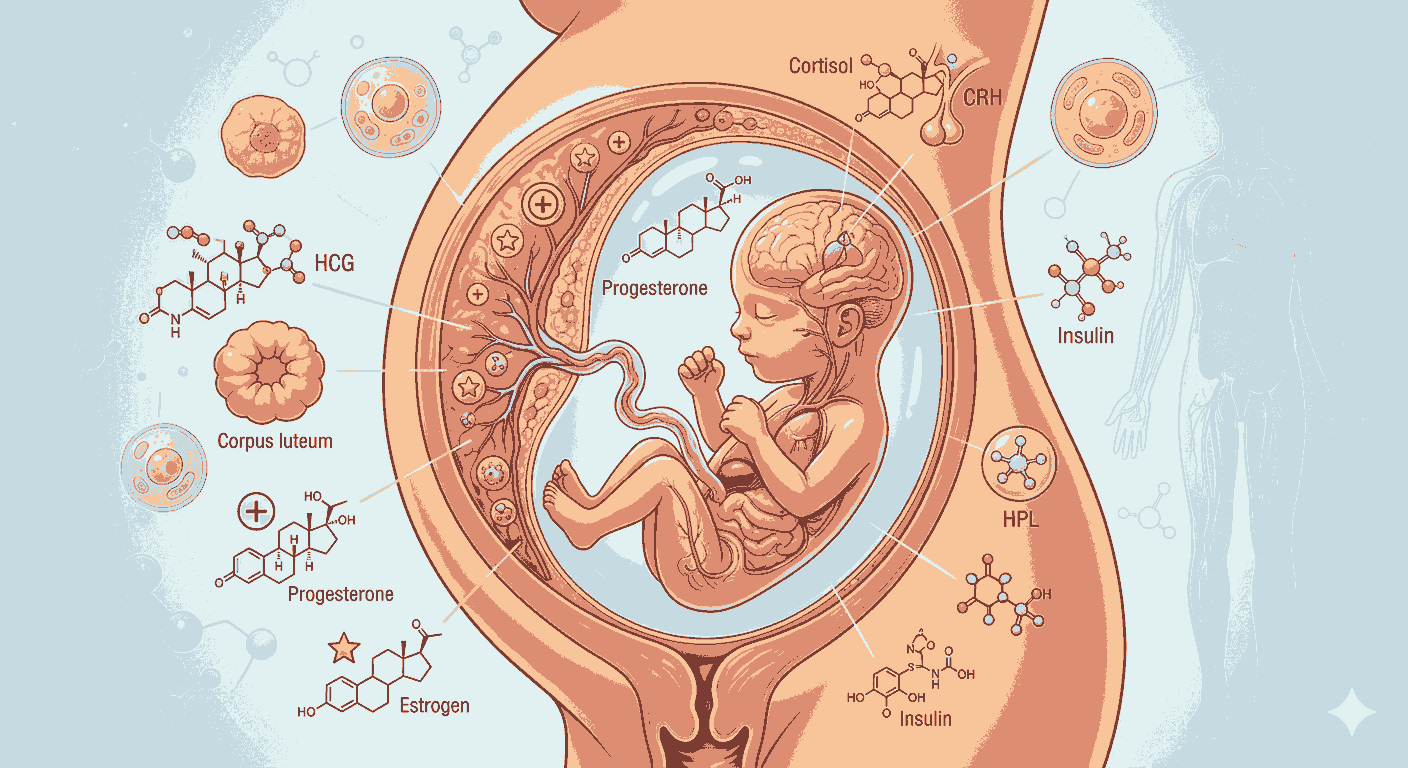
The placenta plays a central role in foetal development, acting as both a nutritive and endocrine organ. In Foetal Development and Hormones MCQs Class 12 Biology, aspirants must clearly understand that the placenta secretes hormones such as human chorionic gonadotropin (hCG), progesterone, estrogen, and human placental lactogen (hPL). These hormones maintain pregnancy and regulate foetal growth. Questions in Foetal Development and Hormones MCQs Class 12 Biology frequently test the functions and sources of these hormones.
Hormonal control is vital during pregnancy, especially in the early stages. In Foetal Development and Hormones MCQs Class 12 Biology, aspirants should remember that hCG maintains the corpus luteum, which continues to secrete progesterone during the first trimester. Progesterone is responsible for maintaining the uterine lining and preventing uterine contractions. This concept is often tested in Foetal Development and Hormones MCQs Class 12 Biology, making it essential to understand hormone interactions clearly.
As pregnancy progresses, the placenta takes over hormone production. In Foetal Development and Hormones MCQs Class 12 Biology, aspirants should note that progesterone and estrogen levels rise steadily to support foetal development. Estrogen stimulates uterine growth, while progesterone maintains the endometrium. Additionally, hPL modifies maternal metabolism to ensure a constant supply of nutrients to the fetus, an important point in Foetal Development and Hormones MCQs Class 12 Biology.
Foetal development is marked by distinct stages and milestones. While studying Foetal Development and Hormones MCQs Class 12 Biology, aspirants must be aware that by the end of the first trimester, most major organs are formed. During the second trimester, foetal movements begin and hair appears. These developmental milestones are frequently asked in Foetal Development and Hormones MCQs Class 12 Biology, so keeping track of timelines is crucial.
Another important concept in Foetal Development and Hormones MCQs Class 12 Biology is the role of extraembryonic membranes such as amnion, chorion, allantois, and yolk sac. These structures provide protection, nourishment, and waste removal for the developing embryo. Aspirants should understand the specific functions of each membrane to accurately answer conceptual questions in Foetal Development and Hormones MCQs Class 12 Biology.
Parturition, or childbirth, is the final stage of foetal development. In Foetal Development and Hormones MCQs Class 12 Biology, aspirants must understand that signals from the fully developed foetus and placenta initiate the process. Oxytocin released from the maternal pituitary gland causes strong uterine contractions, leading to delivery. This hormone-driven mechanism is a key concept in Foetal Development and Hormones MCQs Class 12 Biology.
Lactation is another hormone-regulated process that follows childbirth. While learning Foetal Development and Hormones MCQs Class 12 Biology, aspirants should remember that prolactin stimulates milk production and oxytocin helps in milk ejection. The initial milk, called colostrum, is rich in antibodies, providing immunity to the newborn. These concepts are often included in Foetal Development and Hormones MCQs Class 12 Biology.
Understanding hormonal coordination during pregnancy helps aspirants build a strong foundation in reproductive biology. In Foetal Development and Hormones MCQs Class 12 Biology, emphasis is placed on how hormones interact to ensure successful pregnancy and foetal growth. A clear grasp of these interactions improves accuracy in solving both theoretical and application-based questions.
Aspirants should also focus on the integration of developmental stages with hormonal regulation. Revising diagrams, flowcharts, and timelines can significantly enhance understanding while preparing for Foetal Development and Hormones MCQs Class 12 Biology. Consistent practice and conceptual clarity are the keys to mastering this topic.
Foetal Development and Hormones MCQs Class 12 Biology:
1.
The formation of erythrocytes in foetus takes place in:
A. Liver and spleen
B. Red bone marrow
C. Blood plasma
D. Sarcoplasm
Answer: A
Explanation: In the foetus, erythrocyte formation primarily occurs in the liver and spleen before shifting to bone marrow after birth.
2.
The term blastocyst is applied to the blastula of which one of the following?
A. Kangaroo
B. Platypus
C. Monkey
D. Both (a) and (b)
Answer: C
Explanation: Blastocyst is a stage seen in placental mammals like monkeys. It is equivalent to blastula in other organisms.
3.
Women who consumed thalidomide during pregnancy gave birth to children with:
A. No spleen
B. Hare-lip
C. Extra fingers and toes
D. Underdeveloped limbs
Answer: D
Explanation: Thalidomide caused severe limb deformities (phocomelia) in babies.
4.
Gestation period of mouse is:
A. 30–36 days
B. 19–20 days
C. 35–40 days
D. 40–46 days
Answer: B
Explanation: Mice have a short gestation period of about 19–20 days.
5.
Cleavage is unique because:
A. Membranes do not separate
B. No spindle forms
C. No growth of cells
D. Nucleus does not participate
Answer: C
Explanation: Cleavage increases cell number without increasing overall size.
6.
Select the correct statement:
A. Cleavage follows gastrulation
B. Yolk has no role
C. Cleavage is repeated mitotic division of zygote
D. Gastrulation follows blastulation directly
Answer: C
Explanation: Cleavage is rapid mitotic division forming blastomeres.
7.
Endoskeleton and muscles develop from:
A. Ectoderm
B. Endoderm
C. Mesoderm
D. Yolk plug
Answer: C
Explanation: Mesoderm forms muscles, bones, and connective tissue.
8.
Major source of progesterone in first trimester:
A. Corpus callosum
B. Corpus albicans
C. Placenta
D. Corpus luteum
Answer: D
Explanation: Corpus luteum maintains pregnancy early via progesterone.
9.
Excretory embryonic membrane:
A. Amnion
B. Allantois
C. Yolk sac
D. Chorion
Answer: B
Explanation: Allantois stores waste in embryo.
10.
Correct match of germ layers:
A. Ectoderm – epidermis
B. Mesoderm – epidermis
C. Endoderm – epidermis
D. Allantois – chorion
Answer: A
Explanation: Ectoderm forms skin, nerves, and sense organs.
11.
Trophoblast differentiates into:
A. Allantois
B. Chorion
C. Amnion
D. Embryo
Answer: B
Explanation: Trophoblast forms chorion and placenta.
12.
Progesterone later produced by:
A. Placenta
B. Allantois
C. Chorion
D. Amnion
Answer: A
Explanation: Placenta takes over progesterone production.
13.
Chromosomal imbalance is frequent in:
A. Foetal stage
B. Embryonic stage
C. Adult
D. Childhood
Answer: B
Explanation: Early embryonic stages are highly sensitive.
14.
Nervous system develops from:
A. Ectoderm
B. Endoderm
C. Mesoderm
D. Ectomesoderm
Answer: A
Explanation: Ectoderm forms brain and spinal cord.
15.
First germ layer formed:
A. Ectoderm
B. Mesoderm
C. Endoderm
D. Both B & C
Answer: C
Explanation: Endoderm forms first internally.
16.
The gestation period of elephant is about:
A. 11 months
B. 15 months
C. 22 months
D. 32 months
Answer: C
Explanation: The gestation period of an elephant is approximately 22 months, which is the longest among land mammals. This extended period allows for proper development of the large and complex body systems of the fetus.
17.
What is true for cleavage?
A. Size of embryo increases
B. Size of cells decreases
C. Size of cells increases
D. Size of embryo decreases
Answer: B
Explanation: During cleavage, rapid mitotic divisions occur without growth. As a result, cell size decreases while the overall embryo size remains constant.
18.
Gastrulation means:
A. Conversion of blastula into morula
B. Formation of three germ layers
C. Phase in which organogenesis takes place
D. Formation of inner cell mass
Answer: B
Explanation: Gastrulation is the process by which the embryo forms three primary germ layers—ectoderm, mesoderm, and endoderm, which later differentiate into various tissues and organs.
19.
At the end of 12 weeks (first trimester), what is observed?
A. Movement of the fetus
B. Eyelids and eyelashes are formed
C. Most major organ systems are formed
D. Head is covered with fine hair
Answer: C
Explanation: By the end of the first trimester (12 weeks), most major organ systems are formed, although they are not yet fully functional.
20.
What are ectopic pregnancies referred to as?
A. Pregnancies terminated due to hormones
B. Pregnancies with genetic defects
C. Implantation outside the uterus
D. Defective embryo implantation
Answer: C
Explanation: Ectopic pregnancy occurs when the embryo implants outside the uterus, commonly in the fallopian tube, which can be life-threatening.
21.
Which hormones secreted by the placenta maintain pregnancy?
A. hCG, hPL, progesterone, prolactin
B. hCG, hPL, estrogens, relaxin, oxytocin
C. hCG, progesterone, estrogens, glucocorticoids
D. hCG, hPL, progesterone, estrogens
Answer: D
Explanation: The placenta secretes hCG, hPL, progesterone, and estrogens, which are essential for maintaining pregnancy and supporting fetal development.
22.
Extraembryonic membranes are derived from:
A. Trophoblast
B. Inner cell mass
C. Formative cells
D. Follicle cells
Answer: A
Explanation: The trophoblast gives rise to extraembryonic membranes like chorion, which contribute to placenta formation.
23.
Which statement is incorrect?
A. Spermiogenesis forms spermatozoa
B. Fertilization is a physico-chemical event
C. Cleavage forms blastomeres
D. Cleavage increases mass of embryo
Answer: D
Explanation: Cleavage does not increase the mass of the embryo. It only increases the number of cells by dividing the existing cytoplasm.
24.
Type of placenta in humans is:
A. Haemoendothelial
B. Haemochorial
C. Hemochorionic
D. Hemochorial
Answer: B
Explanation: Humans have a haemochorial placenta, where maternal blood comes in direct contact with the fetal chorion.
25.
Ectoderm forms:
A. Sweat glands
B. Nervous system
C. Lens of the eye
D. All of these
Answer: D
Explanation: The ectoderm forms skin structures, nervous system, and sensory organs like the lens of the eye.
26.
Hormone responsible for parturition:
A. Relaxin
B. Estrogen
C. Oxytocin
D. Progesterone
Answer: C
Explanation: Oxytocin, released from the maternal pituitary, stimulates uterine contractions during childbirth.
27.
Foetal ejection reflex is induced by:
A. Differentiation of mammary glands
B. Pressure of amniotic fluid
C. Oxytocin release
D. Fully developed foetus and placenta
Answer: D
Explanation: Signals from the fully developed foetus and placenta initiate the foetal ejection reflex, leading to oxytocin release.
28.
MTP Act came into force in India in:
A. 1973
B. 1972
C. 1971
D. 1970
Answer: B
Explanation: The Medical Termination of Pregnancy (MTP) Act was implemented in India in 1972.
29.
Several mammary ducts join to form:
A. Lactiferous duct
B. Mammary lobe
C. Mammary ampulla
D. Mammary tubules
Answer: C
Explanation: Mammary ducts join to form a wider structure called the mammary ampulla, which stores milk before release.
30.
Antibody present in colostrum is:
A. IgG
B. IgE
C. IgA
D. IgD
Answer: C
Explanation: Colostrum is rich in IgA antibodies, which provide passive immunity to the newborn.
Conclusion on Foetal Development and Hormones MCQs Class 12 Biology:
In conclusion, Foetal Development and Hormones MCQs Class 12 Biology is a highly important and scoring topic that requires a clear understanding of both developmental stages and hormonal control. Aspirants who focus on conceptual clarity, rather than memorization, can easily tackle even complex questions from this section. By linking processes such as implantation, placental function, and hormonal regulation, aspirants can develop a strong and logical understanding of human reproduction.
Furthermore, regular revision and practice of Foetal Development and Hormones MCQs Class 12 Biology will help aspirants improve speed, accuracy, and confidence. With consistent effort and proper understanding, this topic can become one of the easiest sections to score high marks in exams.