
- Keneitsino Lydia
- April 1, 2026
Master Competitive Exams: 30 Sulphur Containing Amino Acids Cysteine MCQs with Answers
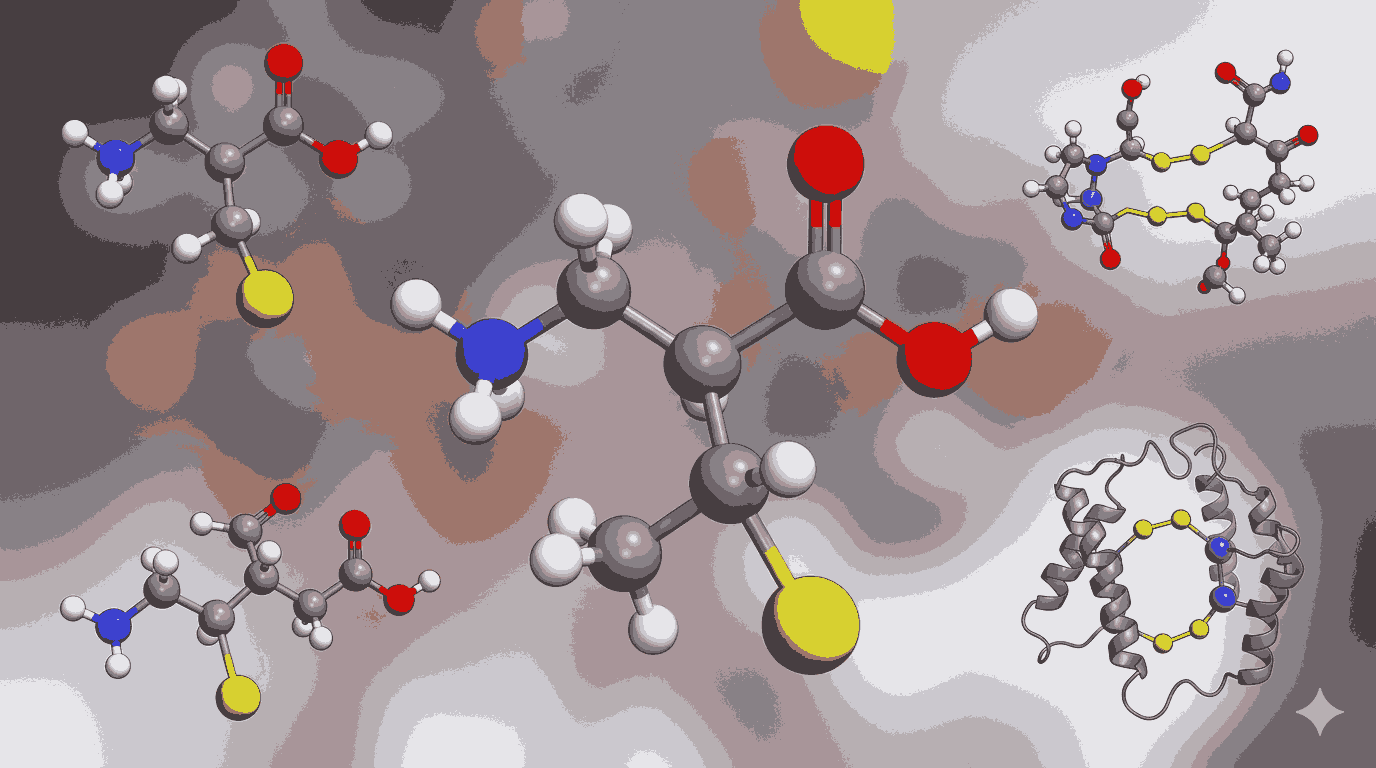
Understanding sulphur containing amino acids cysteine MCQs with answers is essential for aspirants preparing for competitive exams like NEET, JEE, and CUET. Among all amino acids, cysteine holds a unique position because of the presence of sulphur in its structure, which gives it distinctive chemical and biological properties. When aspirants practice sulphur containing amino acids cysteine MCQs with answers, they gain clarity on concepts like disulfide bond formation, protein structure stabilization, and biochemical reactivity.
Cysteine is classified as a semi-essential amino acid, meaning the human body can synthesize it under normal conditions. However, in certain situations such as illness or stress, dietary intake becomes important. The key feature that makes cysteine important in sulphur containing amino acids cysteine MCQs with answers is the presence of a thiol (-SH) group. This functional group allows cysteine to form disulfide bonds, which play a crucial role in maintaining the tertiary and quaternary structure of proteins.
When solving sulphur containing amino acids cysteine MCQs with answers, one commonly tested concept is the formation of disulfide bridges. Two cysteine molecules can oxidize to form cystine, creating a covalent bond that stabilizes protein structures such as keratin in hair and nails. This concept is frequently asked in exams, making sulphur containing amino acids cysteine MCQs with answers highly relevant for revision.
Another important aspect highlighted in sulphur containing amino acids cysteine MCQs with answers is the reactivity of the thiol group. The -SH group is highly reactive and participates in redox reactions. This property is crucial in biological systems, especially in enzyme activity and antioxidant defense. For example, cysteine is a key component of glutathione, an important antioxidant that protects cells from oxidative damage. Therefore, understanding these biochemical roles through sulphur containing amino acids cysteine MCQs with answers helps aspirants connect theory with real-life applications.
In addition to cysteine, methionine is another sulphur-containing amino acid, but cysteine is more reactive due to its thiol group. This distinction is often tested in sulphur containing amino acids cysteine MCQs with answers, where aspirants are required to differentiate between these amino acids based on their structure and function. Methionine contains a thioether group, which is less reactive compared to the thiol group in cysteine.
The importance of cysteine in protein folding is another concept frequently covered in sulphur containing amino acids cysteine MCQs with answers. Disulfide bonds formed by cysteine residues help proteins achieve their proper three-dimensional shape. Incorrect folding can lead to diseases, making this topic both academically and biologically significant. Practicing sulphur containing amino acids cysteine MCQs with answers ensures aspirants understand how structural stability is achieved in proteins.
Cysteine also plays a role in detoxification processes. Its thiol group can bind to harmful substances and assist in their removal from the body. This function is sometimes explored in advanced sulphur containing amino acids cysteine MCQs with answers, especially in higher-level exams. Additionally, cysteine is involved in the synthesis of coenzyme A and taurine, further emphasizing its biological importance.
From an exam perspective, sulphur containing amino acids cysteine MCQs with answers often include questions on identification of functional groups, chemical reactions, and biological roles. Aspirants may also encounter questions related to the optical activity of amino acids, where cysteine is notable due to its unique configuration compared to other amino acids.
To master this topic, it is important to repeatedly practice sulphur containing amino acids cysteine MCQs with answers and focus on conceptual understanding rather than memorization. Pay special attention to keywords like thiol group, disulfide bond, oxidation, and protein stabilization. These terms frequently appear in questions and can help in quickly identifying the correct answer.
Sulphur Containing Amino Acids Cysteine MCQs with Answers:
1. Identify the statement which is not correct from the following
(i) Carbohydrates are stored as glycogen in animals
(ii) In glycylalanine, peptide bond belongs to alanine
(iii) Base-sugar-phosphate unit is known as nucleoside
(iv) Obesity is due to hypothyroidism
a) i, iv
b) ii, iii, iv
c) i, iii, iv
d) ii, iii
Answer: d
2. Which one of the following compounds is chiral?
a) Glycine
b) Serine
c) Alanine
d) Proline
Answer: a
3. ….. is a potent vasodilator.
a) Histamine
b) Serotonin
c) Codeine
d) Cimetidine
Answer: a
4. The number of hydrogen bonds between guanine and cytosine is
a) 2
b) 4
c) 1
d) 3
Answer: d
5. Which one does not correctly match?
a) Silk – polyamide
b) Butter – fat
c) Lipase – enzyme
d) Oxytocin – enzyme
Answer: d
6. Amino acids exist as zwitter ions at
a) acidic pH
b) basic pH
c) neutral pH
d) isoelectric pH
Answer: d
7. Sulphur containing amino acid is
a) Alanine
b) Proline
c) Tyrosine
d) Cysteine
Answer: d
8. Ninhydrin test is used to identify
a) Carbohydrates
b) Amino acids
c) Ketoses
d) Oils and fats
Answer: b
9. Immunoglobulins belong to
a) Hormones
b) Viruses
c) Antibodies
d) Antigens
Answer: c
10. Which is not a steroid hormone?
a) Estrone
b) Cortisone
c) Oxytocin
d) Testosterone
Answer: c
11. Which α-amino acid is optically inactive?
a) Alanine
b) Glycine
c) Lysine
d) Leucine
Answer: b
12.Which of the following represents a zwitter ion of an amino acid?
a) R–CH(NH₂)–COOH
b) R–CH(NH₃⁺)–COOH
c) R–CH(NH₂)–COO⁻
d) R–CH(NH₃⁺)–COO⁻
Answer: d
13. Assertion–Reason
(A): Amino acids exist as zwitter ions
(R): Proline is a natural amino acid
a) Correct, correct explanation
b) Both correct but not explanation
c) A correct, R incorrect
d) Both incorrect
Answer: b
14. At pH = 1, amino acid will exist as
a) Cation
b) Anion
c) Zwitter ion
d) Neutral molecule
Answer: a
15.Assertion (A): Complementary base pairing occurs in DNA.
Reason (R): Adenine pairs with thymine and guanine pairs with cytosine through hydrogen bonding.
a) Both (A) and (R) are correct and (R) is the correct explanation of (A)
b) Both (A) and (R) are correct but (R) is not the correct explanation
c) (A) is correct but (R) is incorrect
d) (A) is incorrect but (R) is correct
Answer: a
16.Match the following amino acids with their characteristic tests:
| List-I (Amino Acid) | List-II (Test/Property) |
|---|---|
| A. Tyrosine | I. Gives violet colour with neutral FeCl₃ |
| B. Serine | II. Gives positive ceric ammonium nitrate test |
| C. Tryptophan | III. Essential amino acid |
| D. Proline | IV. Does not give carbylamine test |
a) A–I, B–II, C–III, D–IV
b) A–II, B–I, C–III, D–IV
c) A–I, B–III, C–II, D–IV
d) A–III, B–II, C–I, D–IV
Answer: a
17.Assertion (A): Tyrosine behaves as an acidic amino acid at physiological pH.
Reason (R): The phenolic –OH group in tyrosine can donate a proton.
a) Both (A) and (R) are correct and (R) explains (A)
b) Both (A) and (R) are correct but (R) does not explain (A)
c) (A) is correct but (R) is incorrect
d) Both (A) and (R) are incorrect
Answer: a
18.Assertion (A): At the isoelectric point, amino acids do not migrate in an electric field.
Reason (R): At this point, amino acids exist predominantly as zwitter ions with no net charge.
a) Both (A) and (R) are correct and (R) explains (A)
b) Both (A) and (R) are correct but (R) does not explain (A)
c) (A) is correct but (R) is incorrect
d) Both (A) and (R) are incorrect
Answer: a
19.Assertion (A): α-amino acids exist as internal salts in aqueous solution.
Reason (R): The proton from the –COOH group transfers to the –NH₂ group forming a dipolar ion.
a) Both (A) and (R) are correct and (R) explains (A)
b) Both (A) and (R) are correct but (R) does not explain (A)
c) (A) is correct but (R) is incorrect
d) Both (A) and (R) are incorrect
Answer: a
20. Which statement is correct?
a) All except lysine optically active
b) All amino acids optically active
c) All except glycine optically active
d) All except glutamic acid optically active
Answer: c
21. Complementary DNA strand of ATCGTATG
a) TAGCTTAC
b) TCACATAC
c) TAGCATAC
d) TACGATAC
Answer: c
22. Lysine is least soluble at pH
a) 3–4
b) 5–6
c) 6–7
d) 8–9
Answer: d
23. Which can exist as zwitter ion?
a) Amino acid
b) Fat
c) Carbohydrate
d) Alcohol
Answer: a
24. Nucleotides are linked by
a) Glycosidic
b) Peptide
c) Ether
d) Phosphodiester
Answer: d
25. Essential amino acid
a) Valine
b) Serine
c) Cysteine
d) Proline
Answer: a
26. Which is not optically active?
a) Glycine
b) Tyrosine
c) Lysine
d) Alanine
Answer: a
27. Not optically active amino acid
a) Leucine
b) Methionine
c) Glycine
d) Lysine
Answer: c
28. Non-essential amino acid
a) Arginine
b) Phenylalanine
c) Tryptophan
d) Tyrosine
Answer: d
29. Base found in RNA but not DNA
a) Uracil
b) Thymine
c) Guanine
d) Adenine
Answer: a
30. Number of nucleotides in a codon
a) Three
b) Four
c) One
d) Two
Answer: a
Sulphur Containing Amino Acids Cysteine MCQs with Answers
In conclusion, mastering sulphur containing amino acids cysteine MCQs with answers provides a strong foundation in biomolecules and protein chemistry. Cysteine’s unique properties make it a high-yield topic for exams, and consistent practice can significantly improve accuracy and confidence. By focusing on the structure, function, and reactions of cysteine, students can easily tackle even the most challenging sulphur containing amino acids cysteine MCQs with answers in competitive exams.