
- Keneitsino Lydia
- March 27, 2026
Boost Your Score With Pentose and Hexose Sugars MCQs with Answers – Proven Success Guide
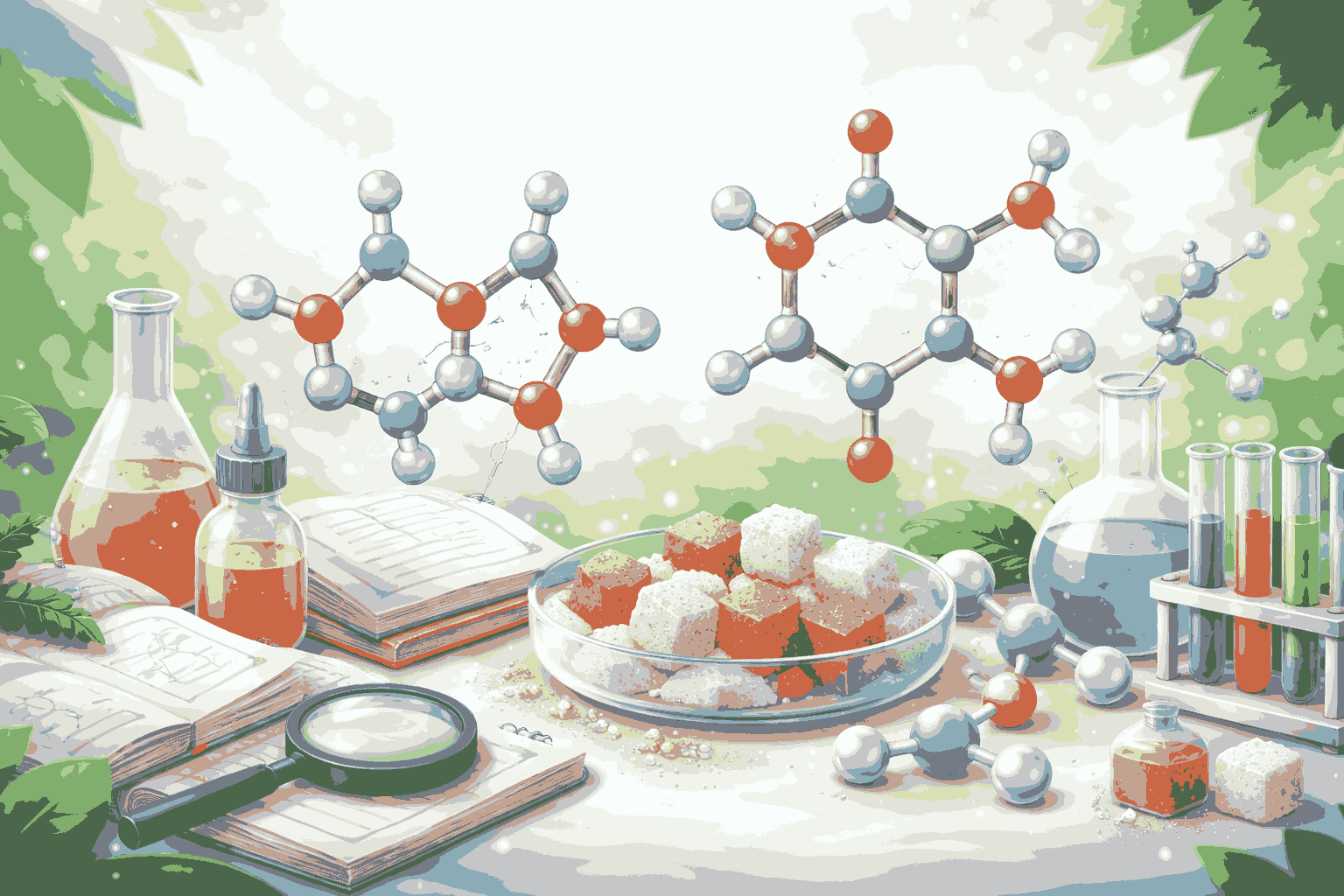
Understanding carbohydrate chemistry becomes much easier when aspirants regularly practice Pentose and hexose sugars mcqs with answers. These questions are especially important for competitive exams like NEET, JEE, and CUET, where conceptual clarity is tested rather than simple memorization. By solving Pentose and hexose sugars mcqs with answers, learners can develop a strong grasp of structural differences, reactions, and properties of sugars.
Pentose sugars are carbohydrates that contain five carbon atoms, while hexose sugars contain six carbon atoms. The distinction may seem simple, but it has deep implications in biochemical processes and reaction mechanisms. Practicing Pentose and hexose sugars mcqs with answers helps students identify these differences quickly and accurately during exams.
One of the most common pentose sugars is ribose, which plays a crucial role in RNA structure. On the other hand, glucose and fructose are classic examples of hexose sugars. Through Pentose and hexose sugars mcqs with answers, aspirants can better understand how these sugars differ in functional groups, such as aldehyde (aldoses) and ketone (ketoses).
Another important concept covered in Pentose and hexose sugars mcqs with answers is isomerism. Glucose and fructose, for instance, are functional isomers. Similarly, epimers and anomers are frequently tested topics. Regular exposure to Pentose and hexose sugars mcqs with answers ensures that aspirants can confidently tackle such questions in exams.
In addition to structure, reaction-based understanding is critical. Many Pentose and hexose sugars mcqs with answers focus on oxidation, reduction, and hydrolysis reactions. For example, glucose can be oxidized to gluconic acid, while fructose can undergo enolization under basic conditions. Practicing Pentose and hexose sugars mcqs with answers strengthens these reaction-based concepts.
Furthermore, Pentose and hexose sugars mcqs with answers often include questions related to biochemical importance. Ribose is essential for ATP and nucleic acids, while glucose serves as a primary energy source in living organisms. By solving Pentose and hexose sugars mcqs with answers, aspirants can connect theoretical knowledge with real-life biological applications.
Another area where Pentose and hexose sugars mcqs with answers are helpful is in understanding cyclic structures. Glucose forms a six-membered pyranose ring, whereas some sugars form five-membered furanose rings. Practicing Pentose and hexose sugars mcqs with answers allows aspirants to recognize these structures quickly.
The concept of mutarotation is also frequently tested. It refers to the change in optical rotation due to the interconversion of α and β forms of sugars. Many Pentose and hexose sugars mcqs with answers include such questions to test deeper conceptual understanding.
In competitive exams, time management is crucial. Solving Pentose and hexose sugars mcqs with answers regularly improves speed and accuracy. Aspirants become familiar with common patterns and question types, which helps them attempt questions more efficiently.
Moreover, Pentose and hexose sugars mcqs with answers help identify weak areas. By analyzing mistakes, aspirants can focus on specific topics like stereochemistry, glycosidic linkages, or reaction mechanisms. This targeted preparation is essential for achieving high scores.
Another advantage of practicing Pentose and hexose sugars mcqs with answers is that it enhances retention. Repeated exposure to similar concepts reinforces learning and ensures that aspirants remember key details during exams.
Teachers and toppers often recommend solving Pentose and hexose sugars mcqs with answers as a revision strategy. Instead of revisiting entire chapters, aspirants can quickly revise important concepts through these questions.
Additionally, Pentose and hexose sugars mcqs with answers provide a practical approach to learning. They bridge the gap between theory and application, making the subject more engaging and easier to understand.
Aspirants preparing for multiple exams benefit greatly from Pentose and hexose sugars mcqs with answers because the core concepts remain the same across different syllabi. This makes preparation more efficient and streamlined.
Consistency is the key to mastering organic chemistry. By solving Pentose and hexose sugars mcqs with answers daily, aspirants can gradually build confidence and reduce exam anxiety.
Pentose and Hexose Sugars MCQs with Answers:
MCQ 1
Which one of the following carbohydrates belongs to monosaccharide family?
a) Sucrose
b) Maltose
c) Fructose
d) Starch
Answer: c
MCQ 2
Cellulose is a straight chain polysaccharide composed of only
a) D-glucose units joined by α-glycosidic linkage
b) D-glucose units joined by β-glycosidic linkage
c) D-galactose units joined by α-glycosidic linkage
d) D-galactose units joined by β-glycosidic linkage
Answer: b
MCQ 3
Which one of the following does not reduce Benedict’s solution?
a) Glucose
b) Sucrose
c) Aldehyde
d) Fructose
Answer: b
MCQ 4
Cow milk is an example of natural emulsion stabilized by
a) fat
b) water
c) casein
d) Mg²⁺ ions
Answer: c
MCQ 5
The main difference between fat and oil is that
a) oils possess low molecular weights
b) oils are the glycerides of fatty acids
c) oils have low melting point
d) All of these
Answer: d
MCQ 6
Table sugar is
a) sucrose
b) glucose
c) fructose
d) maltose
Answer: a
MCQ 7
A mixture of amylose and amylopectin is called
a) lactose
b) starch
c) cellulose
d) sucrose
Answer: b
MCQ 8
Glucose reacts with excess of phenyl hydrazine and forms
a) glucosazone
b) glucose phenyl hydrazine
c) glucose-oxime
d) sorbitol
Answer: a
MCQ 9
Iodine is tested by the following reagent
a) starch
b) urea
c) glucose
d) glycerol
Answer: a
MCQ 10
Glucose is a/an:
a) polyhydroxy ketone
b) alcohol
c) aldehyde of carbonyl
d) pentahydroxy
Answer: d
MCQ 11
Ribose is an example of
a) Ketose
b) disaccharide
c) pentose
d) polysaccharide
Answer: c
MCQ 12
D-glucose units in cellulose are joined by
a) α-1,4 glycosidic bond
b) β-1,6 glycosidic bond
c) β-1,4 glycosidic bond
d) Peptide bond
Answer: c
MCQ 13
The two forms of D-glucopyranose obtained from the solution of D-glucose are called
a) enantiomer
b) epimer
c) diastereomer
d) anomer
Answer: d
MCQ 14
Which of the following classes of compounds do glucose and fructose represent?
a) Aldoses and ketoses, respectively
b) Polyols
c) Monosaccharides
d) All of these
Answer: d
MCQ 15
Mutarotation is not exhibited by
a) glucose
b) maltose
c) fructose
d) sucrose
Answer: d
MCQ 16
The monosaccharides having anomeric carbon atom are
a) geometrical isomers
b) α- and β-optical isomers
c) having symmetrical carbon atoms
d) None of these
Answer: b
MCQ 17
In haemoglobin the metal ion present is
a) Fe³⁺
b) Zn²⁺
c) Co²⁺
d) Cu²⁺
Answer: a
MCQ 18
In aqueous solution glucose remains as
a) only in open chain form
b) only in pyranose form
c) only in furanose form
d) in all three forms in equilibrium
Answer: b
MCQ 19
Ribose and 2-deoxyribose can be differentiated by
a) Fehling’s reagent
b) Tollen’s reagent
c) Barfoed’s reagent
d) Osazone formation
Answer: d
MCQ 20
Pernicious anemia is caused due to deficiency of which vitamin?
a) B12
b) B1
c) B6
d) B2
Answer: a
MCQ 21
Which of the following vitamins cannot be stored in body?
a) A
b) C
c) E
d) K
Answer: b
MCQ 22
Choose the correct statement
a) Vitamin A & K are insoluble in water and can be stored in adipose tissue
b) Vitamin A & K are soluble in water and can be stored in adipose tissue
c) Vitamin A & K are soluble in water but cannot be stored
d) Vitamin A & K are insoluble in water but cannot be stored
Answer: a
MCQ 23
Thiamine is
a) Nitrogenous base
b) Amino acid
c) Hormone
d) Vitamin
Answer: d
MCQ 24
An example of a lipid is
a) Lard
b) Keratin
c) Glutathione
d) Oxytocin
Answer: a
MCQ 25
Which of the following is not a fat soluble vitamin?
a) Vitamin-B-complex
b) Vitamin-D
c) Vitamin-E
d) Vitamin-A
Answer: a
MCQ 26
Match the following (Vitamins & sources):
A – Vitamin D
B – Vitamin E
C – Vitamin A
D – Vitamin K
Correct matching:
A → III (Egg yolk)
B → IV (Sunflower oil)
C → I (Fish liver oil)
D → II (Green leafy vegetables)
Answer: a
MCQ 27
Match the following vitamins with their sources and corresponding deficiency diseases:
List-I (Vitamins)
A) Vitamin B₁
B) Vitamin B₂
C) Vitamin B₆
D) Vitamin B₁₂
List-II (Sources)
I) Egg whites
II) Fish
III) Green vegetables
IV) Grams
List-III (Diseases)
P) Convulsions
Q) Pernicious anemia
R) Cheilosis
S) Beri-Beri
Options:
a) A–III–S, B–I–R, C–IV–P, D–II–Q
b) A–III–S, B–I–R, C–IV–Q, D–II–P
c) A–III–R, B–I–S, C–IV–Q, D–II–P
d) A–III–R, B–I–Q, C–IV–S, D–II–P
Answer: a
MCQ 28
Which of the following is not correct?
a) Chlorophyll synthesizes carbohydrates
b) Oxyhaemoglobin forms by oxygen addition
c) Aspirin is acetyl salicylic acid
d) Vitamin B₁₂ contains Mg²⁺
Answer: d
MCQ 29
Vitamin A is called
a) Ascorbic acid
b) Retinol
c) Calciferol
d) Tocopherol
Answer: b
MCQ 30
Vitamin B₁ is
a) Riboflavin
b) Cobalamin
c) Thiamine
d) Pyridoxine
Answer: c
Pentose and Hexose Sugars MCQs with Answers
In conclusion, Pentose and hexose sugars mcqs with answers are an essential tool for mastering carbohydrate chemistry. They help in understanding concepts, improving problem-solving skills, and boosting exam performance. Regular practice of Pentose and hexose sugars mcqs with answers ensures that aspirants are well-prepared to tackle even the most challenging questions with ease.