
- Keneitsino Lydia
- March 31, 2026
Top-Rated Nucleic Acids Base Pairing and Sequence MCQs with Answers – 30 MCQs for NEET, JEE & CUET Mastery
Understanding nucleic acids is one of the most important aspects of biomolecules in chemistry and biology. Among all the concepts, base pairing and sequence analysis play a crucial role in determining genetic information. This is where Nucleic Acids Base Pairing and Sequence MCQs with Answers become highly valuable for aspirants preparing for competitive exams. These resources help in building a strong conceptual foundation while improving problem-solving skills.
The structure of nucleic acids revolves around the arrangement of nucleotides, which consist of a sugar, a phosphate group, and a nitrogenous base. To master this topic, students often rely on Nucleic Acids Base Pairing and Sequence MCQs with Answers as they provide repeated exposure to key concepts such as hydrogen bonding and complementary strands. Practicing these questions regularly ensures better retention and clarity.
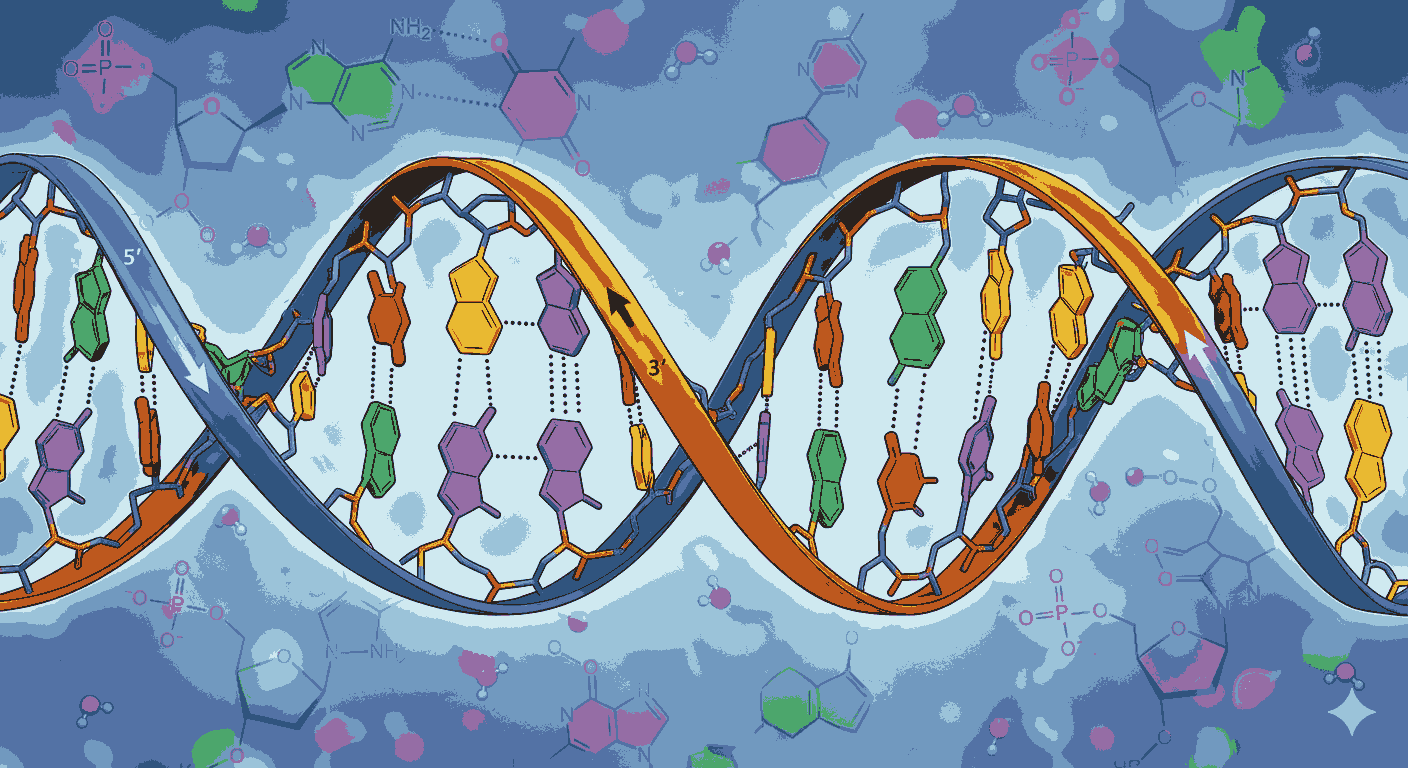
Base pairing is governed by specific rules: adenine pairs with thymine (or uracil in RNA), and guanine pairs with cytosine. These pairings are stabilized by hydrogen bonds, which are fundamental to the stability of DNA. By solving Nucleic Acids Base Pairing and Sequence MCQs with Answers, aspirants can easily memorize these pairing rules and apply them accurately in exams.
Another important concept is the antiparallel nature of DNA strands. One strand runs in the 5′ to 3′ direction, while the other runs in the 3′ to 5′ direction. Understanding this orientation is essential for replication and transcription processes. Using Nucleic Acids Base Pairing and Sequence MCQs with Answers helps aspirants visualize and reinforce these directional properties effectively.
Sequence-based questions are commonly asked in exams, where aspirants are required to determine complementary strands or identify mutations. Practicing Nucleic Acids Base Pairing and Sequence MCQs with Answers allows learners to develop speed and accuracy in solving such problems. This is especially helpful in time-bound exams like NEET and CUET.
In addition to DNA, RNA also plays a vital role in genetic processes. RNA differs from DNA in having ribose sugar and uracil instead of thymine. Solving Nucleic Acids Base Pairing and Sequence MCQs with Answers helps aspirants clearly distinguish between DNA and RNA structures and avoid confusion during exams.
Another key area is the concept of Chargaff’s rules, which state that the amount of adenine equals thymine and guanine equals cytosine in DNA. This concept is frequently tested in MCQs. By practicing Nucleic Acids Base Pairing and Sequence MCQs with Answers, aspirants can easily apply these rules to solve numerical and logical questions.
Mutation and sequence variation are also important topics. A slight change in the nucleotide sequence can lead to significant biological effects. Through Nucleic Acids Base Pairing and Sequence MCQs with Answers, aspirants can understand how these variations occur and how they impact protein synthesis.
The central dogma of molecular biology, which explains the flow of genetic information from DNA to RNA to proteins, is another critical concept. Practicing Nucleic Acids Base Pairing and Sequence MCQs with Answers helps reinforce this process and its associated steps like transcription and translation.
Revision becomes more effective when students use structured materials like Nucleic Acids Base Pairing and Sequence MCQs with Answers. These MCQs cover a wide range of concepts, ensuring comprehensive preparation. They also help in identifying weak areas and improving overall performance.
Time management is crucial in competitive exams. Regular practice with Nucleic Acids Base Pairing and Sequence MCQs with Answers enables aspirants to solve questions quickly and efficiently. This not only boosts confidence but also reduces exam stress.
Teachers and educators often recommend Nucleic Acids Base Pairing and Sequence MCQs with Answers as an essential study tool. These MCQs provide a systematic approach to learning and help in mastering complex topics with ease.
Another benefit of using Nucleic Acids Base Pairing and Sequence MCQs with Answers is that it enhances analytical thinking.Aspirants learn to interpret sequences, identify patterns, and apply concepts logically.
For aspirants aiming to score high marks, consistent practice is key. Solving Nucleic Acids Base Pairing and Sequence MCQs with Answers daily can significantly improve accuracy and conceptual clarity.
Moreover, these MCQs serve as an excellent revision tool before exams. Reviewing Nucleic Acids Base Pairing and Sequence MCQs with Answers ensures that all important concepts are fresh in the mind.
Nucleic Acids Base Pairing and Sequence MCQs with Answers:
1. Which one of the following is correct about H-bonding in nucleotide?
a) A-T, G-C
b) A-G, T-C
c) G-T, A-C
d) A-A, T-T
Answer: a
2. The site of action of insulin is:
a) mitochondria
b) nucleus
c) plasma membrane
d) DNA
Answer: c
3. One of the DNA-strand of a double helix is sequence AGGCAT, the complementary strand will be
a) CTTACG
b) TGCCTA
c) ACCGAT
d) TCCGTA
Answer: d
4. Which one of the following is an amine hormone?
a) Thyroxine
b) Oxypurin
c) Insulin
d) Progesterone
Answer: a
5. The blue colour of snail is due to presence of
a) albumin
b) haemocyanin
c) globulins
d) fibrinogen
Answer: b
6. Which of the following is not present in nucleic acids?
a) Uracil
b) 2-aminopyridine
c) Thymine
d) Adenine
Answer: b
7. RNA does not contain
a) thymine
b) adenine
c) guanine
d) uracil
Answer: a
8. Number of peptide bonds in dipeptide is
a) 2
b) 1
c) 3
d) 4
Answer: b
9. DNA and RNA are chiral molecules due to the presence of
a) chiral base
b) phosphate-ester unit
c) D-sugar component
d) L-sugar component
Answer: c
10. Giving “T” symbol for true statement and “F” symbol for false statement:
a) TFFT
b) FFFF
c) FTFT
d) FTTT
Answer: a
11. Metabolic activities of cells are controlled by:
a) Proteins
b) DNA
c) RNA
d) Fats
Answer: b
12. Nucleic acids are polymers of:
a) Nucleotides
b) nucleosides
c) nuclei of heavy metals
d) proteins
Answer: a
13. In DNA, the complementary bases are
a) Adenine–thymine, guanine–cytosine
b) Adenine–thymine, guanine–uracil
c) Adenine–guanine, thymine–cytosine
d) Uracil–adenine, cytosine–guanine
Answer: a
14. In nucleic acids, the nucleotides are joined together by
a) Phosphoester linkage
b) Phosphodiester linkage
c) Phosphodisulphide linkage
d) Sulphodiester linkage
Answer: b
15. Adenosine is an example of
a) nucleotide
b) purine base
c) pyrimidine base
d) nucleoside
Answer: d
16. The number of disulphide linkage present in insulin are
a) 1
b) 2
c) 3
d) 4
Answer: b
17. This process is known as
a) transcription
b) mutation
c) replication
d) translation
Answer: a
18. The sugar moiety present in RNA molecule is
a) β-D-2-deoxyribose
b) β-D-galactose
c) β-D-fructofuranose
d) β-D-ribose
Answer: d
19. Cytosine forms hydrogen bond with
a) adenine
b) guanine
c) purine
d) thymine
Answer: b
20. Complementary DNA chain for GATGC is
a) GGTGA
b) TGAAG
c) CTACG
d) TTTAG
Answer: c
21. Chirality of nucleic acids is due to
a) D-sugar component
b) L-sugar component
c) chiral bases
d) phosphate ester
Answer: a
22. ATP bond formation enzyme is
a) Isomerases
b) Lyases
c) Transferases
d) Ligases
Answer: d
23. Which is not present in DNA?
a) Thymine
b) Guanine
c) Adenine
d) Uracil
Answer: d
24. Carbon without –OH in deoxyribose
a) C₅
b) C₂
c) C₃
d) C₄
Answer: b
25. Sugar in DNA is
a) D-3-deoxyribose
b) D-ribose
c) D-2-deoxyribose
d) D-glucopyranose
Answer: c
26. Common names of fatty acids come from
a) parent hydrocarbon
b) reduction product
c) natural sources
d) IUPAC system
Answer: c
27. Central dogma states
a) Amino acids → Proteins → DNA
b) DNA → Carbohydrates → Proteins
c) DNA → RNA → Proteins
d) DNA → RNA → Carbohydrates
Answer: c
28. Correct statement about RNA and DNA sugars
a) RNA: arabinose, DNA: ribose
b) RNA: deoxyribose, DNA: arabinose
c) RNA: arabinose, DNA: deoxyribose
d) RNA: ribose, DNA: deoxyribose
Answer: d
29. Linkages between nitrogen bases in DNA
a) Phosphate linkage
b) Glycosidic linkage
c) Hydrogen bonding
d) Peptide linkage
Answer: c
30. DNA segment responsible for protein synthesis is
a) ribose
b) gene
c) nucleoside
d) nucleotide
Answer: b
Conclusion on Nucleic Acids Base Pairing and Sequence MCQs with Answers
In conclusion, mastering nucleic acids requires both understanding and practice. Nucleic Acids Base Pairing and Sequence MCQs with Answers provide the perfect combination of both. By consistently working through these questions, students can strengthen their knowledge, improve their problem-solving skills, and achieve better results in competitive examinations.