
- Keneitsino Lydia
- April 3, 2026
Ultimate Monomer and Macromolecule MCQs with Answers to Boost Your Exam Score Fast
Understanding the concept of polymers begins with mastering the basics of monomers and macromolecules. That is exactly why aspirants often search for Monomer and Macromolecule MCQs with Answers to strengthen their conceptual clarity and exam preparation. Whether you are preparing for board exams, NEET, or JEE, practicing Monomer and Macromolecule MCQs with Answers helps in building a strong foundation in biomolecules and polymer chemistry.
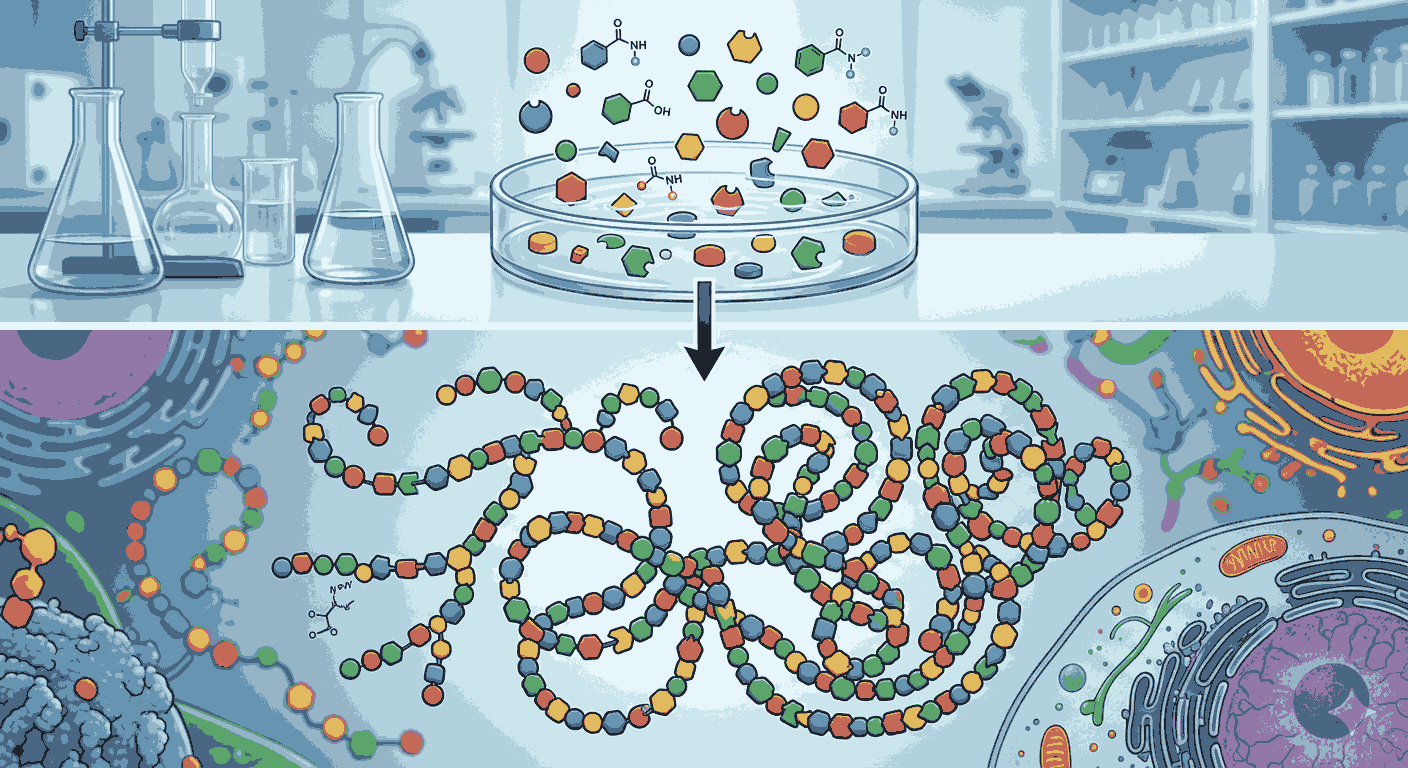
In simple terms, a monomer is a small molecule that can join with similar or different molecules to form a larger structure called a macromolecule. When aspirants solve Monomer and Macromolecule MCQs with Answers, they begin to understand how these small units combine through chemical reactions like addition and condensation polymerization. This understanding is crucial for answering conceptual and application-based questions in competitive exams.
One of the key benefits of practicing Monomer and Macromolecule MCQs with Answers is that it improves retention of important definitions and reactions. For example, recognizing that ethene acts as a monomer to form polyethylene, or that amino acids act as monomers to form proteins, becomes easier when aspirants regularly engage with Monomer and Macromolecule MCQs with Answers.
Moreover, Monomer and Macromolecule MCQs with Answers are extremely useful for revising important topics such as natural polymers, synthetic polymers, and biopolymers. Aspirants often encounter questions related to DNA, proteins, carbohydrates, and synthetic materials like nylon or bakelite. By solving Monomer and Macromolecule MCQs with Answers, they become familiar with these classifications and their properties.
Another important aspect covered through Monomer and Macromolecule MCQs with Answers is the type of polymerization reactions. Addition polymerization and condensation polymerization are frequently asked topics. When learners practice Monomer and Macromolecule MCQs with Answers, they can easily differentiate between these processes and identify examples such as PVC, nylon, and terylene.
In addition, Monomer and Macromolecule MCQs with Answers help aspirants understand the structural differences between linear, branched, and cross-linked polymers. These structural variations directly affect the physical properties of materials, which is a common area of questioning in exams. Regular practice of Monomer and Macromolecule MCQs with Answers ensures that such concepts are clearly understood.
Biological macromolecules are another critical area where Monomer and Macromolecule MCQs with Answers prove to be highly beneficial. Proteins, nucleic acids, and polysaccharides are all macromolecules formed from monomers like amino acids, nucleotides, and monosaccharides. Practicing Monomer and Macromolecule MCQs with Answers helps aspirants connect chemistry concepts with biological applications.
Furthermore, Monomer and Macromolecule MCQs with Answers play a significant role in improving problem-solving speed. Since most competitive exams are time-bound, being able to quickly identify the correct answer is essential. Regular exposure to Monomer and Macromolecule MCQs with Answers enhances both speed and accuracy.
Aspirants also benefit from the pattern recognition that comes with solving Monomer and Macromolecule MCQs with Answers. Over time, they begin to notice recurring question types and common traps, which helps them avoid mistakes in actual exams. This makes Monomer and Macromolecule MCQs with Answers an essential practice tool.
Another advantage of using Monomer and Macromolecule MCQs with Answers is that it supports active learning. Instead of passively reading theory, students engage with questions that require thinking and application. This makes learning more effective and long-lasting, especially when using Monomer and Macromolecule MCQs with Answers as a revision tool.
From an exam perspective, topics like polymer properties, classification, and real-life applications are frequently tested. By practicing Monomer and Macromolecule MCQs with Answers, aspirants can confidently tackle questions related to plastics, rubbers, fibers, and biological molecules.
Monomer and Macromolecule MCQs with Answers:
1. Which of the following polymer is used in the manufacture of wood laminates?
a) Melamine formaldehyde resin
b) Urea formaldehyde resin
c) cis-polyisoprene
d) Phenol and formaldehyde resin
Answer: a
2. Which of the following is not a polymer?
a) Teflon
b) Petroleum
c) Cellulose
d) Natural rubber
Answer: b
3. Which of the following is a biodegradable polymer of polyamide class?
a) Dextron
b) Nylon-2–nylon-6
c) Nylon-6,6
d) PHBV
Answer: b
4. Ebonite is:
a) Synthetic rubber
b) Neoprene
c) Highly vulcanized rubber
d) Natural rubber
Answer: c
5. Nylon-6,6 is formed by:
a) Chain growth polymerization
b) Cross-linked polymerization
c) Addition polymerization
d) Step-growth polymerization
Answer: d
6. Which type of polymer is Bakelite?
a) Addition polymer
b) Homopolymer
c) Condensation polymer
d) Biopolymer
Answer: c
7. Match List-I with List-II
A → Caprolactam
B → 2-chloro-1,3-butadiene
C → Isoprene
D → Acrylonitrile
a) III, IV, I, II
b) III, IV, II, I
c) III, I, II, IV
d) II, I, III, IV
Answer: a
8. Structure of neoprene corresponds to:
a) Polymer of ethylene
b) Polymer of chloroprene
c) Polymer of styrene
d) Polymer of vinyl chloride
Answer: b
9. Which one is not a condensation polymer?
a) Melamine
b) Glyptal
c) Dacron
d) Neoprene
Answer: d
10. Teflon, styrene and neoprene are:
a) Copolymers
b) Condensation polymers
c) Homopolymers
d) Monomers
Answer: c
11. Methyl-α-D-glucoside and methyl-β-D-glucoside are:
a) Epimers
b) Anomers
c) Enantiomers
d) Conformational diastereomers
Answer: b
12. Example of thermosetting polymer:
a) Bakelite
b) PVC
c) Nylon 6,6
d) Buna-S
Answer: a
13. Nylon-6 is obtained by:
a) Terephthalic acid + ethylene glycol
b) Adipic acid + styrene
c) Caprolactam with water
d) Phenol + formaldehyde
Answer: c
14. In Bakelite, rings are joined by:
a) –CH₂–
b) –O–
c) >C=C<
d) None
Answer: a
15. Thermoplastics are:
a) Linear polymers
b) Soften on heating
c) Can be moulded
d) All of these
Answer: d
16. Bakelite is formed by reaction of:
a) Phenol + formaldehyde
b) Urea + formaldehyde
c) Ethylene glycol
d) Tetramethylene glycol
Answer: a
17. Which is a natural polymer?
a) PVC
b) Teflon
c) Nylon 66
d) Cellulose
Answer: d
18. Monomer of given polymer (image-based):
a) 2-methylpropene
b) Styrene
c) Propylene
d) Ethene
Answer: a
19. Condensation polymer example:
a) Dacron
b) Neoprene
c) Teflon
d) Acrylonitrile
Answer: a
20. Polymer formation begins by:
a) Condensation reaction
b) Coordination reaction
c) Ion formation
d) Hydrolysis
Answer: a
21. Which is not a biopolymer?
a) Polysaccharide
b) Protein
c) Lipid
d) Nucleic acid
Answer: c
22. Bakelite is:
a) Addition polymer
b) Homopolymer
c) Condensation polymer
d) Biopolymer
Answer: c
23. Telephone covers are made of:
a) Acrylonitrile
b) Styrene
c) Fluoromethane
d) Phenol + formaldehyde
Answer: d
24. Nylon-6 is made from:
a) 1,3-butadiene
b) Chloroprene
c) Adipic acid
d) Caprolactam
Answer: d
25. Bakelite is polymer of phenol and:
a) HCOOH
b) HCOOCH₃
c) HCHO
d) CH₃COOH
Answer: c
26. Nuclear transformation question:
a) nXm−4_nX^{m-4}
b) n−1Xm−1_{n-1}X^{m-1}
c) nZm−4_nZ^{m-4}
d) None
Answer: a
27. –[NH(CH₂)₆NHCO(CH₂)₄CO]ₙ– is:
a) Addition polymer
b) Thermosetting polymer
c) Homopolymer
d) Copolymer
Answer: d
28. Nylon is:
a) Polyamide
b) Polyester
c) Polyethylene
d) Polypropylene
Answer: a
29. Starch is polymer of:
a) Glucose
b) Fructose
c) Both
d) None
Answer: a
30. Polyethene is addition polymer of:
a) Methane
b) Ethane
c) Ethylene
d) Acetylene
Answer: c
Conclusion on Monomer and Macromolecule MCQs with Answers
Finally, the importance of Monomer and Macromolecule MCQs with Answers cannot be overstated. They serve as a complete package for learning, revision, and self-assessment. Whether you are a beginner or an advanced learner, consistently practicing Monomer and Macromolecule MCQs with Answers will significantly improve your understanding and exam performance.
In conclusion, if you aim to master polymer chemistry and biomolecules, incorporating Monomer and Macromolecule MCQs with Answers into your daily study routine is one of the smartest strategies.