
- Keneitsino Lydia
- March 18, 2026
Fog Aerosol Emulsion MCQs Class 12 Chemistry with Answers: Ultimate Practice Guide to Boost Your Marks
Colloidal chemistry is one of the most important and scoring topics in Class 12 Chemistry, especially for board exams and competitive exams like NEET and JEE. Among the key subtopics, fog, aerosol, and emulsion play a crucial role in understanding real-life applications of colloids. When students prepare using Fog aerosol emulsion MCQs class 12 chemistry with answers, they are able to connect theoretical concepts with practical examples more effectively.
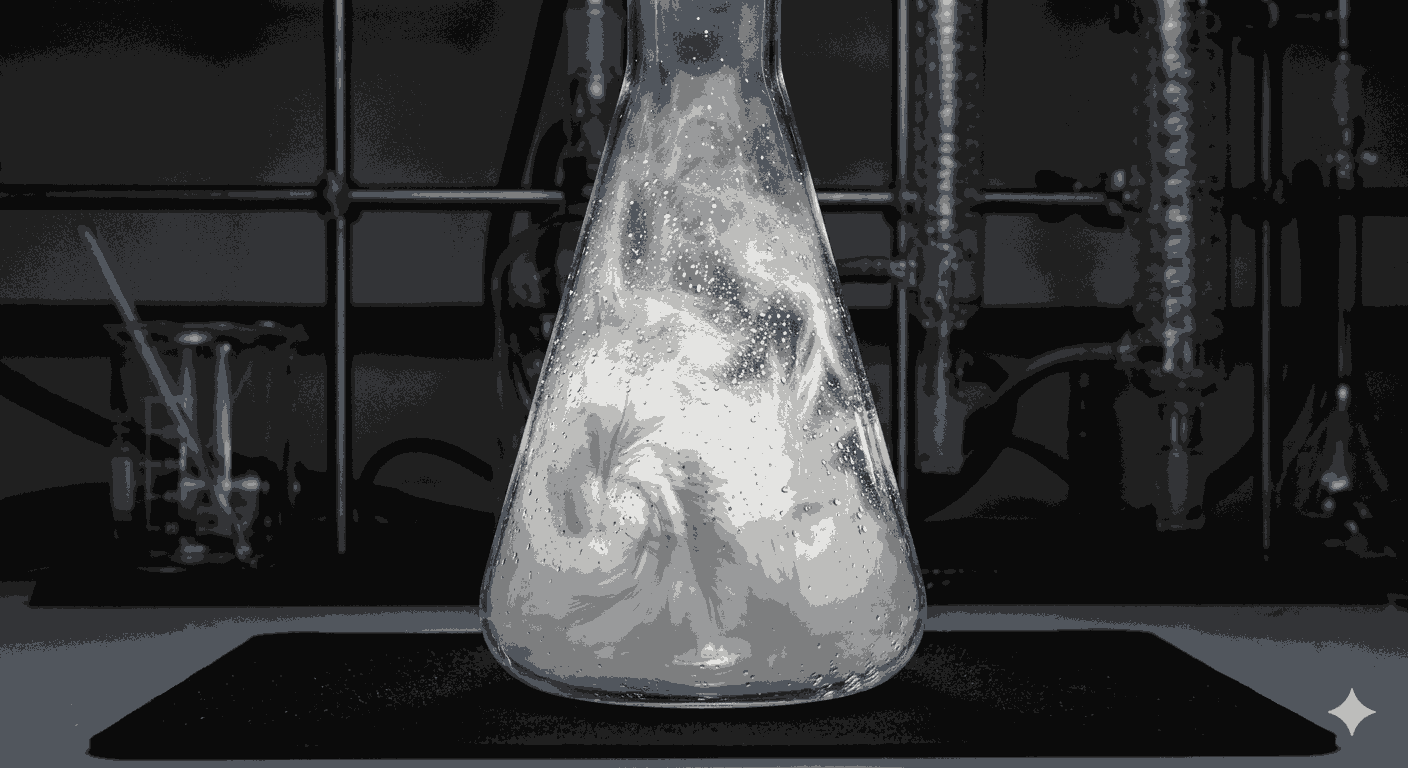
To begin with, fog is a classic example of a colloidal system where liquid droplets are dispersed in a gas. In simple terms, fog consists of tiny water droplets suspended in air. This makes it a type of aerosol. Understanding this classification becomes easier when practicing Fog aerosol emulsion MCQs class 12 chemistry with answers, as questions often focus on identifying dispersed phase and dispersion medium. Fog reduces visibility and is commonly seen in cold or humid conditions, making it a relatable example for students.
Aerosols, in general, are colloidal systems where either solid or liquid particles are dispersed in a gas. Smoke (solid in gas) and fog (liquid in gas) are the most common examples. By studying Fog aerosol emulsion MCQs class 12 chemistry with answers, aspirants can clearly differentiate between various types of aerosols and understand how particle size and medium influence their behavior. These concepts are frequently tested in exams, making them highly important.
Another significant colloidal system is an emulsion. Emulsions are formed when two immiscible liquids, such as oil and water, are mixed together, with one liquid dispersed in the other. Common examples include milk, butter, and creams. The stability of emulsions is often maintained using emulsifying agents. Through Fog aerosol emulsion MCQs class 12 chemistry with answers, students can grasp how emulsifiers work and why some emulsions are more stable than others.
There are two main types of emulsions: oil-in-water (O/W) and water-in-oil (W/O). Milk is an example of an oil-in-water emulsion, while butter is a water-in-oil emulsion. Practicing Fog aerosol emulsion MCQs class 12 chemistry with answers helps aspirants easily identify these types and understand their properties. These distinctions are commonly asked in both conceptual and application-based questions.
An important aspect of colloids is their stability. Aerosols and emulsions remain stable due to the presence of charges on particles or the use of stabilizing agents. However, they can be destabilized through coagulation. Understanding this balance between stability and instability becomes clearer when students engage with Fog aerosol emulsion MCQs class 12 chemistry with answers. These questions often test the role of electrolytes, temperature, and mechanical action.
In daily life, colloidal systems are everywhere. Fog affects transportation, aerosols are used in sprays and pollution studies, and emulsions are widely used in food and cosmetic industries. By solving Fog aerosol emulsion MCQs class 12 chemistry with answers, aspirants not only prepare for exams but also develop a deeper appreciation of how chemistry applies to real-world situations.
Another key concept related to these systems is the Tyndall effect, which explains the scattering of light by colloidal particles. Fog, for instance, shows the Tyndall effect clearly, which is why light beams are visible in misty conditions. When aspirants practice Fog aerosol emulsion MCQs class 12 chemistry with answers, they frequently encounter such phenomena-based questions, enhancing their conceptual clarity.
Moreover, Brownian motion plays a role in maintaining the stability of colloidal particles. Continuous random motion prevents particles from settling down. This concept is also reinforced through Fog aerosol emulsion MCQs class 12 chemistry with answers, where aspirants learn how microscopic movements impact macroscopic properties.
In exam preparation, consistency is key. Regular practice using Fog aerosol emulsion MCQs class 12 chemistry with answers ensures that aspirants are familiar with different question patterns. It also improves their speed and accuracy, which is essential during time-bound exams. Repeated exposure to similar questions helps in retaining concepts for a longer time.
Additionally, Fog aerosol emulsion MCQs class 12 chemistry with answers help in identifying weak areas. Aspirants can focus on topics where they make mistakes and improve gradually. This targeted preparation strategy is highly effective for achieving better scores.
For competitive exams, where conceptual clarity is more important than rote learning, Fog aerosol emulsion MCQs class 12 chemistry with answers serve as an excellent resource. They challenge aspirants to think critically and apply their knowledge in different scenarios.
Furthermore, Fog aerosol emulsion MCQs class 12 chemistry with answers provide a structured revision method before exams. Instead of going through lengthy notes, aspirants can quickly revise important concepts through practice questions.
Fog Aerosol Emulsion MCQs Class 12 Chemistry with Answers:
1. Fog is a colloidal solution of
a) solid in gas
b) liquid in gas
c) gas in liquid
d) gas in solid
Answer: b
2. Muddy water can be purified through coagulation using
a) common salt
b) alums
c) sand
d) lime
Answer: b
3. A colloidal system in which a liquid is dispersed in a liquid is called
a) precipitate
b) emulsion
c) gel
d) sol
Answer: b
4. Electrophoresis is the movement of colloidal particles under the effect of
a) light
b) gravity
c) magnetic field
d) electric field
Answer: d
5. The disperse phase, dispersion medium, and nature of colloidal solution of ‘gold sol’ respectively are
a) solid, solid, lyophobic
b) liquid, liquid, lyophobic
c) solid, liquid, lyophobic
d) solid, liquid, lyophilic
Answer: c
6. The dispersed phase and dispersion medium in soap lather are respectively
a) gas and liquid
b) liquid and gas
c) solid and gas
d) solid and liquid
Answer: a
7. Gold number is associated with
a) amount of gold
b) protective colloids
c) purple of cassius
d) electrophoresis
Answer: b
8. The stability of a lyophobic colloid is due to
a) adsorption of covalent molecules
b) size of particles
c) charge on particles
d) Tyndall effect
Answer: c
9. All colloidal dispersions have
a) low osmotic pressure
b) no osmotic pressure
c) high osmotic pressure
d) very high osmotic pressure
Answer: a
10. Which one of the following does not involve coagulation?
a) Clotting of blood using ferric chloride
b) Formation of delta region
c) Treatment of drinking water by potash alum
d) Peptization
Answer: d
11. The function of Fe(OH)₃ in the contact process is
a) to remove arsenic impurity
b) to detect colloidal impurity
c) to remove moisture
d) to remove dust particles
Answer: a
12. Zeta potential is
a) potential required for coagulation
b) potential to give speed of cm s⁻¹
c) potential difference between fixed and diffuse layer
d) potential energy of particles
Answer: c
13. Which one is an example of multimolecular colloid?
a) Aqueous starch sol
b) Aqueous enzyme sol
c) Alcoholic polystyrene sol
d) Sulphur sol in water
Answer: d
14. Tyndall effect is exhibited by
a) urea solution
b) NaCl solution
c) glucose solution
d) starch solution
Answer: d
15. Which condition is not satisfied by an ideal solution?
a) Δmix V = 0
b) Δmix S = 0
c) Obey Raoult’s law
d) Δmix H = 0
Answer: b
16. The process of converting fresh precipitate into colloid by electrolyte is called
a) dialysis
b) electrophoresis
c) peptization
d) coagulation
Answer: c
17. Fog is a colloidal solution of
a) gaseous particles in liquid
b) liquid dispersed in gas
c) gaseous particles in gas
d) solid dispersed in gas
Answer: b
18. Disperse phase and dispersion medium in butter are respectively
a) solid and liquid
b) liquid and solid
c) solid and solid
d) solid and gas
Answer: b
19. Butter is a colloidal solution of
a) solid-solid
b) liquid-solid
c) solid-liquid
d) gas-solid
Answer: b
20. An example of disperse phase in a gas is
a) milk
b) vegetable oil
c) mist
d) water
Answer: c
21. Which is not a property of colloidal solution?
a) Heterogeneity
b) Particle size > 1000 nm
c) Tyndall effect
d) Brownian movement
Answer: b

Conclusion on Fog Aerosol Emulsion MCQs Class 12 Chemistry with Answers
In conclusion, fog, aerosol, and emulsion are essential topics in colloidal chemistry that have both theoretical and practical significance. By consistently practicing Fog aerosol emulsion MCQs class 12 chemistry with answers, aspirants can strengthen their understanding, improve their problem-solving skills, and perform confidently in exams. Ultimately, Fog aerosol emulsion MCQs class 12 chemistry with answers act as a powerful tool for mastering this topic and achieving academic success.