
- Keneitsino Lydia
- April 2, 2026
Cytosine Guanine Thymine Uracil MCQs with Answers – Ultimate Power Guide to Boost Your Exam Score
Understanding Cytosine Guanine Thymine Uracil MCQs with Answers is essential for aspirants preparing for competitive exams like NEET, JEE, and CUET. These nitrogenous bases form the foundation of nucleic acids, and mastering their properties helps build a strong conceptual base in biomolecules. Practicing Cytosine Guanine Thymine Uracil MCQs with Answers allows aspirants to confidently tackle questions related to DNA, RNA, and genetic coding.
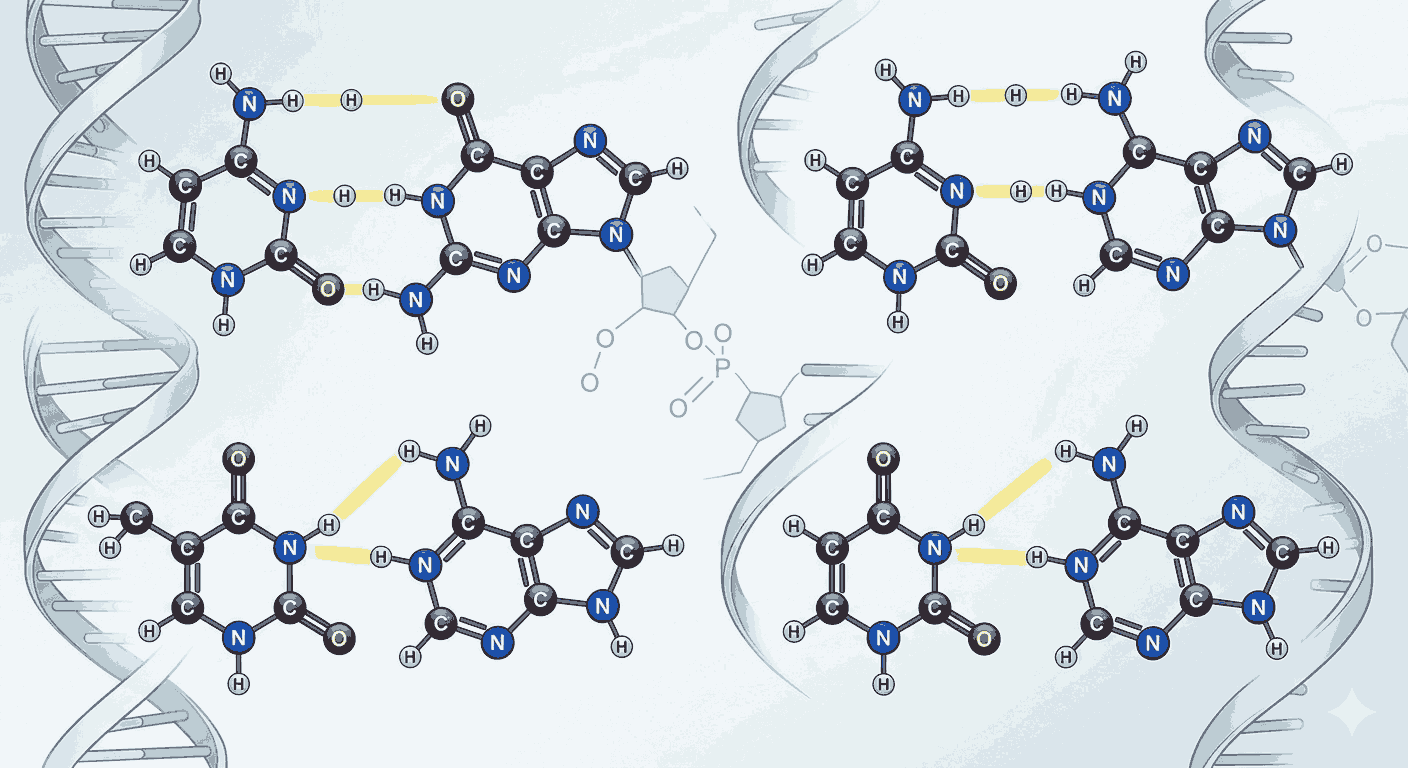
The four bases—cytosine, guanine, thymine, and uracil—play a crucial role in genetic information storage and transmission. In DNA, cytosine pairs with guanine through three hydrogen bonds, while adenine pairs with thymine through two hydrogen bonds. In RNA, thymine is replaced by uracil, which pairs with adenine. These pairing rules are frequently tested in Cytosine Guanine Thymine Uracil MCQs with Answers, making it important for aspirants to understand them thoroughly.
When solving Cytosine Guanine Thymine Uracil MCQs with Answers, aspirants often encounter questions about purines and pyrimidines. Cytosine, thymine, and uracil are pyrimidines, characterized by a single-ring structure, whereas guanine belongs to purines with a double-ring structure. Recognizing this classification is critical, and consistent practice with Cytosine Guanine Thymine Uracil MCQs with Answers helps reinforce this distinction.
Another key concept covered in Cytosine Guanine Thymine Uracil MCQs with Answers is base pairing stability. Guanine and cytosine form three hydrogen bonds, making GC pairs more stable than AT pairs, which have only two hydrogen bonds. This difference affects the melting temperature of DNA and is a common topic in exam questions. By practicing Cytosine Guanine Thymine Uracil MCQs with Answers, aspirants can easily understand and apply this concept.
In addition, Cytosine Guanine Thymine Uracil MCQs with Answers often test the structural differences between DNA and RNA. DNA contains deoxyribose sugar and thymine, while RNA contains ribose sugar and uracil. These subtle differences are crucial for distinguishing between the two nucleic acids. Regular revision through Cytosine Guanine Thymine Uracil MCQs with Answers ensures that aspirants remember these differences effectively.
The role of these bases in genetic coding is another important area emphasized in Cytosine Guanine Thymine Uracil MCQs with Answers. Sequences of these bases form codons, which determine the sequence of amino acids in proteins. This process, known as translation, is fundamental to molecular biology. Understanding this concept through Cytosine Guanine Thymine Uracil MCQs with Answers helps aspirants connect theoretical knowledge with biological processes.
Mutation and base substitution are also commonly discussed topics in Cytosine Guanine Thymine Uracil MCQs with Answers. A change in one base can alter the genetic code, leading to variations or diseases. For example, replacing cytosine with thymine can result in a mutation. Practicing Cytosine Guanine Thymine Uracil MCQs with Answers helps aspirants identify such changes and understand their consequences.
Furthermore, Cytosine Guanine Thymine Uracil MCQs with Answers frequently include questions on Chargaff’s rule, which states that the amount of adenine equals thymine and guanine equals cytosine in DNA. This rule is fundamental for solving numerical problems related to base composition. Consistent practice of Cytosine Guanine Thymine Uracil MCQs with Answers ensures accuracy in such calculations.
Another important concept is hydrogen bonding patterns, which are repeatedly tested in Cytosine Guanine Thymine Uracil MCQs with Answers. Aspirants must remember that GC pairs are stronger than AT pairs due to the additional hydrogen bond. This concept also explains why DNA regions rich in GC content are more stable.
Cytosine Guanine Thymine Uracil MCQs with Answers:
1. The transfer RNA anticodon for the messenger RNA codon G–C–A is
a) C–G–U
b) C–C–U
c) G–U–C
d) U–C–C
Answer: a
2. Glycine in alkaline solution exists as _____ and migrates to _____
a) Cation, cathode
b) Neutral, anode
c) Zwitter ion, cathode
d) Anion, anode
Answer: d
3. If adenine = 30%, percentage of cytosine is
a) 10%
b) 20%
c) 30%
d) 40%
Answer: b
4. Which contains thymine?
a) t-RNA
b) m-RNA
c) r-RNA
d) None of these
Answer: d
5. Which is involved in heme formation?
a) Lysine
b) Glycine
c) Tyrosine
d) None
Answer: b
6.Select the correct combination of True (T) and False (F) statements
(I) Pentose sugar + base forms a nucleoside
(II) Nucleoside + phosphate forms a nucleotide
(III) DNA contains bases A, G, C and T
(IV) RNA contains bases A, G, C and U
a) TTTT
b) TTFF
c) FTFT
d) TFTT
Answer: a
7. Nylon-2-Nylon-6 is made from
a) Phthalic acid + glycine
b) Phenol + formaldehyde
c) Amino caproic acid + glycine
d) Ethylene glycol + phthalic acid
Answer: c
8. Amino acid with secondary amino group
a) Proline
b) Glycine
c) Alanine
d) Lysine
Answer: a
9. Purine base
a) Uracil
b) Thymine
c) Cytosine
d) Guanine
Answer: d
10. Amino acid with pH > 7
a) Glutamic acid
b) Lysine
c) Glycine
d) Alanine
Answer: b
11. Neutral amino acid
a) Glycine
b) Aspartic acid
c) Lysine
d) Arginine
Answer: a
12. Base not present in DNA
a) Quinoline
b) Adenine
c) Cytosine
d) Thymine
Answer: a
13. Difference between RNA and DNA sugar at carbon
a) 1st
b) 2nd
c) 3rd
d) 4th
Answer: b
14. Pyrimidine bases in DNA
a) Cytosine & adenine
b) Cytosine & guanine
c) Cytosine & thymine
d) Cytosine & uracil
Answer: c
15. Base & phosphate linkage positions
a) C₃ & C₅
b) C₁ & C₅
c) C₅ & C₃
d) C₃ & C₃
Answer: b
16. Incorrect statement about RNA
a) Controls protein synthesis
b) Always double helix
c) Does not replicate
d) Present in nucleus
Answer: b
17.Which of the following nitrogenous bases is present in RNA but not in DNA?
a) Thymine
b) Cytosine
c) Uracil
d) Guanine
Answer: c
18. Reacts with CHCl₃ + alc. KOH
a) Adenine & lysine
b) Thymine & proline
c) Adenine & thymine
d) Adenine & proline
Answer: a
19. Complementary base of given compound
a) Uracil
b) Guanine
c) Adenine
d) Cytosine
Answer: c
20.Which one of the following correctly represents the structure of cytosine?
a) A purine base with two rings
b) A pyrimidine base containing an amino group and a keto group
c) A purine base with one ring
d) A sugar molecule attached to phosphate
Answer: b
21.At physiological pH (~7.4), histamine predominantly exists in which form?
a) Neutral form
b) Fully deprotonated form
c) Zwitter ion
d) Protonated (positively charged) form
Answer: d
22. Thiol group present in
a) Cystine
b) Cysteine
c) Methionine
d) Cytosine
Answer: b
23. Correct statement
a) All except lysine active
b) All active
c) All except glycine active
d) All except glutamic acid
Answer: c
24. Increasing order of pKa
a) Asp < Gly < Arg < Lys
b) Arg < Lys < Gly < Asp
c) Gly < Asp < Arg < Lys
d) Asp < Gly < Lys < Arg
Answer: d
25. Sequence of amino acids
a) Val-Ser-Leu
b) Leu-Ser-Thr
c) Val-Ser-Thr
d) Thr-Ser-Val
Answer: c
26. Test not used for amino acids
a) Barfoed test
b) Ninhydrin test
c) Xanthoproteic test
d) Biuret test
Answer: a
27. Most basic amino acid
a) Serine
b) Asparagine
c) Lysine
d) Histidine
Answer: c
28.Which of the following structures represents histidine in strongly acidic solution (pH ≈ 2)?
a) Neutral histidine with –NH₂ and –COOH groups
b) Zwitter ion with –NH₃⁺ and –COO⁻ groups
c) Anionic form with –COO⁻ and –NH₂
d) Fully protonated form with –NH₃⁺ and –COOH groups
Answer: d
29. Number of >C=O groups in Asp-Glu-Lys
a) 3
b) 4
c) 5
d) 6
Answer: c
30. Number of chiral carbons in Ile-Arg-Pro
a) 2
b) 3
c) 4
d) 5
Answer: c
Cytosine Guanine Thymine Uracil MCQs with Answers
In conclusion, mastering Cytosine Guanine Thymine Uracil MCQs with Answers is essential for excelling in biomolecules and molecular biology topics. These bases form the backbone of genetic material, and a clear understanding of their structure, function, and interactions is crucial. By regularly practicing Cytosine Guanine Thymine Uracil MCQs with Answers, aspirants can improve their conceptual clarity, boost confidence, and perform better in competitive exams.