
- Keneitsino Lydia
- March 30, 2026
30 Biuret Test and Xanthoproteic Test Explanation for Protiens – Ultimate Guide to Master These Powerful Reactions
Understanding protein identification tests is a crucial part of biomolecules in chemistry. Among the most important qualitative tests are the Biuret test and the Xanthoproteic test. For aspirants preparing for competitive exams, mastering Biuret test and xanthoproteic test explanation for protiens is essential for both conceptual clarity and application-based questions.
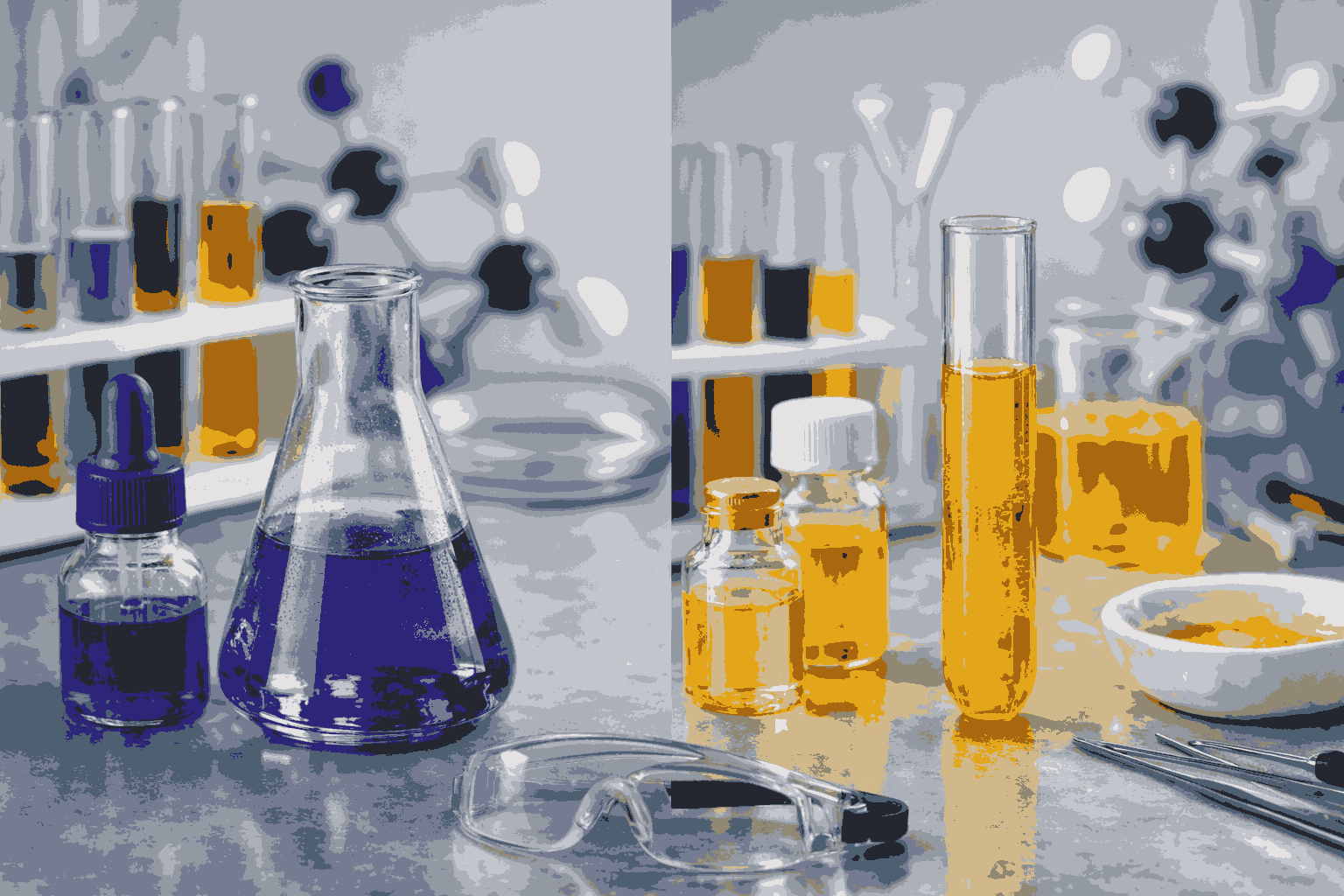
The Biuret test is used to detect the presence of peptide bonds in proteins. When a protein solution is treated with dilute copper sulfate in an alkaline medium, it gives a violet or purple color. This reaction occurs because copper ions form a complex with peptide linkages. Learning Biuret test and xanthoproteic test explanation for protiens helps aspirants understand how proteins differ from amino acids, as the latter do not give a positive Biuret test.
On the other hand, the Xanthoproteic test is used to detect aromatic amino acids such as tyrosine, tryptophan, and phenylalanine. When proteins containing these amino acids are treated with concentrated nitric acid, a yellow color is produced due to nitration of the aromatic ring. With further addition of an alkali, the color changes to orange. Studying Biuret test and xanthoproteic test explanation for protiens enables learners to identify proteins based on their structural components.
One major benefit of understanding Biuret test and xanthoproteic test explanation for protiens is the ability to distinguish between different biomolecules. While carbohydrates and lipids do not respond to these tests, proteins give characteristic color changes, making identification straightforward.
The Biuret test specifically indicates the presence of two or more peptide bonds. Therefore, dipeptides may give a weak result, while polypeptides and proteins give a strong violet color. Practicing Biuret test and xanthoproteic test explanation for protiens helps aspirants grasp why the intensity of color varies depending on the number of peptide bonds.
Similarly, the Xanthoproteic test highlights the presence of aromatic amino acids. This makes it particularly useful in distinguishing proteins with aromatic side chains from those without them. Through Biuret test and xanthoproteic test explanation for protiens, aspirants learn how protein composition affects chemical behavior.
Another important aspect of Biuret test and xanthoproteic test explanation for protiens is their role in laboratory analysis. These tests are widely used in biochemical experiments to confirm the presence of proteins in unknown samples.
In competitive exams like NEET, JEE, and CUET, questions often focus on reaction mechanisms and color changes. By practicing Biuret test and xanthoproteic test explanation for protiens, aspirants can quickly identify correct answers based on conceptual understanding.
Moreover, Biuret test and xanthoproteic test explanation for protiens help in reinforcing theoretical knowledge through practical examples. This dual approach makes learning more effective and long-lasting.
Aspirants also benefit from the fact that Biuret test and xanthoproteic test explanation for protiens are frequently repeated topics in exams. Mastery of these tests ensures that students can score easy marks without confusion.
Another advantage is improved analytical skills. When aspirants study Biuret test and xanthoproteic test explanation for protiens, they learn to interpret results based on chemical reactions rather than memorizing facts.
Additionally, Biuret test and xanthoproteic test explanation for protiens provide insight into protein structure. The Biuret test relates to peptide bonds, while the Xanthoproteic test relates to aromatic rings, giving a comprehensive understanding of proteins.
Consistency in revision is key, and regularly reviewing Biuret test and xanthoproteic test explanation for protiens helps aspirants retain important concepts for longer periods.
These tests also have real-world applications in medical and food industries. For instance, detecting protein content in food or biological samples relies on principles covered in Biuret test and xanthoproteic test explanation for protiens.
Furthermore, Biuret test and xanthoproteic test explanation for protiens make it easier to understand advanced topics like protein denaturation and structure-function relationships.
Teachers often emphasize Biuret test and xanthoproteic test explanation for protiens because they form the foundation for many higher-level biochemical concepts.
Another key point is that Biuret test and xanthoproteic test explanation for protiens are simple yet highly effective, making them ideal for both beginners and advanced learners.
By regularly practicing Biuret test and xanthoproteic test explanation for protiens, aspirants can build confidence and improve their exam performance significantly.
Biuret Test and Xanthoproteic Test Explanation for Proteins:
1. Assertion (A): Proteins are made up of α-amino acids.
Reason (R): During denaturation, secondary and tertiary structures are destroyed.
a) Both (A) and (R) are correct
b) Both correct but (R) not explanation
c) (A) correct but (R) incorrect
d) Both incorrect
Answer: c
2. Assertion (A): Disruption of natural protein structure is called denaturation.
Reason (R): Cooking egg causes denaturation.
a) Both correct and reason explains
b) Both correct but not explanation
c) A correct, R incorrect
d) Both incorrect
Answer: b
3. Denaturation of proteins leads to loss of biological activity by
a) Formation of amino acids
b) Loss of primary structure
c) Loss of primary and secondary
d) Loss of secondary and tertiary
Answer: d
4. α-Amino acids are
a) NH₂ and COOH groups
b) Acidic (NH₃⁺) and basic (COO⁻)
c) Neutral
d) None
Answer: b
5. Which is true for protein synthesis?
a) Amino acids recognized by mRNA
b) Third base less specific
c) One codon per amino acid
d) tRNA has many amino acids
Answer: b
6. Hydrolysis of proteins gives
a) α-amino acids
b) β-amino acids
c) γ-amino acids
d) All
Answer: a
7. Biomolecules acting as drug targets are
a) Carbohydrates
b) Proteins
c) Nucleic acids
d) All
Answer: b
8. Quaternary structure refers to
a) Carbohydrates
b) Vitamins
c) Proteins
d) Nucleic acids
Answer: c
9. Haemoglobin
a) Catalyst
b) Maintains sugar
c) Oxygen carrier
d) Forms antibodies
Answer: c
10. Functional group for disulphide bond
a) Thioester
b) Thioether
c) Thiol
d) Thiocarbonate
Answer: c
11. Coiled fibrous protein is
a) α and β
b) β-form
c) Globular
d) α-form
Answer: c
12. Enzymes in digestion (A, B)
a) Amylase, maltase
b) Diastase, lipase
c) Pepsin, trypsin
d) Invertase, zymase
Answer: c
13. Fibrous protein absent in
a) Myosin
b) Albumin
c) Collagen
d) Fibron
Answer: b
14. Coloured transition metal ion
a) Cu⁺
b) Zn²⁺
c) Sc³⁺
d) V⁴⁺
Answer: d
15. Helical structure stabilised by
a) Peptide bonds
b) Dipeptide
c) Hydrogen bonds
d) Van der Waals
Answer: c
16. Bonds not broken in denaturation
a) Hydrogen
b) Peptide
c) Disulphide
d) Ionic
Answer: b
17. Protein in silk
a) Insulin
b) Keratin
c) Albumin
d) Myosin
Answer: b
18. Muscle protein insoluble in water
a) Carotene
b) Insulin
c) Albumin
d) Myosin
Answer: d
19. α-helix stabilised by
a) Van der Waals
b) Covalent
c) Ionic
d) Hydrogen bonds
Answer: d
20. Water soluble protein
a) Fibrin
b) Albumin
c) Myosin
d) Collagen
Answer: b
21. Not a fibrous protein
a) Keratin
b) Albumin
c) Collagen
d) Myosin
Answer: b
22. Seliwanoff & Xanthoproteic tests identify
a) Aldoses, ketoses
b) Proteins, ketoses
c) Ketoses, proteins
d) Ketoses, aldoses
Answer: c
23. Tilden’s reagent is
a) NOCl₂
b) NOCl
c) Ni + Cl₂
d) NaBr
Answer: b
24. Polypeptides >10,000 molecular weight are
a) Amino acids
b) Hormones
c) Proteins
d) Terminal amino acids
Answer: c
25. Denaturation leads to loss of
a) Amino acids
b) Primary structure
c) Primary + secondary
d) Secondary + tertiary
Answer: d
26. Disulphide bonds in insulin
a) 1
b) 2
c) 3
d) 4
Answer: c
27. Yellow colour with conc. HNO₃ test
a) Hopp’s test
b) Acid-base
c) Biuret
d) Xanthoproteic
Answer: d
28. Highest calorific value
a) Proteins
b) Fats
c) Carbohydrates
d) Vitamins
Answer: b
29. Proteins are composed of
a) α-amino acids
b) Carbohydrates
c) Vitamins
d) Minerals
Answer: a
30. Oxygen transport protein
a) Myoglobin
b) Albumin
c) Haemoglobin
d) Fibrin
Answer: c

Conclusion on Biuret Test and Xanthoproteic Test Explanation for Proteins
Finally, mastering Biuret test and xanthoproteic test explanation for protiens ensures a strong understanding of protein chemistry, which is essential for both academic success and real-world applications.
In conclusion, Biuret test and xanthoproteic test explanation for protiens are indispensable tools for studying biomolecules. With consistent practice and clear understanding,aspirants can easily excel in this topic and achieve better results in competitive exams.