
- Keneitsino Lydia
- May 15, 2026
Ultimate Restriction Enzyme and Ligase MCQs Class 12 to Boost Your Exam Preparation
Restriction Enzyme and Ligase MCQs Class 12 is an important topic for aspirants preparing for board examinations and competitive entrance tests like NEET. Understanding the concepts behind restriction enzymes and DNA ligase helps aspirants build a strong foundation in molecular biology and biotechnology. Restriction Enzyme and Ligase MCQs Class 12 often focus on the role of enzymes in cutting and joining DNA fragments during genetic engineering experiments.
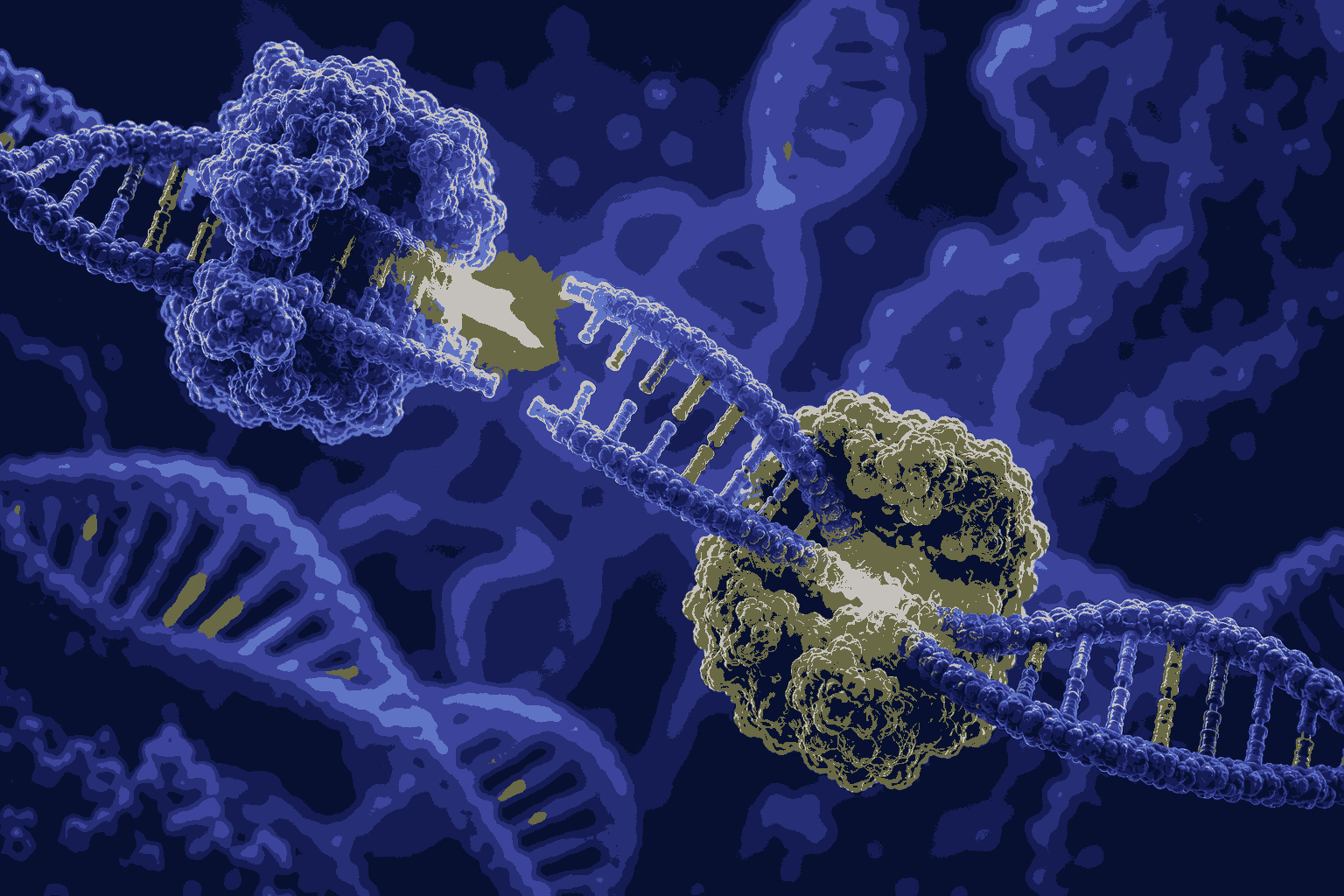
These Restriction Enzyme and Ligase MCQs Class 12 are essential because they explain how recombinant DNA technology works in modern biology laboratories. Many aspirants find Restriction Enzyme and Ligase MCQs Class 12 highly scoring when they understand the practical applications rather than simply memorizing definitions. In biotechnology, restriction enzymes are often referred to as molecular scissors because they cut DNA at specific recognition sites.
Restriction Enzyme and Ligase MCQs Class 12 generally test whether aspirants understand palindromic sequences and the action of endonucleases. When a restriction enzyme identifies a specific sequence, it cuts the DNA molecule and creates sticky or blunt ends. Restriction Enzyme and Ligase MCQs Class 12 also emphasize the importance of sticky ends because these ends help foreign DNA fragments attach easily during cloning procedures. Aspirants who clearly understand this mechanism usually perform better in genetics and biotechnology chapters.
DNA ligase is another crucial enzyme discussed frequently in biology textbooks. Restriction Enzyme and Ligase MCQs Class 12 commonly explain that DNA ligase acts like molecular glue by joining DNA fragments together. This enzyme forms phosphodiester bonds between nucleotides and stabilizes recombinant DNA molecules. In recombinant DNA technology, restriction enzymes first cut the DNA, and ligase then joins the desired fragment into a vector. Restriction Enzyme and Ligase MCQs Class 12 therefore become very important for aspirants who wish to understand cloning, gene transfer, and DNA manipulation techniques in detail.
Aspirants preparing for NEET should also focus on the discovery and naming of restriction enzymes. Restriction Enzyme and Ligase MCQs Class 12 frequently include examples such as EcoRI and HindII. These enzymes are named based on the bacterial species from which they are isolated. For example, EcoRI originates from Escherichia coli. Restriction Enzyme and Ligase MCQs Class 12 help aspirants understand how these enzymes recognize precise DNA sequences and cut them predictably. This specificity is extremely important in genetic engineering because scientists need controlled and accurate DNA modification.
Another important aspect covered in Restriction Enzyme and Ligase MCQs Class 12 is the use of plasmids as vectors. Plasmids are circular DNA molecules found in bacteria that can replicate independently. Scientists insert foreign DNA into plasmids using restriction enzymes and ligase. Restriction Enzyme and Ligase MCQs Class 12 often explain how recombinant plasmids are introduced into bacterial cells for gene cloning and protein production. Aspirants should understand the sequence of steps involved in this process because it is frequently asked in conceptual biology questions.
The applications of recombinant DNA technology are vast and medically significant. Restriction Enzyme and Ligase MCQs Class 12 sometimes discuss the production of insulin, vaccines, and genetically modified organisms. By understanding how enzymes manipulate DNA, aspirants can better appreciate the real-world importance of biotechnology. Restriction Enzyme and Ligase MCQs Class 12 also improve analytical thinking because many questions involve interpreting diagrams, DNA sequences, and experimental setups.
To master biotechnology topics, aspirants should revise enzyme functions regularly and focus on understanding rather than rote learning. Restriction Enzyme and Ligase MCQs Class 12 become easier when aspirants visualize DNA cutting and joining processes step by step. Diagrams of sticky ends, cloning vectors, and recombinant DNA molecules can greatly improve retention. Restriction Enzyme and Ligase MCQs Class 12 also strengthen conceptual clarity for advanced genetics chapters in higher studies.
Time management is equally important while preparing biology chapters. Restriction Enzyme and Ligase MCQs Class 12 should be practiced repeatedly along with related concepts such as cloning vectors, PCR, gel electrophoresis, and transformation. Consistent revision allows aspirants to recognize common patterns in examination questions. Restriction Enzyme and Ligase MCQs Class 12 are especially valuable because they connect theoretical biology with practical laboratory techniques.
30 Restriction Enzyme and Ligase MCQs Class 12:
- Which process is associated with the semiconservative method?
A. DNA replication
B. Transcription
C. Translation
D. Protein synthesis
Answer: A. DNA replication
Explanation: The semiconservative method is associated with DNA replication. In semiconservative replication, each newly formed DNA molecule contains one parental strand and one newly synthesized strand.
- What is the first step in DNA replication according to the provided passage?
A. Formation of lagging strand
B. Attraction of nucleotides
C. DNA amplification
D. Formation of template strand
Answer: D. Formation of template strand
Explanation: Formation of the template strand is the first step in DNA replication. The original DNA strands separate and act as templates for new strand synthesis.
- mRNA synthesis is known as
A. Translation
B. Transcription
C. Replication
D. Duplication
Answer: B. Transcription
Explanation: mRNA synthesis is known as transcription. During transcription, genetic information from DNA is copied into RNA.
- In eukaryotes (i). RNA polymerase I transcribes rRNAs (ii). RNA polymerase II transcribes snRNAs (iii). RNA polymerases III transcribes hnRNA (iv). RNA polymerase II transcribes hnRNA
A. (i) and (ii) are correct
B. (i) and (iii) are correct
C. (i), (ii) and (iv) are correct
D. (ii) and (iii) are correct
E. (i) and (iv) are correct
Answer: E. (i) and (iv) are correct
Explanation: RNA polymerase I transcribes rRNA, while RNA polymerase II transcribes hnRNA (precursor of mRNA).
- Choose the correct statements.
(A) tRNA looks an inverted ‘L’.
(B) Single DNA dependent RNA polymerase catalyses transcription of types of RNA in eukaryotes.
(C) The structural gene in a transcription unit is polycistronic in prokaryotes.
(D) Transcriptase catalyses the polymerization of DNA in 5’→3′ direction where 3’→5′ strand acts as template.
A. A, B, C only
B. B, C, D only
C. A, B, D only
D. A, C, D only
Answer: D. A, C, D only
Explanation: tRNA has an inverted L-shaped structure. Prokaryotic structural genes are polycistronic, and transcriptase catalyzes polymerization in the 5’→3′ direction.
- Identify the reaction site of the Hind II enzyme, DNA ligase, and ribonuclease respectively.
A. RNA, DNA-sugar-phosphate backbone, Joining sticky ends of DNA
B. Joining sticky ends of DNA, DNA-sugar-phosphate backbone, RNA
C. DNA-sugar-phosphate backbone, RNA, Joining sticky ends of DNA
D. DNA-sugar-phosphate backbone, Joining sticky ends of DNA, RNA
Answer: D. DNA-sugar-phosphate backbone, Joining sticky ends of DNA, RNA
Explanation: Hind II acts on DNA sugar-phosphate backbone, DNA ligase joins sticky ends, and ribonuclease acts on RNA.
- During the synthesis of the lagging strand, in which direction does the polymerization of DNA nucleotides occur?
A. 3’→5′ direction
B. 5’→3′ direction
C. Any direction
D. Promoter to terminator direction
Answer: B. 5’→3′ direction
Explanation: DNA polymerization always occurs in the 5’→3′ direction, including on the lagging strand.
- Which enzyme is responsible for transcription?
A. DNA polymerase-I
B. RNA polymerase
C. Reverse transcriptase
D. DNA polymerase-III
Answer: B. RNA polymerase
Explanation: RNA polymerase synthesizes RNA from a DNA template during transcription.
- What is the transcription unit?
A. TATA box to start point
B. TATA box to stop codon
C. Start point to stop codon
D. 35 sequence to start point
Answer: B. TATA box to stop codon
Explanation: The transcription unit extends from the promoter region including TATA box to the termination region.
- Which portion of a eukaryotic gene is transcribed but not translated?
A. Exon
B. Intron
C. Cistron
D. Codon
Answer: B. Intron
Explanation: Introns are transcribed into RNA but removed during RNA splicing and therefore not translated.
- What is the process known as when RNA is formed from DNA?
A. Transcription
B. Translation
C. Replication
D. Recombination
Answer: A. Transcription
Explanation: Formation of RNA from DNA is called transcription.
- What is the process of producing two identical replicas of DNA from one original DNA molecule known as?
A. Transcription
B. Replication
C. Translation
D. Duplication
Answer: B. Replication
Explanation: Replication produces two identical DNA molecules from one parental DNA molecule.
- cDNA probes are copied from the messenger RNA molecules with the help of
A. Restriction enzymes
B. Reverse transcriptase
C. DNA polymerase
D. Adenosine deaminase
Answer: B. Reverse transcriptase
Explanation: Reverse transcriptase synthesizes complementary DNA (cDNA) from mRNA templates.
- How is mRNA formed?
A. Translation
B. Transcription
C. Duplication
D. Capping
Answer: B. Transcription
Explanation: mRNA is formed during transcription from a DNA template.
- Which of the following pairs is incorrect regarding RNA polymerases and their products?
A. RNA polymerase I – Sn RNA 5S rRNA, r-RNA
B. RNA polymerase I – r-RNA
C. RNA polymerase II – hnRNA
D. RNA polymerase III – tRNA
Answer: A. RNA polymerase I – Sn RNA 5S rRNA, r-RNA
Explanation: RNA polymerase I transcribes rRNA only, not snRNA or 5S rRNA.
- Which statement is wrong about transcription in bacteria?
A. Splicing is not required
B. Single RNA polymerase controls all DNA polymerases
C. This process requires more/less energy
D. None
Answer: B. Single RNA polymerase controls all DNA polymerases
Explanation: In bacteria, a single RNA polymerase transcribes all RNA types, but it does not control DNA polymerases.
- In which direction does DNA replication take place and why?
A. 3′ to 5′ because DNA polymerase acts on the 5’–OH of the existing strand
B. 5′ to 3′ because DNA polymerase acts on the 3’–OH of the existing strand
C. 5′ to 3′ because DNA polymerase acts on the 5’–OH of the existing strand
D. 3′ to 5′ because DNA polymerase acts on the 3’–OH of the existing strand
Answer: B. 5′ to 3′ because DNA polymerase acts on the 3’–OH of the existing strand
Explanation: DNA polymerase adds nucleotides only to the free 3′ OH end, so replication proceeds in the 5’→3′ direction.
- With respect to DNA synthesis, identify the correct combination of statements.
- Always the direction of DNA polymerisation is 5′-3′.
- DNA ligase forms hydrogen bonds between DNA strands.
- DNA polymerase cannot initiate replication on its own.
- DNA polymerase can catalyse polymerization in both directions.
A. II, III and IV
B. I and II
C. I and III
D. III and IV
Answer: C. I and III
Explanation: DNA polymerization occurs only in the 5’→3′ direction, and DNA polymerase requires a primer to initiate replication.
- Which enzyme joins DNA fragments?
A. DNA ligase
B. DNA polymerase
C. DNA gyrase
D. Topoisomerase
Answer: A. DNA ligase
Explanation: DNA ligase seals breaks in the DNA backbone and joins DNA fragments together.
- The transcription unit is represented by the following diagram. Select the correct answer based on this.
A. Promoter → Terminator → Coding strand → Structural gene
B. Promoter → Structural gene → Coding strand → Terminator
C. Terminator → Coding strand → Structural gene → Promoter
D. Promoter → Coding strand → Terminator → Structural gene
Answer: B. Promoter → Structural gene → Coding strand → Terminator
Explanation: A transcription unit consists of three main regions: the promoter, the structural gene, and the terminator. The promoter is the site where RNA polymerase binds to initiate transcription. The structural gene contains the genetic information to be transcribed, while the terminator signals the end of transcription. The coding strand has the same sequence as the RNA transcript except thymine is replaced by uracil.
- The transcription unit is represented by the following diagram. Select the correct answer based on this.
A. Promoter Terminator Coding strand Structural gene
B. Promoter Structural gene Coding strand Terminator
C. Terminator Coding strand Structural gene Promoter
D. Promoter Coding strand Terminator Structural gene
Answer: B. Promoter Structural gene Coding strand Terminator
Explanation: A transcription unit includes promoter, structural gene, coding strand, and terminator.
- Restriction enzymes:
A. are endonucleases which cleave DNA at specific sites
B. make DNA complementary to existing DNA or RNA
C. cut or join DNA fragments
D. are required in vectorless direct gene transfer
Answer: A. are endonucleases which cleave DNA at specific sites
Explanation: Restriction enzymes recognize specific DNA sequences and cut DNA at those sites.
- Formation of m-RNA on a DNA template is called:
A. transcription
B. translation
C. transduction
D. none of these
Answer: A. transcription
Explanation: Transcription is the synthesis of mRNA using DNA as template.
- Which enzyme helps to cut one strand of DNA duplex to release tension of coiling of two strands?
A. DNA ligase
B. DNA polymerase
C. Topo-isomerase
D. Swielases (helicase or unwindases)
Answer: C. Topo-isomerase
Explanation: Topoisomerase relieves supercoiling tension during DNA replication.
- If the sequence of bases in DNA is ATTCGATG, what will be the sequence of bases in its transcript?
A. GUAGCUUA
B. AUUCGAUG
C. CAUCGAAU
D. UAAGCUAC
Answer: D. UAAGCUAC
Explanation: During transcription, RNA bases pair complementarily with DNA bases.
- In split genes, what are the coding sequences called?
A. Exons
B. Cistrons
C. Introns
D. Operons
Answer: A. Exons
Explanation: Exons are coding sequences retained in mature mRNA.
- What is the process of transfer of genetic information from DNA to RNA called?
A. Transversion
B. Transcription
C. Translation
D. Translocation
Answer: B. Transcription
Explanation: Transcription transfers genetic information from DNA to RNA.
- What is the process by which the language of DNA is converted into the language of mRNA called?
A. Transformation
B. Transcription
C. Translation
D. Transduction
Answer: B. Transcription
Explanation: Transcription converts DNA information into mRNA sequence.
- Identify the correct pair of combinations:
(I) Schwann – Omnis cellula-e-cellula
(II) Ochoa – Polynucleotide phosphorylase
(III) Taylor – Semi conservative replication of DNA
(IV) Flemming – Ribosomes
A. (II), (III)
B. (III), (IV)
C. (II), (IV)
D. (I), (III)
Answer: A. (II), (III)
Explanation: Ochoa discovered Polynucleotide phosphorylase, and Taylor worked on semiconservative DNA replication.
- Which component is not found in eukaryotic ribosomes transcribed by RNA polymerase-I?
A. 28S rRNA
B. 5S rRNA
C. 5.8S rRNA
D. 18S rRNA
Answer: B. 5S rRNA
Explanation: 5S rRNA is transcribed by RNA polymerase III, not RNA polymerase I.
Conclusion on Restriction Enzyme and Ligase MCQs Class 12
Finally, biotechnology remains one of the most interesting and rapidly developing branches of biology. Restriction Enzyme and Ligase MCQs Class 12 provide aspirants with a deeper understanding of how scientists alter genetic material for research and medicine. With proper preparation and conceptual understanding, aspirants can confidently solve biotechnology-based questions in board exams and entrance examinations. Restriction Enzyme and Ligase MCQs Class 12 ultimately help aspirants strengthen their understanding of DNA manipulation, molecular tools, and modern genetic engineering techniques.