
- Keneitsino Lydia
- April 24, 2026
Master It Fast: 30 Trophoblast Cells Function in Implantation MCQs for NEET,JEE & CUET
Understanding the concept of trophoblast cells is essential for mastering human reproduction, especially when preparing for competitive exams. The topic Trophoblast Cells Function in Implantation MCQs is frequently tested because it connects embryology, physiology, and hormonal regulation in a clear and logical manner. A strong grasp of this topic helps aspirants answer conceptual questions with confidence.
The Trophoblast Cells Function in Implantation MCQs focus on how early embryonic cells contribute to successful pregnancy. After fertilization, the zygote undergoes several divisions to form a blastocyst. This blastocyst contains two main components: the inner cell mass and the trophoblast. The trophoblast is the outer layer of cells that plays a crucial role during implantation.
In the context of Trophoblast Cells Function in Implantation MCQs, implantation refers to the process by which the blastocyst attaches itself to the uterine wall. This process typically occurs around 6–7 days after fertilization. The trophoblast cells are directly responsible for initiating and sustaining this attachment.
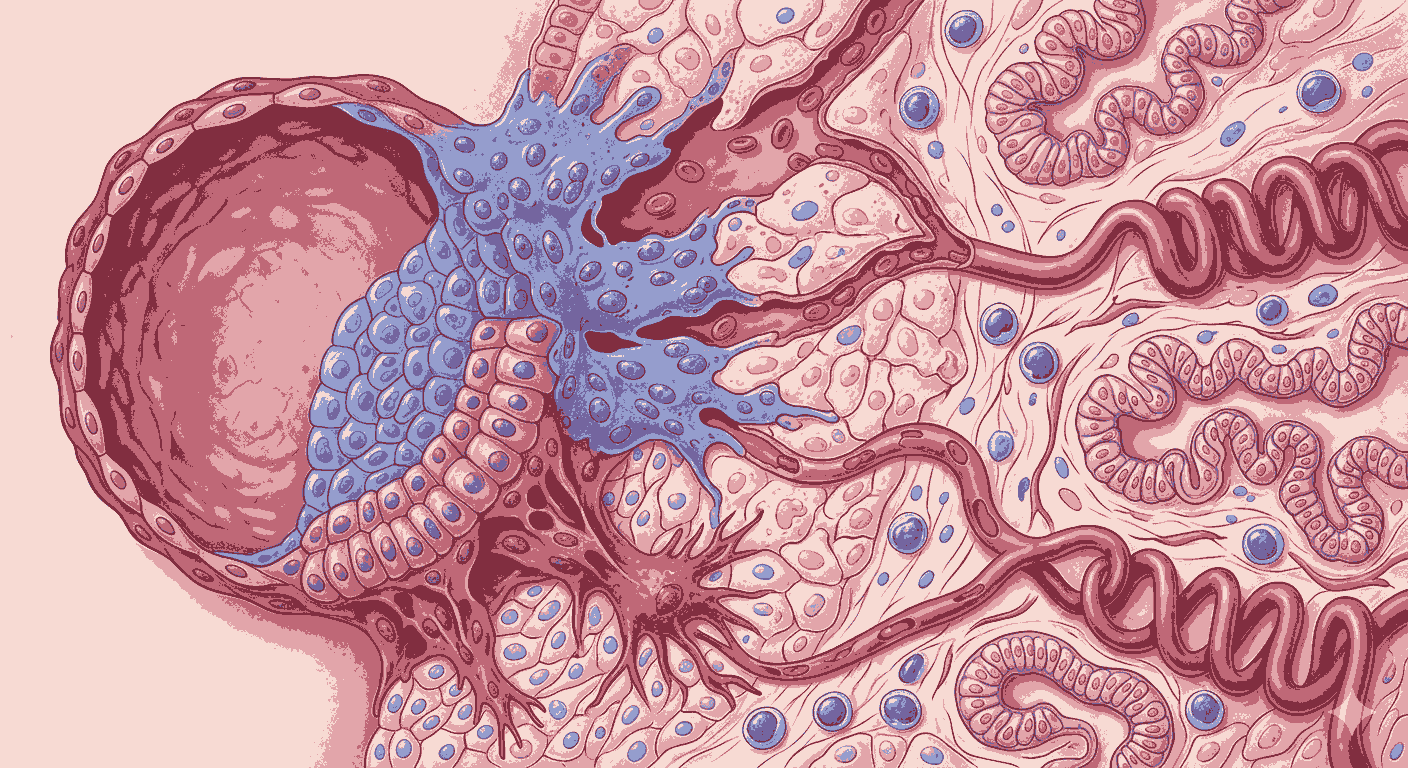
One of the most important points highlighted in Trophoblast Cells Function in Implantation MCQs is the differentiation of trophoblast cells into two layers: cytotrophoblast and syncytiotrophoblast. The cytotrophoblast is the inner cellular layer, while the syncytiotrophoblast is the outer multinucleated layer that invades the uterine lining.
The role of syncytiotrophoblast is especially emphasized in Trophoblast Cells Function in Implantation MCQs. These cells secrete enzymes that digest the endometrial tissue, allowing the blastocyst to embed itself into the uterine wall. Without this invasive action, implantation would not occur successfully.
Another key concept in Trophoblast Cells Function in Implantation MCQs is hormone secretion. The trophoblast cells produce human chorionic gonadotropin (hCG), a hormone that maintains the corpus luteum. This ensures continued secretion of progesterone, which is essential for maintaining the uterine lining during early pregnancy.
Aspirants studying Trophoblast Cells Function in Implantation MCQs should also understand how trophoblast cells help in forming the placenta. As implantation progresses, these cells contribute to the development of chorionic villi, which later become the functional units of the placenta responsible for nutrient and gas exchange.
In many Trophoblast Cells Function in Implantation MCQs, questions test the understanding of how trophoblast cells interact with maternal tissues. These interactions are highly regulated to prevent rejection of the embryo while still allowing invasion. This delicate balance is a fascinating aspect of human reproduction.
Another important aspect covered in Trophoblast Cells Function in Implantation MCQs is immune tolerance. The trophoblast cells help protect the embryo from the maternal immune system by modifying immune responses. This ensures that the developing embryo is not treated as a foreign body.
When solving Trophoblast Cells Function in Implantation MCQs, aspirants should remember the timeline of implantation. The blastocyst attaches, invades, and becomes fully embedded within a few days. Trophoblast cells actively drive each step of this process.
The importance of enzymes secreted by trophoblast cells is also frequently tested in Trophoblast Cells Function in Implantation MCQs. These enzymes break down the extracellular matrix of the endometrium, facilitating deeper implantation and establishment of maternal-fetal connection.
Another concept often emphasized in Trophoblast Cells Function in Implantation MCQs is the formation of lacunae. These are spaces formed within the syncytiotrophoblast that fill with maternal blood, marking the beginning of placental circulation.
Aspirants should also note in Trophoblast Cells Function in Implantation MCQs that improper functioning of trophoblast cells can lead to implantation failure. This highlights the clinical importance of these cells in reproductive health.
The topic Trophoblast Cells Function in Implantation MCQs also connects to pregnancy detection. The hCG hormone produced by trophoblast cells is the basis for pregnancy tests, making this concept highly relevant beyond exams.
In addition, Trophoblast Cells Function in Implantation MCQs often explore the structural adaptations of trophoblast cells. Their ability to fuse and form a multinucleated layer is unique and essential for their invasive function.
Understanding blood vessel interaction is another key area in Trophoblast Cells Function in Implantation MCQs. Trophoblast cells remodel maternal blood vessels to ensure an adequate supply of nutrients and oxygen to the embryo.
The concept of placental barrier formation is also linked to Trophoblast Cells Function in Implantation MCQs. This barrier regulates the exchange of substances between mother and fetus while protecting the embryo.
Aspirants preparing for exams should focus on conceptual clarity when studying Trophoblast Cells Function in Implantation MCQs. Instead of memorizing facts, understanding the sequence of events during implantation can make answering questions much easier.
Another recurring theme in Trophoblast Cells Function in Implantation MCQs is the coordination between hormones and cellular processes. Hormonal signals regulate trophoblast activity, ensuring proper timing and progression of implantation.
30 Trophoblast Cells Function in Implantation MCQs:
1. After ovulation follicles converted into
a) Corpus luteum
b) Corpus albicans
c) Corpus cavernosa
d) Corpus callosum
Answer: a
Explanation: After ovulation, the Graafian follicle transforms into the corpus luteum, which secretes progesterone.
2. Amount of cellular DNA increases during
a) Cytokinesis
b) Fertilisation
c) Mutation
d) Respiration
Answer: b
Explanation: During fertilization, two haploid gametes fuse to form a diploid zygote, doubling DNA content.
3. In humans, sperm first contacts which layer of ovum?
a) Zona pellucida
b) Vitelline membrane
c) Jelly coat
d) Corona radiata
Answer: d
Explanation: Sperm first encounters the corona radiata, the outermost layer of the ovum.
4. Enzyme dissolving zona pellucida
a) Hyaluronidase
b) Acrosin
c) Progesterone
d) Testosterone
Answer: b
Explanation: Acrosin helps dissolve the zona pellucida for sperm entry.
5. Ovum receives sperm at
a) Animal pole
b) Vegetal pole
c) Equator
d) Pigmented area
Answer: a
Explanation: Sperm entry occurs at the animal pole, where the nucleus is located.
6. Secretions produced by sperm at fertilization
a) Fertilizin & antifertilizin
b) Antifertilizin & spermlysin
c) Fertilizin & spermlysin
d) Only spermlysin
Answer: b
Explanation: Sperm releases antifertilizin and spermlysin to aid fertilization.
7. Correct sequence in human reproduction
a) Gametogenesis → gestation → insemination → fertilization → implantation → parturition
b) Gametogenesis → insemination → gestation → implantation → fertilization → parturition
c) Gametogenesis → insemination → fertilization → implantation → gestation → parturition
d) Gestation → gametogenesis → insemination → implantation → fertilization → parturition
Answer: c
Explanation: Proper sequence: Gametogenesis → insemination → fertilization → implantation → gestation → parturition
8. Site of fertilization in mammals
a) Ovary
b) Fallopian tube
c) Cervix
d) Uterus
Answer: b
Explanation: Fertilization occurs in the fallopian tube (ampullary region).
9. Species-specific fertilization occurs because
a) Fertilizin mismatch
b) Antifertilizin of A and fertilizin of B mismatch
c) Fertilizin of A and antifertilizin of B mismatch
d) Antifertilizin mismatch
Answer: d
Explanation: Species specificity depends on incompatibility of antifertilizin proteins.
10. Function of Copper-T
a) Fertilization prevention
b) Egg maturation
c) Ovulation
d) Implantation
Answer: a
Explanation: Copper-T prevents fertilization by affecting sperm motility.
11. Sperm penetration causes
a) First polar body formation
b) Meiosis I
c) Meiosis II
d) Pronuclei formation
Answer: c
Explanation: Entry of sperm triggers completion of meiosis II.
12. Semen consists of sperm and secretions from
a) Seminal vesicle, prostate, Cowper’s gland
b) Seminal vesicle, testis, uterus
c) Seminal vesicle, prostate, testis
d) Seminal vesicle, Cowper’s gland, testis
Answer: a
Explanation: Semen includes secretions from accessory glands.
13. Blastocyst fixing in uterus is called
a) Placentation
b) Fertilization
c) Implantation
d) Impregnation
Answer: c
Explanation: Implantation is embedding of blastocyst in uterus.
14. During fertilization
a) Corona radiata traps sperms
b) Two sperms enter
c) Acrosome allows one sperm entry
d) Others lose tails
Answer: c
Explanation: Acrosomal enzymes help one sperm enter ovum.
15. Human placenta type
a) Epitheliochorial
b) Syndesmochorial
c) Endotheliochorial
d) Haemochorial
Answer: d
Explanation: Humans have haemochorial placenta.
16. Cells secreting lytic enzymes in implantation
a) Syncytiotrophoblast
b) Corona radiata
c) Embryonic disc
d) Cytotrophoblast
Answer: a
Explanation: Syncytiotrophoblast invades endometrium.
17. Test tube baby
a) Fertilization inside female
b) Fertilization outside, development inside
c) Premature baby
d) Development outside body
Answer: b
Explanation: IVF involves fertilization outside, growth inside uterus.
18. Choose the correct statements regarding reproductive techniques (GIFT, IVF, ZIFT):
Statements:
- Ova collected from a female donor are transferred to the fallopian tube to facilitate fertilization in artificial insemination.
- Zygote is collected from a female donor and transferred to the fallopian tube in IVF.
- Transfer of an ovum collected from a donor into the fallopian tube of another female who cannot produce an ovum is called GIFT.
- Transfer of early embryos with up to 8 blastomeres into the fallopian tube is called ZIFT.
Options:
a) 1, 2, 4
b) 2, 3, 4
c) Only 2
d) 3, 4
Answer: d) 3, 4
Explanation:
- Statement 1 is incorrect because transferring ova into the fallopian tube is part of GIFT (Gamete Intrafallopian Transfer), not artificial insemination.
- Statement 2 is incorrect because in IVF, fertilization occurs outside the body and the zygote is usually transferred into the uterus, not collected from a donor and placed into the tube.
- Statement 3 is correct — GIFT involves transferring an ovum into the fallopian tube of another female.
- Statement 4 is correct — ZIFT involves transfer of early embryos (up to 8 blastomeres) into the fallopian tube.
19. Zygote implantation stage (test tube baby)
a) 32-celled
b) 64-celled
c) 100-celled
d) 164-celled
Answer: a
Explanation: Embryo transferred at 32-cell stage.
20. Meiosis II in oogenesis occurs
a) Before fertilization
b) After implantation
c) Before ovulation
d) After fertilization
Answer: d
Explanation: Completed only after sperm entry.
21. Oogenesis begins at
a) Adult
b) Puberty
c) Embryonic stage
d) Birth
Answer: c
Explanation: Begins in fetal life.
22. Embryo (>16 blastomeres) transferred to
a) Uterus
b) Fallopian tube
c) Fimbriae
d) Cervix
Answer: a
Explanation: Advanced embryos placed in uterus.
23. GnRH acts on
a) Anterior pituitary (LH, FSH release)
b) Posterior pituitary
c) Adrenal gland
d) Thyroid gland
Answer: a
Explanation: GnRH stimulates FSH and LH secretion.
Conclusion on Trophoblast Cells Function in Implantation MCQs
In summary, Trophoblast Cells Function in Implantation MCQs provide a comprehensive understanding of early pregnancy events. From blastocyst formation to placental development, trophoblast cells play a central role in ensuring successful implantation.
Mastering Trophoblast Cells Function in Implantation MCQs not only helps in scoring well in exams but also builds a strong foundation in human reproductive biology. With consistent revision and clear understanding, this topic becomes both interesting and easy to remember.