
- Keneitsino Lydia
- March 16, 2026
Master Brownian Movement Colloid MCQs Class 12: Powerful Practice Questions to Boost Your Surface Chemistry Score
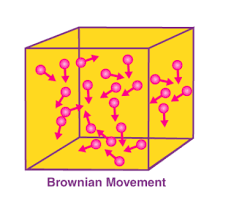
The concept of Brownian movement was first observed by the botanist Robert Brown in 1827 while studying pollen grains suspended in water. He noticed that the tiny particles were moving randomly even when there was no external force acting on them. Later studies showed that this motion was due to collisions between the colloidal particles and the molecules of the surrounding medium. This fundamental idea is frequently tested in Brownian movement colloid MCQs class 12, helping aspirants understand the molecular explanation behind the motion. Through repeated practice of Brownian movement colloid MCQs class 12, aspirants can clearly grasp how microscopic molecular collisions produce visible motion.
Brownian movement plays an important role in maintaining the stability of colloidal solutions. In a colloidal system, particles are small enough to remain suspended but large enough to scatter light. Without Brownian motion, these particles would settle under the influence of gravity. The constant random movement keeps them dispersed throughout the medium. Questions about the stability of colloids often appear in Brownian movement colloid MCQs class 12, highlighting why this phenomenon is so important in surface chemistry. Practicing Brownian movement colloid MCQs class 12 helps aspirants understand how Brownian motion prevents sedimentation.
Another important factor affecting Brownian movement is the size of the particles. Smaller particles experience more pronounced Brownian motion because they are more easily influenced by molecular collisions. Larger particles move less randomly because their greater mass resists the impact of surrounding molecules. This relationship between particle size and motion is often emphasized in Brownian movement colloid MCQs class 12, making it easier for aspirants to remember the concept. When aspirants solve Brownian movement colloid MCQs class 12, they also learn how particle size affects the behavior of colloidal systems.
Temperature is another factor that influences Brownian movement. As temperature increases, the kinetic energy of the molecules in the dispersion medium also increases. This leads to more frequent and energetic collisions with the colloidal particles, resulting in more intense Brownian motion. Questions related to temperature effects are commonly included in Brownian movement colloid MCQs class 12, as they test the understanding of molecular motion and kinetic theory. Practicing Brownian movement colloid MCQs class 12 helps aspirants connect the concept of Brownian motion with temperature changes in colloidal systems.
The viscosity of the dispersion medium also affects Brownian movement. In a highly viscous medium, the movement of colloidal particles becomes slower because the medium resists their motion. Conversely, in a less viscous medium, the particles move more freely. These relationships between viscosity and particle motion are frequently tested in Brownian movement colloid MCQs class 12, helping aspirants understand how different properties of the medium influence colloidal behavior. By solving Brownian movement colloid MCQs class 12, aspirants gain a deeper understanding of how physical conditions affect Brownian motion.
Brownian movement also provides experimental evidence for the kinetic theory of matter. The random motion of colloidal particles demonstrates that molecules in a fluid are constantly moving and colliding with each other. This observation helped scientists confirm that matter is composed of tiny particles in continuous motion. Many conceptual questions in Brownian movement colloid MCQs class 12 highlight this connection between Brownian motion and molecular theory. Through consistent practice of Brownian movement colloid MCQs class 12, aspirants can appreciate the scientific significance of this phenomenon.
In practical applications, Brownian movement is important in fields such as medicine, environmental science, and nanotechnology. It helps explain the behavior of nanoparticles, drug delivery systems, and colloidal suspensions used in industrial processes. Understanding these applications can make the concept more interesting and meaningful for aspirants. These real-life connections are often reflected in Brownian movement colloid MCQs class 12, which encourage aspirants to apply theoretical knowledge to practical situations. Reviewing Brownian movement colloid MCQs class 12 can therefore strengthen both conceptual and applied understanding.
Brownian Movement Colloid MCQs Class 12 :
Which of the following is not a surface phenomenon?
A. Water and its vapour in a closed vessel
B. Heterogeneous catalysis
C. Crystallization
D. Corrosion
Answer: C
Q2.
What is the position of the polar and non-polar parts in a micelle?
A. Polar at outer surface and non-polar at inner surface
B. Polar at inner surface and non-polar at outer surface
C. Distributed all over the surface
D. Present only on the surface
Answer: A
Q3.
At high pressure, the entire surface gets covered by a monomolecular layer of gas. The reaction follows:
A. Three-halved order
B. Second order
C. First order
D. Zero order
Answer: D
Q4.
Which gas molecule has the maximum enthalpy of physisorption?
A. C₂H₆
B. Ne
C. H₂O
D. H₂
Answer: C
Q5.
According to adsorption theory of catalysis, the rate of reaction increases because:
A. Concentration of reactant molecules increases at catalyst surface
B. Activation energy becomes large
C. Absorption produces heat
D. Adsorption lowers the activation energy
Answer: D
Q6.
In chemical adsorption, how many layers are adsorbed?
A. One
B. Two
C. Multiple
D. Zero
Answer: A
Q7.
Which statement is incorrect for physical adsorption?
A. Monomolecular layer forms on adsorbent
B. It is instantaneous
C. Low activation energy required
D. Occurs at low temperature
Answer: A
Q8.
Which statement is not true about enzymes?
A. Enzymes are non-specific
B. Most enzymes are proteins
C. They lower activation energy
D. Activity depends on pH and temperature
Answer: A
Q9.
Which characteristic is not correct for physical adsorption?
A. Reversible process
B. Adsorption increases with temperature
C. Spontaneous process
D. Both enthalpy and entropy negative
Answer: B
Q10.
What is the phenomenon called when both adsorption and absorption occur?
A. Chemisorption
B. Physisorption
C. Desorption
D. Sorption
Answer: D
Q11.
Physical adsorption of a gas may convert to chemical adsorption with:
A. Decrease in temperature
B. Increase in temperature
C. Increase in surface area
D. Decrease in surface area
Answer: B
Q12.
50 mL of 1 M oxalic acid is shaken with 0.5 g charcoal. Final concentration = 0.5 M. Amount adsorbed per gram charcoal is:
A. 3.5 g
B. 5.75 g
C. 6.3 g
D. 2.6 g
Answer: C
Q13.
Which equation represents the Langmuir adsorption isotherm?
A. log(x/m) = log(a/b) + (1/a) log P
B. x/m = b/a + 1/aP
C. x/m = (1 + bP)/aP
D. 1/(x/m) = b/a + 1/aP
Answer: D
Q14.
Which condition favors physical adsorption?
A. High temperature and high pressure
B. High temperature and low pressure
C. Low temperature and high pressure
D. Low temperature and low pressure
Answer: C
Q15.
Milk is an example of:
A. True solution
B. Gel
C. Suspension
D. Emulsion
Answer: D
Q16.
Gold numbers of colloids A, B, C, D are 0.50, 0.01, 0.10, 0.005 respectively. Correct order of protective power:
A. A < C < B < D
B. B < D < A < C
C. D < A < C < B
D. C < B < D < A
Answer: A
Q17.
Peptisation is the process in which:
A. Suspension converts to true solution
B. Precipitate dissolves
C. Colloidal particles settle
D. Precipitate converts into colloid
Answer: D
Q18.
Which phenomenon indicates the charge on colloidal particles?
A. Tyndall effect
B. Brownian motion
C. Electrophoresis
D. Electroosmosis
Answer: C
Q19.
A colloidal solution moves toward anode in electric field. The order of electrolyte required for coagulation is:
A. NaCl > BaCl₂ > AlCl₃
B. BaCl₂ > AlCl₃ > NaCl
C. AlCl₃ = NaCl = BaCl₂
D. AlCl₃ > BaCl₂ > NaCl
Answer: D
Q20.
Which has the least gold number?
A. Gelatin
B. Starch
C. Albumin
D. Blood
Answer: A
Q21.
Colloidal solution is purified by:
A. Disintegration
B. Peptisation
C. Filtration
D. Dialysis
Answer: D
Q22.
Which is a lyophobic colloid?
A. Starch solution
B. Protein solution
C. Gold sol
D. Polymer solution
Answer: C
Q23.
Sulphur solution is an example of:
A. Emulsion
B. Multimolecular colloid
C. Macromolecular colloid
D. Lyophilic colloid
Answer: B
Q24.
Assertion: Finely divided gold appears red and changes color with particle size.
Reason: Color depends on wavelength of light scattered.
A. Both correct and reason explains
B. Both correct but not explanation
C. Assertion true reason false
D. Assertion false reason true
Answer: A
Q25.
Colloidal solution used in treatment of skin diseases:
A. Colloidal gold
B. Colloidal antimony
C. Colloidal sulphur
D. Colloidal silver
Answer: C
Q26.
Macromolecular colloids among the following:
I. Starch
II. Sulphur sol
III. Synthetic detergent
IV. Synthetic rubber
A. II, IV
B. I, II
C. II, III
D. I, IV
Answer: D
Q27.
Assertion: Animal skins are colloidal in nature
Reason: Animal skin has positively charged particles
A. Both correct and explanation correct
B. Both correct but explanation incorrect
C. Assertion correct reason incorrect
D. Assertion incorrect reason correct
Answer: B
Q28.
Approximate size of colloidal particles:
A. 1 – 1000 nm
B. 1000 – 2000 nm
C. 2000 – 3000 nm
D. 3000 – 4000 nm
Answer: A
Q29.
Photographic plates are prepared by coating emulsion of:
A. AgBr
B. CuBr
C. ZnB₂
D. FeBr₂
Answer: A
Q30.
Brownian movement in colloidal particles is caused by:
A.Gravitational force
B. Collision with molecules of dispersion medium
C. Electrical attraction
D. Magnetic force
Answer: B
Conclusion on Brownian Movement Colloid MCQs Class 12
In conclusion, Brownian movement is a key concept in the study of colloids and surface chemistry. It explains why colloidal particles remain suspended and provides insight into molecular motion in fluids. For aspirants studying Class 12 chemistry, mastering this topic is important for both board exams and competitive tests. Regular practice through Brownian movement colloid MCQs class 12 allows aspirants to revise the concept thoroughly and build confidence in answering exam questions. With consistent study and practice of Brownian movement colloid MCQs class 12, aspirants can develop a strong foundation in colloidal chemistry and perform well in examinations.