
- Keneitsino Lydia
- March 14, 2026
Best Gas Adsorption MCQs Class 12 Surface Chemistry – Powerful Questions to Boost Your Exam Score
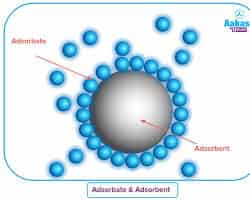
Gas adsorption mcqs Class 12 surface chemistry is an important concept in the surface chemistry chapter of Class 12 chemistry. It explains how gas molecules accumulate on the surface of solids due to attractive forces between the adsorbent and the adsorbate. For aspirants preparing for board examinations and competitive tests, practicing Gas adsorption MCQs class 12 surface chemistry can significantly improve conceptual clarity and problem-solving skills. Many examination questions are framed around this concept, making Gas adsorption MCQs class 12 surface chemistry an essential revision topic.
In surface chemistry, adsorption is different from absorption. Absorption involves the bulk of the material, whereas adsorption occurs only on the surface of the solid. Because of this surface phenomenon, properties like surface area, pressure, temperature, and the nature of the gas play crucial roles. Aspirants who practice Gas adsorption MCQs class 12 surface chemistry learn to distinguish these concepts clearly and apply them in theoretical as well as numerical questions. Continuous exposure to Gas adsorption MCQs class 12 surface chemistry helps build a strong understanding of these differences.
There are two main types of adsorption: physisorption and chemisorption. Physisorption occurs due to weak van der Waals forces between gas molecules and the solid surface. Chemisorption, on the other hand, involves the formation of chemical bonds between the adsorbate and the adsorbent. These differences are frequently tested in exams, and many aspirants strengthen their understanding through Gas adsorption MCQs class 12 surface chemistry. By solving Gas adsorption MCQs class 12 surface chemistry, aspirants become familiar with how temperature, pressure, and activation energy affect each type of adsorption.
Temperature plays a major role in adsorption processes. Since adsorption is generally an exothermic process, increasing temperature often decreases the extent of adsorption. This principle is especially relevant in physical adsorption where the forces involved are weak. Understanding such relationships becomes easier when aspirants regularly practice Gas adsorption MCQs class 12 surface chemistry. Repeated practice of Gas adsorption MCQs class 12 surface chemistry allows aspirants to recognize patterns in exam questions and answer them with greater confidence.
Pressure also affects gas adsorption significantly. At low pressure, adsorption increases rapidly with pressure because more gas molecules collide with the surface of the adsorbent. As pressure continues to increase, the surface gradually becomes saturated and the rate of increase slows down. This behavior is explained through adsorption isotherms, which are commonly included in Gas adsorption MCQs class 12 surfaace chemistry. Aspirants who regularly solve Gas adsorption MCQs class 12 surfaace chemistry develop a better understanding of graphical representations and adsorption equations.
Another important factor influencing gas adsorption mcqs Class 12 surface chemistry is the nature of the gas itself. Gases that are easily liquefiable, such as ammonia and sulfur dioxide, tend to be adsorbed more readily than gases like hydrogen or nitrogen. This occurs because easily liquefiable gases have stronger intermolecular forces. Many conceptual questions in Gas adsorption MCQs class 12 surface chemistry test this idea, helping aspirants understand why certain gases adsorb more strongly on surfaces. Practicing Gas adsorption MCQs class 12 surface chemistry reinforces these trends and improves conceptual recall.
Surface area of the adsorbent is also critical for adsorption efficiency. Materials like activated charcoal, silica gel, and alumina have very large surface areas and are commonly used as adsorbents. Because adsorption occurs only on the surface, a larger surface area allows more gas molecules to accumulate. This property is frequently highlighted in Gas adsorption MCQs class 12 surface chemistry, especially when questions ask which material would adsorb the greatest amount of gas. Working through Gas adsorption MCQs class 12 surface chemistry helps aspirants understand the practical applications of these materials.
Adsorption also has several real-world applications. It is used in gas masks to remove poisonous gases, in heterogeneous catalysis to speed up chemical reactions, and in purification processes such as decolorization of solutions using activated charcoal. These applications are sometimes included as conceptual questions in Gas adsorption MCQs class 12 surface chemistry. When aspirants repeatedly revise these applications through Gas adsorption MCQs class 12 surface chemistry, they gain both theoretical knowledge and practical understanding.
Gas Adsorption MCQs Class 12 Surface Chemistry:
1. Freundlich isotherm numerical
Q1. Plot of log(x/m) against log p is a straight line inclined at an angle of 45°. When the pressure is 0.5 atm and Freundlich parameter k is 10, the amount of solute adsorbed per gram of adsorbent will be (log 5 = 0.6990).
A. 1 g
B. 2 g
C. 3 g
D. 5 g
Answer: D
2. Incorrect statement for physisorption
Q2. Which of the following statements is incorrect with respect to physisorption?
A. The forces involved are van der Waals forces
B. More easily liquefiable gases are adsorbed easily
C. Under high pressure it results in multimolecular layer on adsorbent surface
D. ΔH adsorption is low and positive
Answer: D
3. Slope and intercept in Freundlich plot
Q3. For Freundlich isotherm a graph of log(x/m) is plotted against log p. The slope of the line and its y-axis intercept respectively correspond to
A. 1/n , k
B. log(1/n) , k
C. 1/n , log k
D. log(1/n) , log k
Answer: C
4. Relation not related to adsorption
Q4. If x is amount of adsorbate and m is amount of adsorbent, which of the following relations is not related to adsorption process?
A. x/m = f(p) at constant T
B. x/m = f(T) at constant p
C. p = f(T) at constant (x/m)
D. x/m = p × T
Answer: D
5. Incorrect statement about chemisorption
Q5. For chemisorption, which of the following is wrong?
A. It is irreversible
B. It requires activation energy
C. It forms multimolecular layers on adsorbent
D. Surface compounds are formed
Answer: C
6. Langmuir model assumption
Q6. In Langmuir’s model of adsorption of a gas on a solid surface
A. Rate of dissociation does not depend on surface covered
B. Multiple molecules can adsorb at a single site
C. Mass of gas striking surface is proportional to gas pressure
D. Mass of gas striking surface is independent of pressure
Answer: C
7. Assumption of Langmuir isotherm
Q7. The Langmuir adsorption isotherm is deduced using the assumption
A. Adsorption sites are equivalent
B. Heat of adsorption varies with coverage
C. Adsorbed molecules interact with each other
D. Adsorption occurs in multilayers
Answer: A
8. Not characteristic of chemisorption
Q8. Which of the following is not a characteristic of chemisorption?
A. Adsorption is highly specific
B. Heat of adsorption around 400 kJ/mol
C. Process is irreversible
D. It forms multimolecular layer
Answer: D
9. Freundlich graph numerical
Q9. In an adsorption experiment, log(x/m) vs log P was linear with slope 45°. The intercept on log(x/m) axis was 0.300. The amount of gas adsorbed per gram of charcoal under pressure 0.5 atm is
A. 0.5 g
B. 1.0 g
C. 5 g
D. 0.75 g
Answer: B
10. Assertion–Reason (adsorption)
Q10. Assertion: Enthalpy of physisorption is greater than chemisorption.
Reason: Physisorption involves van der Waals forces whereas chemisorption involves chemical bonds.
A. Both correct and reason explains assertion
B. Both correct but reason does not explain
C. Assertion correct, reason incorrect
D. Both incorrect
Answer: D
11. Incorrect chemisorption statement
Q11. Which of the following is incorrect?
A. Chemisorption is caused by bond formation
B. Chemisorption is reversible process
C. Chemisorption is specific in nature
D. Chemisorption increases with increase in temperature
Answer: B
12. Thermodynamics of adsorption
Q12. For adsorption phenomenon
A. ΔH = −ve , ΔS = +ve
B. ΔH = −ve , ΔS = −ve
C. ΔH = +ve , ΔS = +ve
D. ΔH = +ve , ΔS = −ve
Answer: B
13. Maximum adsorption gas
Q13. At given temperature and pressure adsorption of which gas will occur the most?
A. Hydrogen
B. Oxygen
C. Ammonia
D. Nitrogen
Answer: C
14. Incorrect statement for physisorption
Q14. Which of the following statement is incorrect regarding physisorption?
A. High pressure results in multilayer adsorption
B. Easily liquefiable gases are adsorbed readily
C. Enthalpy of adsorption is low and positive
D. Occurs due to van der Waals forces
Answer: C
15. Adsorption of krypton on charcoal
Q15. During adsorption of krypton on activated charcoal at low temperature
A. ΔH > 0 and ΔS < 0
B. ΔH < 0 and ΔS < 0
C. ΔH > 0 and ΔS > 0
D. ΔH < 0 and ΔS > 0
Answer: B
16. Maximum hydrogen adsorption
Q16. Which can adsorb larger volume of hydrogen gas?
A. Finely divided platinum
B. Colloidal Fe(OH)₃
C. Finely divided nickel
D. Colloidal palladium
Answer: D
17. Assertion Reason (adsorption)
Q17. Assertion: Adsorption is an exothermic process.
Reason: Physisorption is reversible.
A. Both correct and reason explains
B. Both correct but reason not explanation
C. Assertion correct, reason incorrect
D. Assertion incorrect, reason correct
Answer: B
18. Non adsorbent substance
Q18. Which one of the following is not an adsorbent?
A. Silica gel
B. Alumina
C. Clay
D. Calcium chloride
Answer: D
19. Correct adsorption order
Q19. Correct order of adsorption of gases on charcoal
A. SO₂ > CH₄ > H₂
B. CH₄ > SO₂ > H₂
C. H₂ > CH₄ > SO₂
D. SO₂ > H₂ > CH₄
Answer: A
20. Physisorption graph identification
Q20. Which of the following graphs represent physisorption?
A. D and C
B. A and D
C. A and C
D. B and C
Answer: C
21. Thermodynamics of gas adsorption
Q21. Which one is correct for adsorption of a gas on a solid surface?
A. ΔH > 0 , ΔS > 0
B. ΔH < 0 , ΔS < 0
C. ΔH > 0 , ΔS < 0
D. ΔH < 0 , ΔS > 0
Answer: B
22. Temperature effect on adsorption
Q22. Select correct graph describing adsorption isotherms at two temperatures (T₁ > T₂)
A. Graph 1
B. Graph 2
C. Graph 3
D. Graph 4
Answer: D
23. Assertion Reason (SO₂ adsorption)
Q23. Assertion: SO₂ is adsorbed more than H₂ on charcoal.
Reason: SO₂ has higher critical temperature than H₂.
A. Both correct but reason not explanation
B. Both correct and reason explains
C. Assertion incorrect
D. Reason incorrect
Answer: B
24. Methylene blue adsorption
Q24. Methylene blue from aqueous solution is adsorbed on activated charcoal at 25°C. Which statement is correct?
A. Requires activation energy
B. Adsorption accompanied by decrease in enthalpy
C. Adsorption increases with temperature
D. Adsorption irreversible
Answer: B
25. Assertion Reason (catalytic activity)
Q25. Assertion: Catalytic activity increases from Group 5 to Group 7 metals.
Reason: Reactants are strongly adsorbed on Group 7–9 elements.
A. Assertion true, reason false
B. Both true but not explanation
C. Both true and explanation correct
D. Both false
Answer: A
26. Gas mixture adsorption graph
Q26. Mixture of O₂, H₂, and CO placed with charcoal. Correct pressure-time graph is
A. Graph 1
B. Graph 2
C. Graph 3
D. Graph 4
Answer: C
27. Freundlich numerical
Q27. For log(x/m) vs log p straight line with slope 2 and intercept 0.4771, value of x/m at pressure 4 atm is
A. 48
B. 50
C. 27
D. 3
Answer: A
28. Thermodynamic change in adsorption
Q28. Adsorption is accompanied by
A. Decrease in enthalpy and decrease in entropy
B. Increase in enthalpy and decrease in entropy
C. Decrease in enthalpy and increase in entropy
D. Increase in enthalpy and increase in entropy
Answer: A
29. Conclusion from Freundlich equation
Q29. Freundlich equation: x/m = kp¹⁄ⁿ. Which conclusion is correct?
A. i, iv
B. i, ii, iii
C. i, iii
D. only iii
Answer: C
30. Adsorption of inert gases
Q30. Adsorption of inert gases on activated charcoal increases with
A. Decrease in atomic mass and temperature
B. Increase in atomic mass and temperature
C. Increase in atomic mass and decrease in temperature
D. Decrease in atomic mass and increase in temperature
Answer: C
Conclusion on Gas Adsorption MCQs Class 12 Surface Chemistry
In conclusion, gas adsorption mcqs Class 12 surface chemistry is a fundamental concept in Class 12 surface chemistry and plays a significant role in both academic and competitive examinations. Understanding the factors affecting adsorption, the types of adsorption, and the related adsorption isotherms can help aspirants answer exam questions accurately. Consistent practice using Gas adsorption MCQs class 12 surface chemistry is one of the best ways to master this topic. With regular revision and focused practice through Gas adsorption MCQs class 12 surface chemistry, aspirants can develop a strong conceptual foundation and perform confidently in examinations