
- Keneitsino Lydia
- March 13, 2026
Best Adsorption Theory of Catalysis MCQs Class 12 With Solutions for Quick Exam Success
Adsorption plays a very important role in the field of surface chemistry and chemical kinetics. One of the most significant concepts studied in Class 12 chemistry is the adsorption theory of catalysis. This Adsorption Theory of Catalysis MCQs Class 12 With Solutions theory explains how catalysts increase the rate of chemical reactions by providing a surface on which reactant molecules can be temporarily adsorbed. Understanding this Adsorption Theory of Catalysis MCQs Class 12 With Solutions concept is essential for students preparing for board exams and competitive examinations. Practicing Adsorption Theory of Catalysis MCQs Class 12 With Solutions helps aspirants build a strong conceptual foundation and improve their problem-solving skills in surface chemistry.
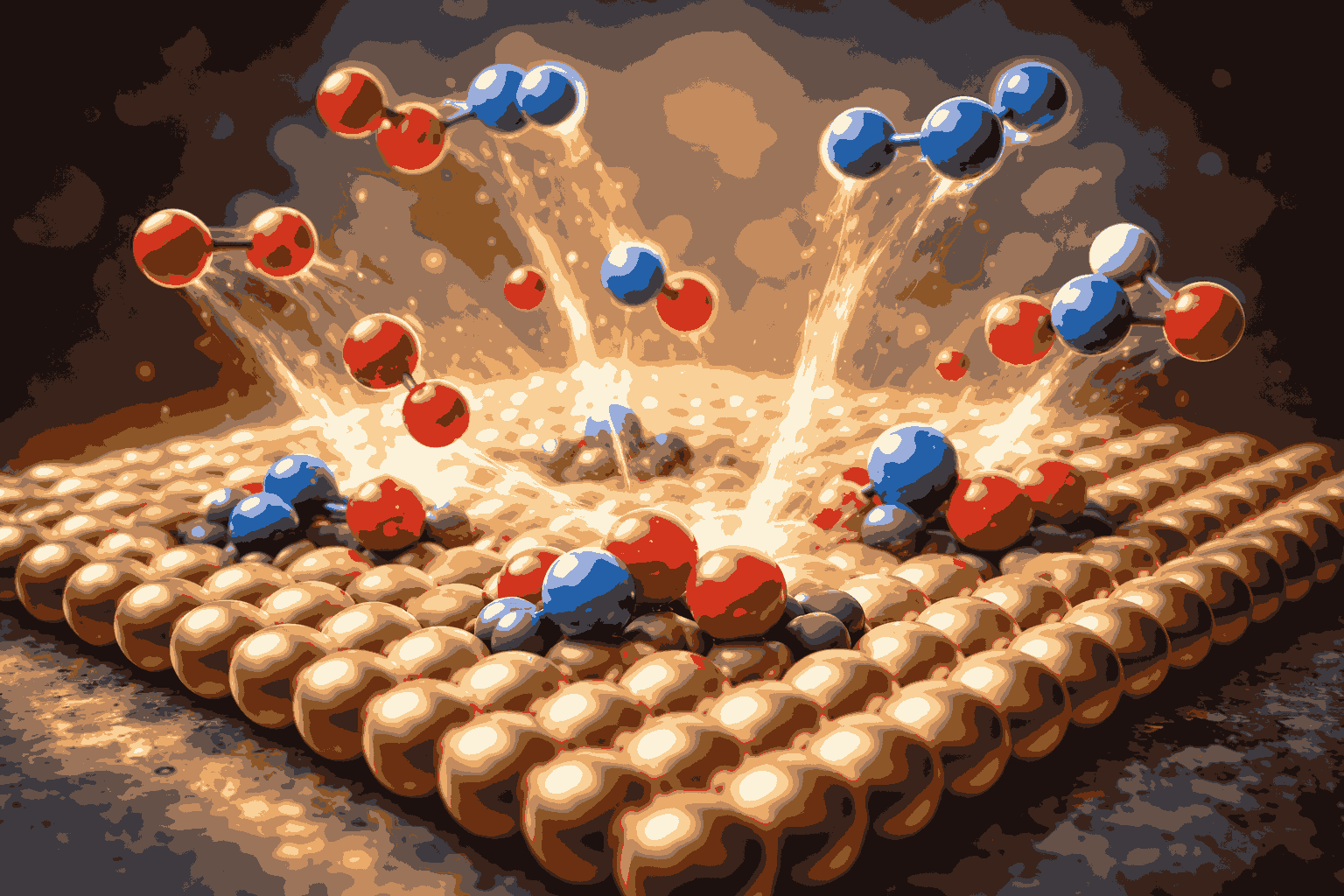
According to the adsorption theory of catalysis MCQs Class 12 with solutions, when reactant molecules come into contact with the surface of a catalyst, they become adsorbed on that surface. This adsorption weakens the bonds within the reactant molecules and allows them to react more easily. As a result, the activation energy required for the reaction decreases and the reaction proceeds faster. Aspirants studying surface chemistry often strengthen their understanding of this process by solving Adsorption Theory of Catalysis MCQs Class 12 With Solutions, which focus on how adsorption influences reaction rates.
Catalysis based on adsorption usually occurs in heterogeneous catalytic reactions, where the catalyst is in a different phase from the reactants. In such cases, the catalyst surface provides active sites where reactant molecules attach temporarily. Once the reaction occurs, the products are released from the surface and the catalyst becomes available again for further reactions. These step-by-step mechanisms are frequently discussed when aspirants practice Adsorption Theory of Catalysis MCQs Class 12 With Solutions, because many questions focus on the role of catalyst surfaces.
The adsorption theory involves several important stages. The first stage is diffusion of reactant molecules to the surface of the catalyst. The second stage involves adsorption of these molecules onto the catalyst surface. The third stage is the formation of intermediate activated complexes on the surface. Finally, the reaction occurs and products desorb from the surface of the catalyst. Understanding these stages helps aspirants analyze catalytic reactions more clearly while solving Adsorption Theory of Catalysis MCQs Class 12 With Solutions.
Another important aspect of Adsorption Theory of Catalysis MCQs Class 12 With Solutions is the concept of active centers on the catalyst surface. Active centers are specific sites where adsorption and reaction take place. The number and nature of these active centers determine the effectiveness of the catalyst. Catalysts with larger surface areas usually have more active centers and therefore show greater catalytic activity. This concept is frequently tested in Adsorption Theory of Catalysis MCQs Class 12 With Solutions, where aspirants must relate surface area with catalytic efficiency.
Temperature and pressure also affect adsorption processes. At lower temperatures, adsorption is generally stronger because molecules have less kinetic energy and remain attached to the surface longer. However, very strong adsorption can sometimes reduce the reaction rate because reactants may not leave the surface easily. Balancing adsorption and desorption is therefore essential for efficient catalysis. Students studying reaction mechanisms often encounter these ideas when practicing Adsorption Theory of Catalysis MCQs Class 12 With Solutions.
The adsorption theory of catalysis MCQs Class 12 with solutions is widely applied in industrial chemical processes. For example, in the Haber process for ammonia production, finely divided iron acts as a catalyst and provides a surface for nitrogen and hydrogen molecules to adsorb and react. Similarly, in the hydrogenation of vegetable oils, nickel catalysts help hydrogen molecules attach to the surface and react with unsaturated compounds. These real-world applications are often included in Adsorption Theory of Catalysis MCQs Class 12 With Solutions, helping aspirants understand how catalytic reactions occur in industrial settings.
Another important concept related to adsorption is catalyst poisoning. Catalyst poisoning occurs when foreign substances block the active sites on the catalyst surface, preventing reactants from adsorbing properly. This reduces the efficiency of the catalyst and slows down the reaction rate. Many conceptual questions in Adsorption Theory of Catalysis MCQs Class 12 With Solutions focus on identifying substances that act as catalytic poisons and understanding how they affect reactions.
Catalysts can also show selectivity, meaning that a catalyst may favor the formation of a particular product over others. This property is extremely valuable in industrial chemistry where controlling product formation is essential. Selectivity is closely related to adsorption behavior, since different reactants or intermediates may adsorb differently on the catalyst surface. Aspirants preparing for examinations often encounter such concepts in Adsorption Theory of Catalysis MCQs Class 12 With Solutions.
In addition to heterogeneous catalysis, adsorption also plays a role in many environmental applications. Catalytic converters in automobiles use adsorption and catalytic reactions to convert harmful gases into less harmful substances. Similarly, adsorption processes are used in pollution control and gas purification. These practical applications further emphasize why practicing Adsorption Theory of Catalysis MCQs Class 12 With Solutions is helpful for aspirants studying surface chemistry.
Understanding adsorption theory of Catalysis MCQs Class 12 with solutions also improves a student’s ability to interpret reaction mechanisms and catalytic behavior in different chemical systems. By studying examples, analyzing mechanisms, and practicing conceptual problems, aspirants can gain a deeper understanding of how catalysts work. Regular practice with Adsorption Theory of Catalysis MCQs Class 12 With Solutions allows learners to strengthen their analytical skills and apply theoretical knowledge to exam-based questions.
Adsorption Theory of Catalysis MCQs Class 12 With Solutions:
Q1.
Which one of the following reactions is an example of heterogeneous catalysis?
A. 2CO(g)+O2(g)→NO(g)2CO2(g)2CO(g) + O_2(g) \xrightarrow{NO(g)} 2CO_2(g)
B. 2SO2(g)+O2(g)→NO(g)2SO3(g)2SO_2(g) + O_2(g) \xrightarrow{NO(g)} 2SO_3(g)
C. 2CO(g)+O2(g)→Pt(s)2CO2(g)2CO(g) + O_2(g) \xrightarrow{Pt(s)} 2CO_2(g)
D. CH3CHO(g)→I2(g)CO(g)CH_3CHO(g) \xrightarrow{I_2(g)} CO(g)
Answer: C
Q2.
Which of the following is an example of heterogeneous catalysis reaction?
A. 2SO2(g)+O2(g)→NO(g)2SO3(g)2SO_2(g) + O_2(g) \xrightarrow{NO(g)} 2SO_3(g)
B. Hydrolysis of aqueous sucrose with mineral acid
C. 2H2O2(l)→Pt(s)2H2O(l)+O2(g)2H_2O_2(l) \xrightarrow{Pt(s)} 2H_2O(l) + O_2(g)
D. Hydrolysis of liquid with aqueous mineral acid
Answer: C
Q3.
An example of homogeneous catalysis is
A. Contact process
B. Haber’s process
C. Lead chamber process
D. Hydrogenation of oils
Answer: C
Q4.
Which one of the following is an example of homogeneous catalysis?
A. Manufacture of sulphuric acid by Contact process
B. Manufacture of ammonia by Haber process
C. Hydrolysis of sucrose with dilute HCl
D. Hydrogenation of oil
Answer: C
Q5.
In the reaction
H2O2(aq)→I−H2O+12O2H_2O_2(aq) \xrightarrow{I^-} H_2O + \frac{1}{2}O_2
iodide ion acts as
A. Homogeneous catalyst
B. Acid catalyst
C. Heterogeneous catalyst
D. Enzyme catalyst
Answer: A
Q6.
Which will act as the best protective colloid?
A. Gelatin
B. Starch
C. Egg albumin
D. Gum arabic
Answer: A
Q7.
Which gas is strongly adsorbed by activated charcoal?
A. H₂
B. N₂
C. O₂
D. SO₂
Answer: D
Q8.
Emulsions of oil in water are unstable. For stabilization
A. Both statements correct
B. Both incorrect
C. Statement I correct but II incorrect
D. Statement I incorrect but II correct
Answer: C
Q9.
If initial pressure of gas is 0.03 atm, mass absorbed per gram of adsorbent is
A. 14 × 10⁻² g
B. 10 × 10⁻² g
C. 11 × 10⁻² g
D. 12 × 10⁻² g
Answer: D
Q10.
Correct matching of colloids
List II List II
A.Sol 1.Solid in liquid
B.Foam 2.Gas in liquid
C.Emulsion 3.Liquid in liquid
D.Aerosol 4.Solid or liquid in gas
A. A–1 B–2, C–3, D–4
B. A–3, B–1, C–4 D–2
C. A–2, B–3, C–1, D–4
D. A–4, B–3, C–2, D–1
Answer: A
Q11.
The gas most strongly adsorbed on activated charcoal is
A. Hydrogen
B. Methane
C. Carbon dioxide
D. n-Butane
Answer: D
Q12.
Which statement is NOT true for physisorption?
A. Due to van der Waals forces
B. Not specific
C. Requires high activation energy
D. Depends on gas nature
Answer: C
Q13.
Zeta potential is related to
A. Colour
B. Tyndall effect
C. Charge on colloidal particles
D. Brownian movement
Answer: C
Q14.
Mass of acetic acid adsorbed per gram carbon is
A. 5 g
B. 4 g
C. 3 g
D. 2 g
Answer: D
Q15.
Example of heterogeneous catalysis
A. 2SO2+O2→NO2SO32SO_2 + O_2 \xrightarrow{NO} 2SO_3
B. Hydrolysis of sucrose
C. N2+O2→Pt2NON_2 + O_2 \xrightarrow{Pt} 2NO
D. Ester hydrolysis with NaOH
Answer: C
Q16.
Which is NOT heterogeneous catalysis?
A. Cracking of hydrocarbons using zeolite
B. Decomposition of ozone using NO
C. Contact process
D. Fischer–Tropsch process
Answer: B
Q17.
Which is NOT heterogeneous catalytic reaction?
A. Haber process
B. Combustion of coal
C. Hydrogenation of vegetable oils
D. Ostwald process
Answer: B
Q18.
Example of homogeneous catalysis
A. Oxidation of NH₃ in Ostwald process
B. Oxidation of SO₂ in contact process
C. Oxidation of SO₂ in lead chamber process
D. Manufacture of NH₃
Answer: C
Q19.
According to adsorption theory, reaction rate increases because
A. Adsorption lowers activation energy
B. Reactant concentration increases at catalyst surface
C. Activation energy increases
D. Heat produced
Answer: A
Q20.
Feature of catalysis shown by given reactions (different products with different catalysts)
A. Activity
B. Selectivity
C. Catalytic promoter
D. Catalytic poison
Answer: B
Q21.
Hydrogenation of vegetable oils using Ni catalyst is
A. Enzyme catalysis
B. Homogeneous catalysis
C. Heterogeneous catalysis
D. Liquid catalysis
Answer: C
Q22.
Negative catalysis is also called
A. Autocatalysis
B. Induced catalysis
C. Inhibition
D. Enzyme catalysis
Answer: C
Q23.
A negative catalyst
A. Lowers activation energy
B. Does not change activation energy
C. Provides new pathway
D. Increases activation energy
Answer: D
Q24.
Example of autocatalysis
A. 2AsH3→2As+3H22AsH_3 \rightarrow 2As + 3H_2
B. Haber process
C. Contact process
D. Hydrolysis of sucrose
Answer: A
Q25.
Ion with minimum coagulating value
A. SO42−SO_4^{2-}
B. [Fe(CN)6]3−[Fe(CN)_6]^{3-}
C. Ba2+Ba^{2+}
D. Al3+Al^{3+}
Answer: D
Q26.
Homogeneous catalytic reaction
A. N2+3H2→Fe2NH3N_2 + 3H_2 \xrightarrow{Fe} 2NH_3
B. 2SO2+O2→NO2SO32SO_2 + O_2 \xrightarrow{NO} 2SO_3
C. CO+3H2→NiCH4CO + 3H_2 \xrightarrow{Ni} CH_4
D. 2SO2+O2→V2O52SO32SO_2 + O_2 \xrightarrow{V_2O_5} 2SO_3
Answer: B
Q27.
Example of autocatalysis
A. Decomposition of KClO₃
B. Oxidation of SO₂
C. Formation of NH₃
D. Oxidation of oxalic acid by KMnO₄
Answer: D
Q28.
Adsorption theory applies to
A. Homogeneous catalysis
B. Heterogeneous catalysis
C. Autocatalysis
D. Induced catalysis
Answer: B
Q29.
Reaction 2SO2+O2→V2O52SO32SO_2 + O_2 \xrightarrow{V_2O_5} 2SO_3 is
A. Neutralization
B. Homogeneous catalysis
C. Heterogeneous catalysis
D. Irreversible reaction
Answer: C
Q30.
Which statement is correct regarding catalysts?
A. Catalyst changes equilibrium constant
B. Catalyst changes product
C. Catalyst changes activation energy only
D. Catalyst is consumed during reaction
Answer: C
Conclusion on Adsorption Theory of Catalysis MCQs Class 12 With Solutions
In conclusion, the adsorption theory of catalysis provides a clear explanation of how catalysts accelerate chemical reactions by allowing reactants to adsorb onto their surfaces. This process reduces activation energy and makes reactions occur more efficiently. By studying the stages of adsorption, the role of active sites, and the influence of temperature and pressure, aspirants can better understand catalytic processes. Consistent practice with Adsorption Theory of Catalysis MCQs Class 12 With Solutions helps aspirants build confidence, improve conceptual clarity, and perform well in chemistry examinations.