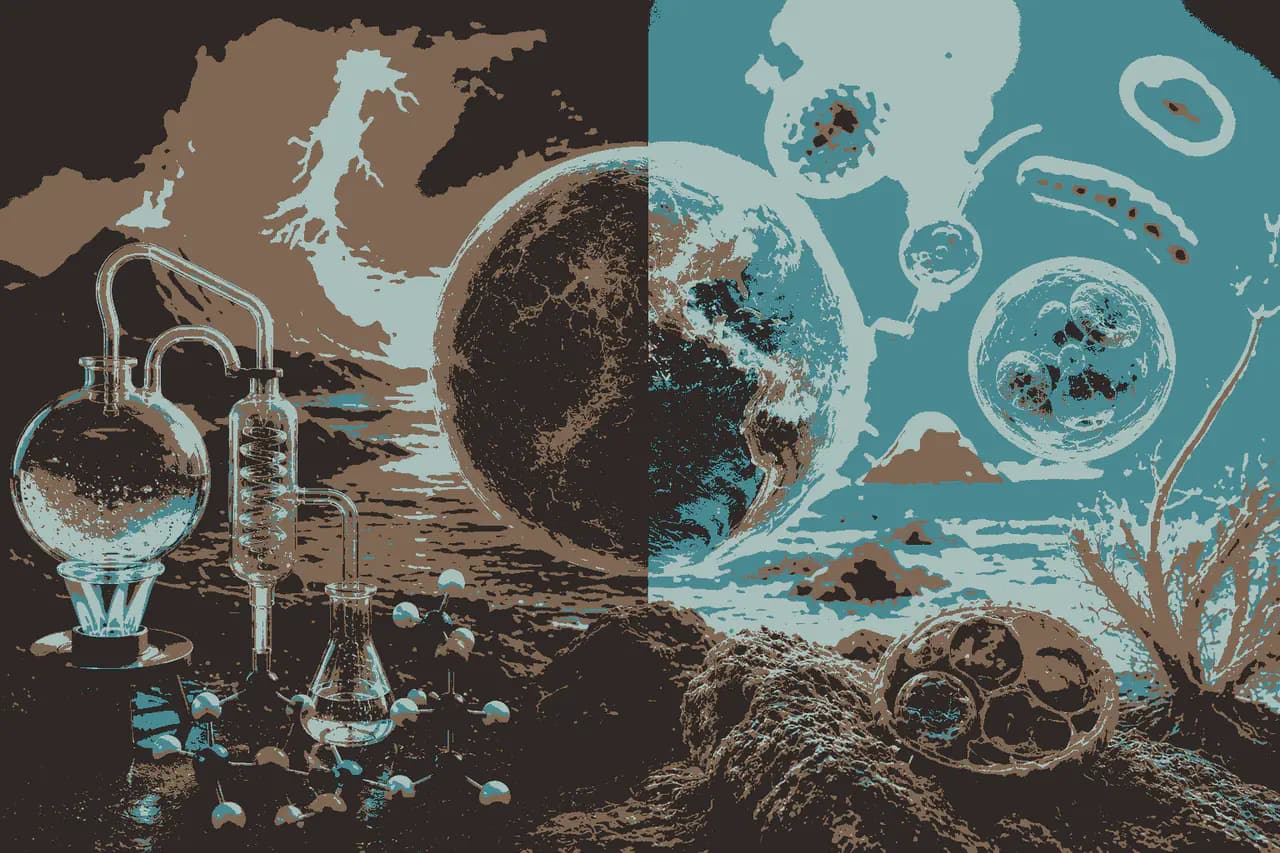
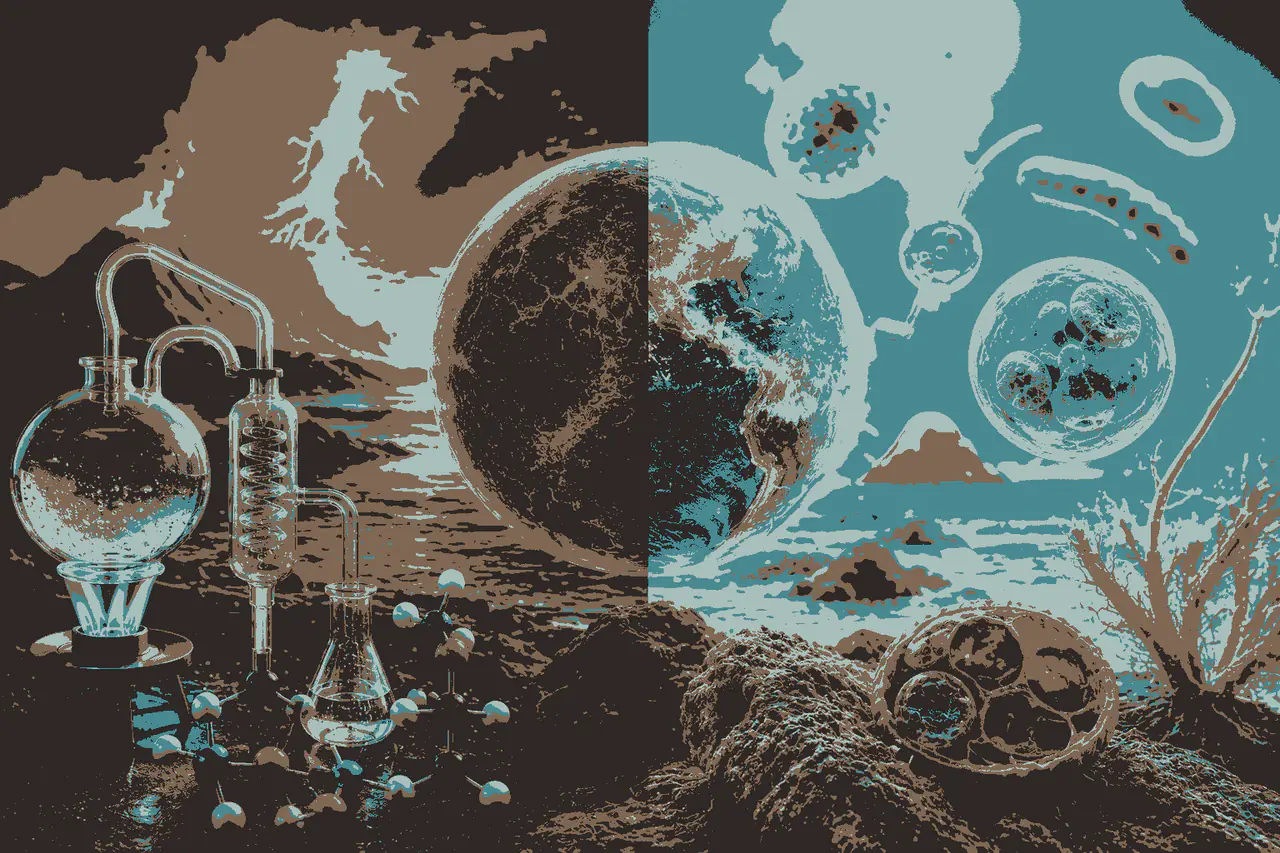
Abiogenesis and biogenesis are two of the most important concepts in evolutionary biology, and aspirants preparing for NEET often search for Abiogenesis and Biogenesis MCQs for NEET to strengthen their understanding of origin-of-life theories. The topic explains how scientists attempted to understand whether life emerged from non-living matter or from pre-existing life forms. Because questions from this chapter are frequently asked in competitive examinations, Abiogenesis and Biogenesis MCQs for NEET has become an essential revision resource for aspirants aiming to improve conceptual clarity and scoring potential.
The theory of abiogenesis states that life originated spontaneously from non-living substances. Early scientists believed that organisms such as worms, insects, and microorganisms could arise naturally from decaying organic matter. Aspirants studying Abiogenesis and Biogenesis MCQs for NEET learn how this theory dominated scientific thinking for centuries before experimental evidence challenged it. Understanding the historical background of abiogenesis is important because many NEET questions are directly based on the experiments that disproved spontaneous generation.
Biogenesis, on the other hand, states that life originates only from pre-existing life. Aspirants revising through Abiogenesis and Biogenesis MCQs for NEET frequently study the contributions of scientists like Francesco Redi, Lazzaro Spallanzani, and Louis Pasteur, who performed experiments disproving spontaneous generation. These scientists demonstrated that microorganisms and living organisms do not arise automatically from non-living matter when contamination is prevented. This concept is repeatedly highlighted in Abiogenesis and Biogenesis MCQs for NEET because it forms the scientific basis of modern biology.
Francesco Redi conducted one of the earliest experiments against abiogenesis. He placed meat in different jars, some covered and some uncovered, and observed that maggots appeared only where flies could reach the meat. Aspirants preparing with Abiogenesis and Biogenesis MCQs for NEET often revise this experiment because questions about Redi’s contribution are common in board and entrance examinations. His findings strongly supported the concept of biogenesis.
Another important scientist included in Abiogenesis and Biogenesis MCQs for NEET is Lazzaro Spallanzani. He demonstrated that boiled broth remained free of microorganisms if sealed properly. This experiment provided further evidence against spontaneous generation. Aspirants benefit from studying Abiogenesis and Biogenesis MCQs for NEET because these experiments are frequently compared in objective questions to test conceptual understanding.
Louis Pasteur finally disproved abiogenesis conclusively through his famous swan-neck flask experiment. Aspirants studying Abiogenesis and Biogenesis MCQs for NEET learn that Pasteur boiled nutrient broth in flasks with curved necks that allowed air to enter but trapped dust particles and microorganisms. The broth remained sterile unless the neck was broken. This experiment established that microorganisms arise from existing microorganisms rather than spontaneously from non-living matter. Questions related to Pasteur’s experiment are extremely important in Abiogenesis and Biogenesis MCQs for NEET.
The debate between abiogenesis and biogenesis also helped scientists understand the origin of life more scientifically. Modern theories suggest that while spontaneous generation in its old form is incorrect, primitive Earth conditions allowed chemical evolution to produce simple organic molecules. Aspirants using Abiogenesis and Biogenesis MCQs for NEET often study how Oparin and Haldane proposed that life may have originated through gradual chemical evolution under reducing atmospheric conditions.
The Miller-Urey experiment is closely connected with Abiogenesis and Biogenesis MCQs for NEET because it experimentally supported chemical evolution. Stanley Miller and Harold Urey simulated primitive Earth conditions using methane, ammonia, hydrogen, and water vapour, along with electric sparks. Amino acids formed in the apparatus, suggesting that organic compounds necessary for life could form naturally. Aspirants revising through Abiogenesis and Biogenesis MCQs for NEET often focus on this experiment because it bridges the concepts of chemical evolution and the origin of life.
Another important concept included in Abiogenesis and Biogenesis MCQs for NEET is the reducing atmosphere of primitive Earth. Free oxygen was absent, allowing organic molecules to form without oxidation. Aspirants frequently revise these atmospheric conditions because questions about methane, hydrogen, ammonia, and water vapour are common in NEET examinations.
The topic also helps aspirants understand how scientific theories evolve through experimentation and evidence. By practicing Abiogenesis and Biogenesis MCQs for NEET, aspirants improve their ability to compare experiments, identify scientists, and understand the differences between spontaneous generation, biogenesis, and chemical evolution. This improves conceptual retention and helps in solving application-based questions more accurately.
Regular revision using Abiogenesis and Biogenesis MCQs for NEET also strengthens understanding of evolutionary biology and molecular origins of life. Since NEET biology contains many conceptual and assertion-reason questions, aspirants who repeatedly practice Abiogenesis and Biogenesis MCQs for NEET often gain better confidence in handling tricky objective questions.
Abiogenesis and Biogenesis MCQs for NEET:
- Who proposed the Big Bang theory?
A. Kant
B. Lemaitre
C. K. Bahadur
D. Weismann
Answer: B. Lemaitre
Explanation: Big Bang theory was proposed by Georges Lemaitre in 1931. According to this theory, the universe began from a single explosive event.
- Panspermia means:
A. Creation of life from dead matter
B. Creation of life from chemicals
C. Origin of sperm in testes
D. Transfer of spores from other planets to Earth
Answer: D. Transfer of spores from other planets to Earth
Explanation: Panspermia suggests that life reached Earth from outer space through meteorites and comets.
3. The protein first hypothesis (in origin of life) was given by
A. Sidney Fox
B. Thomas Cech
C. Cairns Smith
D. Sidney Altman
Answer: A. Sidney Fox
Explanation:
Sidney Fox proposed the protein-first hypothesis. He demonstrated that amino acids under hot and dry conditions could polymerize to form protein-like molecules called proteinoids.
- Following are the two statements regarding the origin of life:
I. The earliest organisms that appeared on Earth were non-green and presumably anaerobes.
II. The first autotrophic organisms were chemoautotrophs that never released oxygen.
A. II is correct, but I is false
B. Both I and II are correct
C. Both I and II are false
D. I is correct, but II is false
Answer: B. Both I and II are correct
Explanation: The earliest organisms were anaerobic and non-green. The first autotrophs were chemoautotrophs that did not release oxygen.
- Which theory on the origin of life is mostly accepted?
A. Special creation
B. Steady state
C. Panspermia
D. Chemical origin
Answer: D. Chemical origin
Explanation: Chemical evolution theory is widely accepted for explaining the origin of life.
- Coacervates were discovered by:
A. Huxley
B. Fox
C. Oparin
D. Miller
Answer: C. Oparin
Explanation: Alexander Oparin discovered coacervates, microscopic structures formed from organic molecules.
- In Urey and Miller’s experiment, the ratio of ammonia : hydrogen : methane was
A. 1 : 2 : 2
B. 2 : 2 : 1
C. 1 : 1 : 2
D. 1 : 2 : 1
Answer: A. 1 : 2 : 2
Explanation: The experiment used ammonia, hydrogen, and methane in the ratio 1 : 2 : 2.
- Francisco Redi and Spallanzani disproved the theory of
A. Abiogenesis
B. Biogenesis
C. Cosmozoic
D. Special creation
Answer: A. Abiogenesis
Explanation: Their experiments disproved spontaneous generation.
- Origin of life took place in/on
A. Water
B. Air
C. Mountains
D. Land
Answer: A. Water
Explanation: Life is believed to have originated in water.
- In Miller’s experiment, which was NOT part of the starting chemicals?
A. H₂S
B. H₂
C. NH₃
D. CH₄
Answer: A. H₂S
Explanation: Hydrogen sulphide was not used in the original Miller-Urey experiment.
- Theory of catastrophism was supported by
A. Louis Pasteur
B. A.I. Oparin
C. Cuvier
D. Haldane
Answer: C. Cuvier
Explanation: Georges Cuvier proposed catastrophism.
- The development of mammalian heart through fish-like and frog-like stages supports
A. Lamarck’s principle
B. Mendelian principles
C. Biogenetic law
D. Hardy-Weinberg law
Answer: C. Biogenetic law
Explanation: Embryonic stages repeat evolutionary history.
- Which is considered most essential in the origin of life?
A. Enzymes
B. Nucleic acids
C. Carbohydrates
D. Proteins
Answer: B. Nucleic acids
Explanation: Nucleic acids store and transfer genetic information.
- Theory of abiogenesis was conclusively disproved by
A. Swan-neck experiment by Richter
B. Broth experiment by Spallanzani
C. Swan-neck experiment by Pasteur
D. Maggot experiment by Redi
Answer: C. Swan-neck experiment by Pasteur
Explanation: Pasteur disproved spontaneous generation using swan-neck flask experiments.
- Which experiment suggested that living organisms cannot arise spontaneously from non-living matter?
A. Microbes did not appear in stored meat
B. Larvae appeared in decaying matter
C. Microbes appeared from unsterilized matter
D. Heated and sealed meat did not spoil
Answer: D. Heated and sealed meat did not spoil
Explanation: Sterilized and sealed meat remained free of microbes.
- Primitive Earth had
A. Reducing atmosphere without free oxygen
B. Oxidizing atmosphere with free oxygen
C. Both (a) and (b)
D. None of the above
Answer: A. Reducing atmosphere without free oxygen
Explanation: Primitive atmosphere lacked free oxygen.
- The term protobiogenesis refers to theory of
A. Panspermia
B. Special creation
C. Biochemical origin of life
D. Spontaneous generation
Answer: C. Biochemical origin of life
Explanation: Protobiogenesis explains origin of life from chemical substances.
- Pasteur’s experiment refuted spontaneous generation because
A. He did not boil the flask long enough
B. Swan-neck flask prevented contamination by microbes
C. The flask was tightly covered
D. Muslin cloth was used
Answer: B. Swan-neck flask prevented contamination by microbes
Explanation: The curved neck allowed air but trapped microorganisms.
- Evolution is
A. Progressive development of a race
B. History and development of race along with variations
C. History of race
D. Development of race
Answer: B. History and development of race along with variations
Explanation: Evolution involves gradual hereditary changes over generations.
- Gill slits in vertebrate embryos support the theory of
A. Metamorphosis
B. Biogenesis
C. Organic evolution
D. Recapitulation
Answer: D. Recapitulation
Explanation: Embryonic stages resemble ancestral forms.
- According to Neo-Darwinism, origin of new species is due to
A. Mutations
B. Useful variations
C. Mutations together with natural selection
D. Hybridization
Answer: C. Mutations together with natural selection
Explanation: Neo-Darwinism combines mutation and natural selection.
- Evolutionary history of an organism is called
A. Phylogeny
B. Ancestry
C. Paleontology
D. Ontogeny
Answer: A. Phylogeny
Explanation: Phylogeny studies evolutionary relationships.
- Stanley Miller proposed origin of life by
A. Chemical synthesis
B. Abiogenesis
C. Biogenesis
D. None of these
Answer: A. Chemical synthesis
Explanation: Miller experimentally demonstrated chemical synthesis of organic compounds.
- Which factor is NOT included in modern synthetic theory of evolution?
A. Mutations and genetic recombination
B. Inheritance of acquired characters
C. Natural selection
D. Reproductive isolation
Answer: B. Inheritance of acquired characters
Explanation: Lamarck’s acquired inheritance is not part of modern synthesis.
- Assertion: First cells lived in an oxygen-free atmosphere.
Reason: Organisms retain anaerobic mechanisms for glucose breakdown.
A. Both true and reason explains assertion
B. Both true but reason not explanation
C. Assertion true but reason false
D. Assertion false but reason true
Answer: C. Assertion true but reason false
Explanation: Early life was anaerobic, but the reason does not correctly explain it.
- Match the theories with scientists correctly:
A. Catastrophism
B. Coacervate theory
C. Germplasm theory
D. Mutation theory
A. II IV I III
B. V IV I II
C. III I IV V
D. II IV I V
Answer: C. III I IV V
Explanation:
- Catastrophism – Cuvier
- Coacervate theory – Oparin
- Germplasm theory – Weismann
- Mutation theory – Hugo de Vries
- The material for organic evolution is
A. Effect of hormones
B. Nutritive value
C. Mutation
D. Asexual reproduction
Answer: C. Mutation
Explanation: Mutations create genetic variations necessary for evolution.
- Which scientist is NOT related to organic evolution?
A. Erasmus Darwin
B. Charles Darwin
C. Darlington
D. T.R. Malthus
Answer: C. Darlington
Explanation: Darlington worked mainly on chromosome studies.
- Modern theory of organic evolution is based on
A. Population
B. Mutation
C. Isolation
D. All of these
Answer: D. All of these
Explanation: Modern evolutionary theory combines population genetics, mutation, and isolation.
- Origin of life was due to
A. Will of God
B. Spontaneous generation
C. Effect of Sun rays on mud
D. None of the above
Answer: D. None of the above
Explanation: Origin of life is explained through chemical evolution, not the listed options.
Conclusion on Abiogenesis and Biogenesis MCQs for NEET
In conclusion, Abiogenesis and Biogenesis MCQs for NEET is an essential study resource for aspirants preparing for competitive biology examinations. The topic covers spontaneous generation, experiments by Redi, Spallanzani, and Pasteur, chemical evolution theories, and the scientific understanding of life’s origin. Continuous revision through Abiogenesis and Biogenesis MCQs for NEET helps aspirants strengthen conceptual clarity, improve retention, and perform better in examinations.
Related reading
Ultimate Jean Baptiste Lamarck Evolution Theory MCQs with Answers for Smart NEET Prepraration
Master Jean Baptiste Lamarck Evolution Theory MCQs with Answers for NEET , Class 12 Biology. Learn Lamarckism, acquired characters, evolution concepts examples.
Powerful Common Ancestor of Apes and Humans MCQs with Answers for Competitive Exams
Learn Common Ancestor of Apes and Humans MCQs with Answers for NEET and Class 12 Biology. Explore fossils, evolution, primates, and human ancestry concepts exam