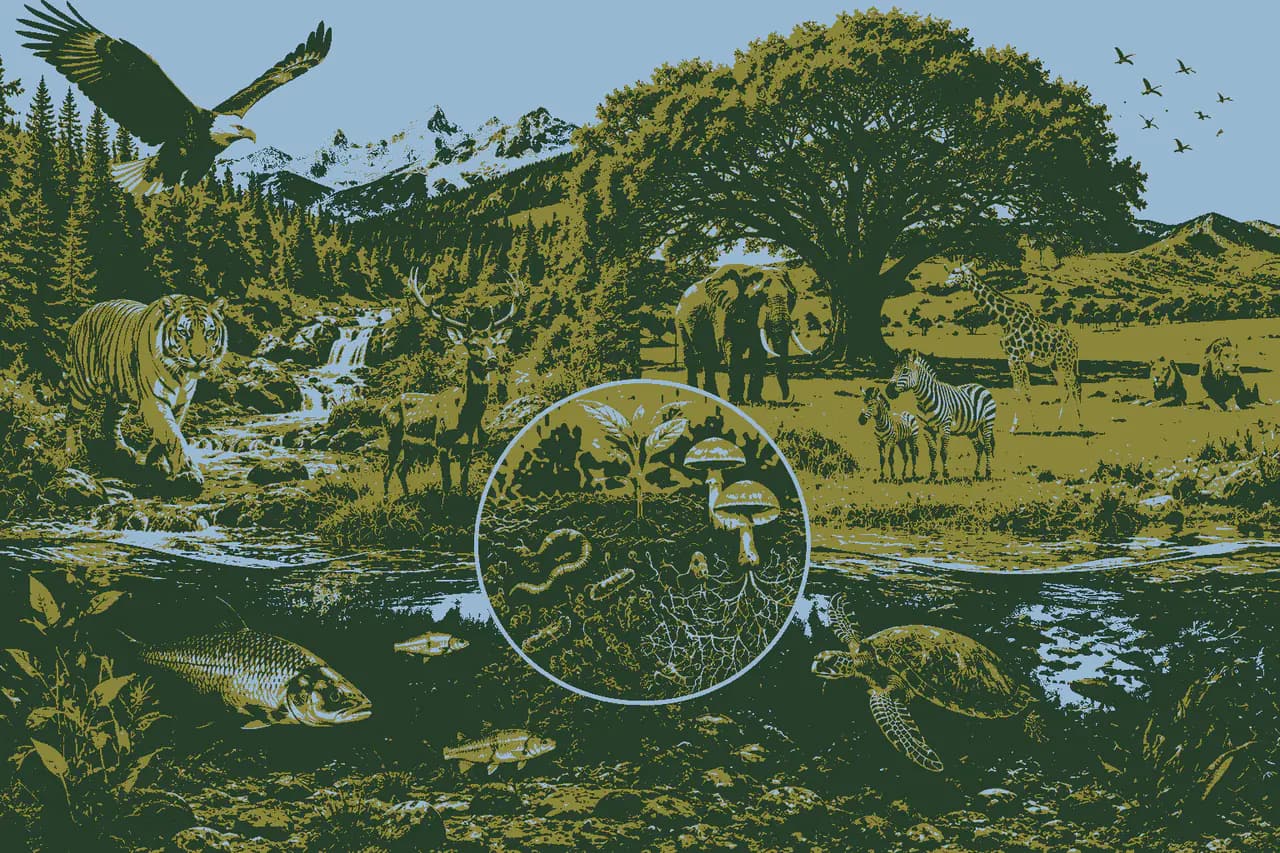
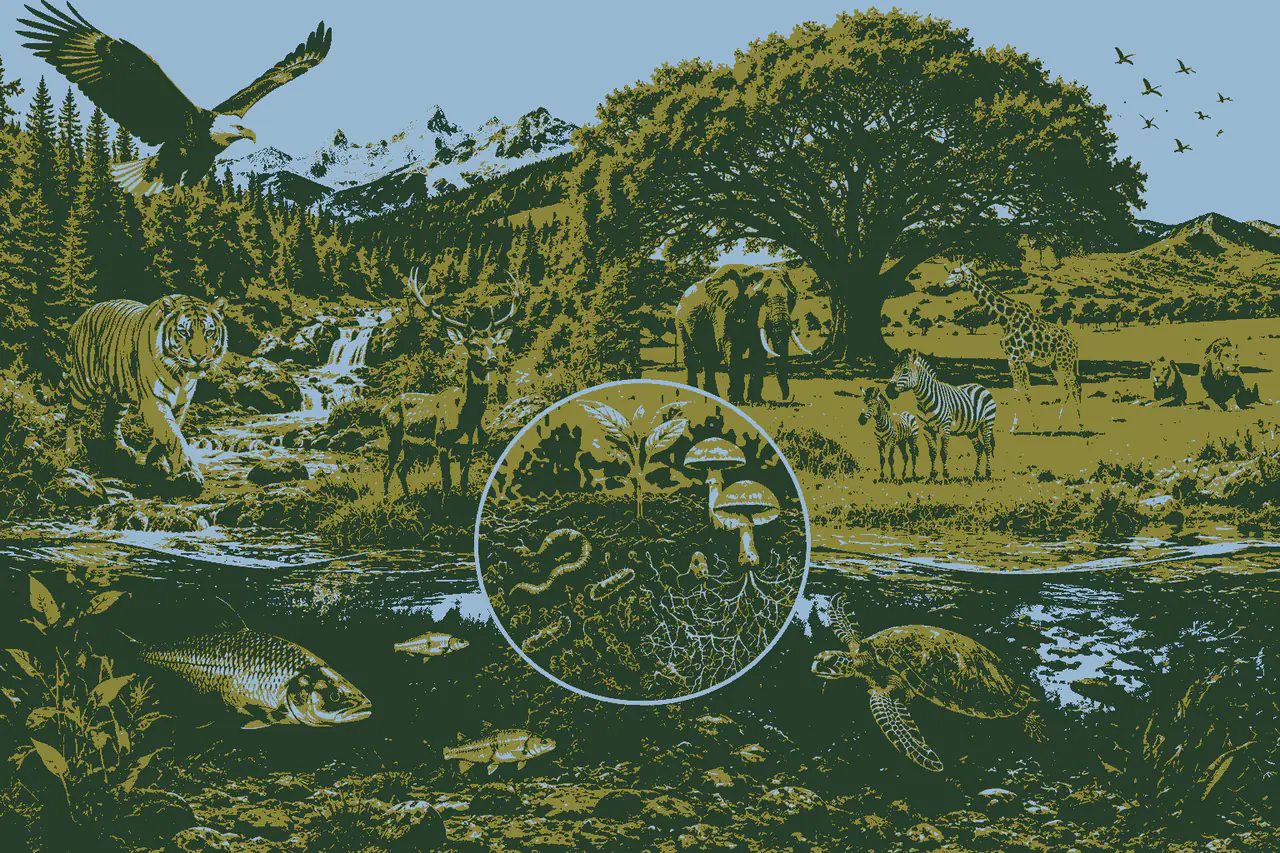
Habitat Niche and Ecosystem MCQs with Answers is an important ecology topic for aspirants who want to understand how organisms live, interact, survive, and perform their roles in nature. Habitat Niche and Ecosystem MCQs with Answers helps aspirants revise the basic structure of ecology by connecting three essential ideas: where an organism lives, what role it performs, and how living and non-living components interact as a system. Habitat Niche and Ecosystem MCQs with Answers becomes easier when aspirants first understand the meaning of habitat. A habitat is the natural place where an organism lives and obtains food, shelter, water, space, and suitable conditions for survival. Habitat Niche and Ecosystem MCQs with Answers explains that habitats may be terrestrial, aquatic, aerial, or soil-based, depending on the organism and its adaptations. Habitat Niche and Ecosystem MCQs with Answers also helps aspirants understand that habitat is not the same as niche. Habitat is the physical address of an organism, while niche is its ecological profession or functional role. Habitat Niche and Ecosystem MCQs with Answers teaches that an organism’s niche includes its feeding habits, breeding behavior, interactions with other organisms, use of resources, and response to environmental factors. Habitat Niche and Ecosystem MCQs with Answers is useful for comparing organisms that may live in the same habitat but occupy different niches. For example, many birds may live in the same forest, but some feed on insects, some on fruits, and some on nectar. Habitat Niche and Ecosystem MCQs with Answers helps aspirants understand that niche differentiation reduces competition and supports coexistence within a community. Habitat Niche and Ecosystem MCQs with Answers is also connected with the concept of ecosystem. An ecosystem is a functional unit of nature where living organisms interact with one another and with abiotic factors such as light, temperature, soil, air, and water. Habitat Niche and Ecosystem MCQs with Answers explains that ponds, forests, grasslands, deserts, lakes, coral reefs, and agricultural fields are examples of ecosystems. Habitat Niche and Ecosystem MCQs with Answers helps aspirants revise the components of an ecosystem. Biotic components include producers, consumers, and decomposers. Abiotic components include sunlight, minerals, water, temperature, gases, and soil. Habitat Niche and Ecosystem MCQs with Answers becomes clearer when aspirants understand that energy flows through ecosystems while nutrients are recycled through processes such as decomposition and nutrient cycling. Habitat Niche and Ecosystem MCQs with Answers is important for understanding producers, consumers, and decomposers. Producers such as green plants prepare food through photosynthesis. Consumers depend directly or indirectly on producers. Decomposers such as bacteria and fungi break down dead organic matter. Habitat Niche and Ecosystem MCQs with Answers helps aspirants connect these groups with food chains, food webs, energy flow, and ecosystem stability. Habitat Niche and Ecosystem MCQs with Answers also explains why biodiversity is essential for ecosystem balance. Different species occupy different niches and contribute to ecosystem functioning. Habitat Niche and Ecosystem MCQs with Answers teaches aspirants that removal of important species, especially keystone species, can disturb the structure and survival of an entire community. This concept is important in conservation biology and environmental science. Habitat Niche and Ecosystem MCQs with Answers becomes strong when aspirants understand the relationship between habitat destruction and species decline. When forests are cut, wetlands are drained, or rivers are polluted, organisms lose their habitats. Habitat Niche and Ecosystem MCQs with Answers helps aspirants understand that habitat loss can lead to reduced population size, migration, competition, extinction, and disturbance of ecological balance. Habitat Niche and Ecosystem MCQs with Answers also connects with ecotone, biome, landscape, and biosphere. An ecotone is a transition zone between two ecosystems. A biome is a large ecological region shaped by climate and vegetation. A landscape contains different ecosystems within natural boundaries. Habitat Niche and Ecosystem MCQs with Answers helps aspirants arrange ecological levels from organism to population, community, ecosystem, biome, and biosphere. Habitat Niche and Ecosystem MCQs with Answers is highly useful for exam preparation because many questions test differences between similar terms. Aspirants should remember that habitat means living place, niche means functional role, and ecosystem means interaction of biotic and abiotic components. Habitat Niche and Ecosystem MCQs with Answers can help aspirants avoid confusion between community, ecosystem, biome, landscape, and biosphere.
Habitat Niche and Ecosystem MCQs with Answers:
- Which of the following statements is true regarding habitat and niche in an ecosystem?
Statement 1: Habitat is a place in which organisms live. Statement 2: The functional role of an organism in an ecosystem is called niche. A. Both statements I and II are true B. Both statements I and II are false C. Statement I is true but Statement II is false D. Statement I is false but Statement II is true Answer: A. Both statements I and II are true Explanation: A habitat is the natural place where an organism or community lives and thrives. A niche refers to the functional role of an organism in an ecosystem, including its interactions, resource use, and ecological position.
- What is the typical temperature range of water in the epilimnion of a thermally stratified lake in summer in temperate regions?
A. 21°C - 25°C B. 4°C - 5°C C. 4°C - 21°C D. 35°C - 45°C Answer: A. 21°C - 25°C Explanation: During summer, the epilimnion is the upper warm layer of a stratified lake. In temperate regions, its water temperature commonly ranges from 21°C to 25°C.
- In a lake ecosystem, which category does Dytiscus belong to?
A. Nekton B. Neuston C. Periphyton D. Plankton Answer: A. Nekton Explanation: Dytiscus is an aquatic beetle that actively swims through water. Since it can move independently against water currents, it belongs to the nekton category.
- What is the limiting nutrient for both natural and agricultural ecosystems?
A. Nitrogen B. Carbon C. Phosphorus D. Oxygen Answer: A. Nitrogen Explanation: Nitrogen is an essential nutrient for plant growth and ecosystem productivity. It is often a limiting nutrient in both natural and agricultural ecosystems.
-
- Match the ecological interactions with their correct descriptions.
- What is the unit of land containing different ecosystems surrounded by natural boundaries called?
A. Biome B. Landscape C. Ecosphere D. Ecosystem Answer: B. Landscape Explanation: A landscape is a unit of land containing different ecosystems surrounded by natural boundaries such as mountains, rivers, forests, or other physical features.
- Which choices have a compound impact on ecosystem goods and services?
A. Participation in developing community garden B. Use of artificial fertilizers C. Natural pest control D. Increase in consumption Options: A. B, D B. A, B C. A, D D. B, C Answer: B. A, B Explanation: Participation in developing a community garden and use of artificial fertilizers can both have a compound impact on ecosystem goods and services.
- In the rivet popper hypothesis, Paul Ehrlich compared the rivets in an airplane to
A. Ecosystem B. General within a family C. Species within a genus D. Genetic diversity Answer: C. Species within a genus Explanation: In the rivet popper hypothesis, Paul Ehrlich compared an ecosystem to an airplane and species to rivets. The removal of species can weaken ecosystem stability.
- Given below are two statements:
Statement I: Gause's Competitive Exclusion Principle states that two closely related species competing for the same resources cannot coexist indefinitely, and the competitively inferior one will be eliminated eventually. Statement II: In general, carnivores are more adversely affected by competition than herbivores. A. Statement I is incorrect but Statement II is true B. Both Statement I and Statement II are true C. Both Statement I and Statement II are false D. Statement I is correct but Statement II is false Answer: D. Statement I is correct but Statement II is false Explanation: Gause’s Competitive Exclusion Principle states that two species competing for the same limited resources cannot coexist indefinitely. Statement II is false because herbivores and plants are generally more affected by competition than carnivores.
- The purpose of crop rotation is
A. To increase the fertility of soil B. To decrease the fertility of soil C. To prevent soil erosion D. To prevent water erosion Answer: A. To increase the fertility of soil Explanation: Crop rotation improves soil fertility by growing different crops in sequence. It also helps reduce soil erosion, pest build-up, and nutrient depletion.
- Vertical distribution of different species occupying different levels in a biotic community is known as
A. Stratification B. Zonation C. Pyramid D. Divergence Answer: A. Stratification Explanation: Stratification refers to the vertical layering of species in a community. In a forest, trees form the upper layer, shrubs form the middle layer, and herbs and grasses occupy the lower layer.
- Number of wildlife is continuously decreasing. What is the main reason for this?
A. Predation B. Cutting down of forest C. Destruction of habitat D. Hunting Answer: C. Destruction of habitat Explanation: The main reason for the decline of wildlife is habitat destruction. Forest clearing, agriculture, settlements, industries, dams, and roads destroy natural habitats.
- Eutrophication is caused due to
A. Accumulation of minerals B. Effect of UV-C C. Accumulation of metals only D. Accumulation of zooplankton Answer: A. Accumulation of minerals Explanation: Eutrophication occurs when water bodies become enriched with nutrients such as nitrates and phosphates, causing excessive growth of algae and aquatic plants.
- What is a keystone species?
A. A species which makes up only a small proportion of the total biomass of a community, yet has a huge impact on the community's organization and survival B. A common species that has plenty of biomass, yet has a fairly low impact on the community's organization C. A rare species that has minimal impact on the biomass and on other species in the community D. A dominant species that constitutes a large proportion of the biomass and affects many other species Answer: A. A species which makes up only a small proportion of the total biomass of a community, yet has a huge impact on the community's organization and survival Explanation: A keystone species has a disproportionately large effect on ecosystem structure and survival. Its removal may seriously disturb the community.
- The Great Barrier Reef along the east coast of Australia can be categorised as
A. Population B. Community C. Ecosystem D. Biome Answer: C. Ecosystem Explanation: The Great Barrier Reef is a large coral reef ecosystem made up of living organisms and their surrounding abiotic environment.
- Amazon Rain Forest is known as
A. Lungs of Forest B. Lungs of our Planet C. Lungs of Plants D. Lungs of Mars Answer: B. Lungs of our Planet Explanation: The Amazon Rainforest is known as the lungs of our planet because it plays a major role in oxygen production and carbon dioxide absorption through photosynthesis.
- Who proposed that ecosystem is the symbol of structure and function of nature?
A. Tansley B. Odum C. Reiter D. Gardner Answer: A. Tansley Explanation: A. G. Tansley coined the term ecosystem in 1935. An ecosystem is considered the structural and functional unit of ecology.
- Which among the following is not a functional unit of the ecosystem?
A. Decomposition B. Nutrient cycling C. Energy flow D. Pollution Answer: D. Pollution Explanation: Energy flow, nutrient cycling, and decomposition are important functional aspects of an ecosystem. Pollution is not a functional unit of an ecosystem.
- The species, though insignificant in number, determine the existence of many other species in a given ecosystem. Such species is known as
A. Sacred species B. Endemic species C. Keystone species D. Extinct species Answer: C. Keystone species Explanation: Keystone species may be low in number but have a major influence on ecosystem stability and the survival of many other species.
- Benthic organisms are found in
A. Surface of marine water B. Middle of water in sea C. Bottom of sea D. On ground Answer: C. Bottom of sea Explanation: Benthic organisms live at the bottom of seas, lakes, or other water bodies. They may live on the surface of sediments or burrow inside them.
- Overlapping region between two ecosystems is called
A. Biome B. Ecotone C. Niche D. Photic zone Answer: B. Ecotone Explanation: An ecotone is a transition or overlapping zone between two ecosystems. For example, mangrove forests form an ecotone between marine and terrestrial ecosystems.
- Which of the following supports a dense population of plankton and littoral vegetation?
A. Oligotrophic B. Eutrophic C. Lithotrophic D. Agroecotrophic Answer: B. Eutrophic Explanation: Eutrophic water bodies are nutrient-rich and support dense growth of plankton, algae, cyanobacteria, and littoral vegetation.
- Stability of an ecosystem depends upon
A. Primary productivity B. Interchange between producers and consumers C. Number of producers D. Number of consumers Answer: B. Interchange between producers and consumers Explanation: Ecosystem stability depends on balanced interactions and energy exchange between producers, consumers, and decomposers.
- Assertion and Reason:
Assertion (A): Landscape is the unit of land containing different ecosystems surrounded by natural boundaries. Reason (R): Landscape is the level of organization which is higher than an ecosystem. A. Both A and R are correct and R is the correct explanation of A B. Both A and R are correct and R is not the correct explanation of A C. A is correct but R is wrong D. A is wrong but R is correct Answer: A. Both A and R are correct and R is the correct explanation of A Explanation: A landscape contains different ecosystems and is surrounded by natural boundaries. It is considered a level of organization higher than an ecosystem.
- Identify the organisms that belong to the benthos of a lake ecosystem.
A. Gerris and beetles B. Chironomid larvae and red annelids C. Daphnia and Notonecta D. Ranatra and copepods Answer: B. Chironomid larvae and red annelids Explanation: Benthos includes organisms living at the bottom of aquatic ecosystems. Chironomid larvae and red annelids are examples of benthic organisms in lakes.
- In a comparative analogy between an aeroplane and an ecosystem, which matching is correct according to Paul Ehrlich’s Rivet Popper Hypothesis?
List I: i. Rivets ii. Aeroplane iii. Popping of a rivet iv. Rivets on the wings v. Flight safety List II: A. Ecosystem B. Species C. Keystone species D. Proper functioning of the ecosystem E. A species becoming extinct Options: A. i - B, ii - A, iii - E, iv - C, v - D B. i - B, ii - A, iii - C, iv - E, v - D C. i - B, ii - E, iii - E, iv - C, v - A D. i - B, ii - D, iii - C, iv - E, v - A Answer: A. i - B, ii - A, iii - E, iv - C, v - D Explanation: In Paul Ehrlich’s Rivet Popper Hypothesis, an ecosystem is compared to an aeroplane. The rivets represent species, and the popping of a rivet represents the extinction of a species. Rivets on the wings represent keystone species because their removal can cause serious damage. Flight safety represents the proper functioning and stability of the ecosystem.
- Which statement is true about the Amazon rainforest and species richness?
Statement 1: Amazon rainforest is called the lungs of our planet. Statement 2: The number of species per unit area is called species richness. A. Both Statement I and Statement II are true B. Both Statement I and Statement II are false C. Statement I is true, but Statement II is false D. Statement I is false, but Statement II is true Answer: A. Both Statement I and Statement II are true Explanation: The Amazon rainforest is known as the lungs of the planet. Species richness refers to the number of species present in a given area.
- Terracing is done in
A. Desert areas B. Hilly areas C. Dry areas D. Plain areas Answer: B. Hilly areas Explanation: Terracing is practiced in hilly and mountain regions to reduce soil erosion and water runoff.
- Aquatic photodiffraction includes which zones?
A. Euphotic, disphotic and aphotic
B. Aphotic, euphotic and disphotic
C. Euphotic, aphotic and disphotic
D. None of the above
Answer: A. Euphotic, disphotic and aphotic
Explanation: Aquatic photodiffraction includes euphotic, disphotic, and aphotic zones. The euphotic and disphotic zones together form the photic zone.
Conclusion on Habitat Niche and Ecosystem MCQs with Answers
In conclusion, Habitat Niche and Ecosystem MCQs with Answers is a high-value ecology topic for aspirants preparing Class 12 Biology, NEET, and environmental science exams. Habitat Niche and Ecosystem MCQs with Answers gives aspirants a clear understanding of ecological organization, organism roles, species interactions, habitat importance, ecosystem functioning, biodiversity, and conservation.
Related reading
Conquer Organisms Interactions MCQs Solved Answers for Competitive Exams
Revise Organisms Interactions MCQs Solved Answers covering mutualism, commensalism, predation, parasitism, competition, amensalis, ecology for competitive exams
Master Hibernation and Migration MCQs Solved Answers Effortlessly
Revise Hibernation and Migration MCQs Solved Answers covering dormancy, animal migration, winter sleep, homeostasis, biological clocks , and ecology adaptation.