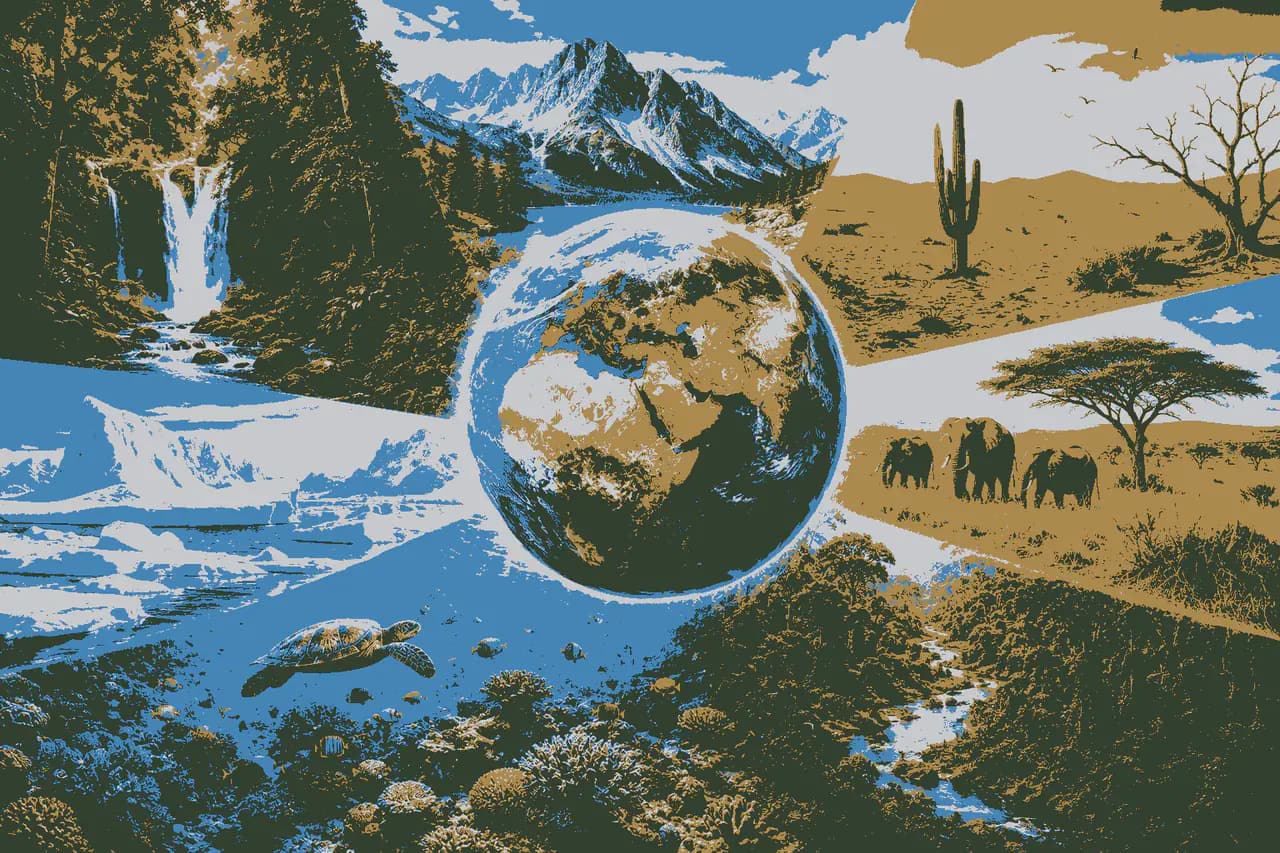
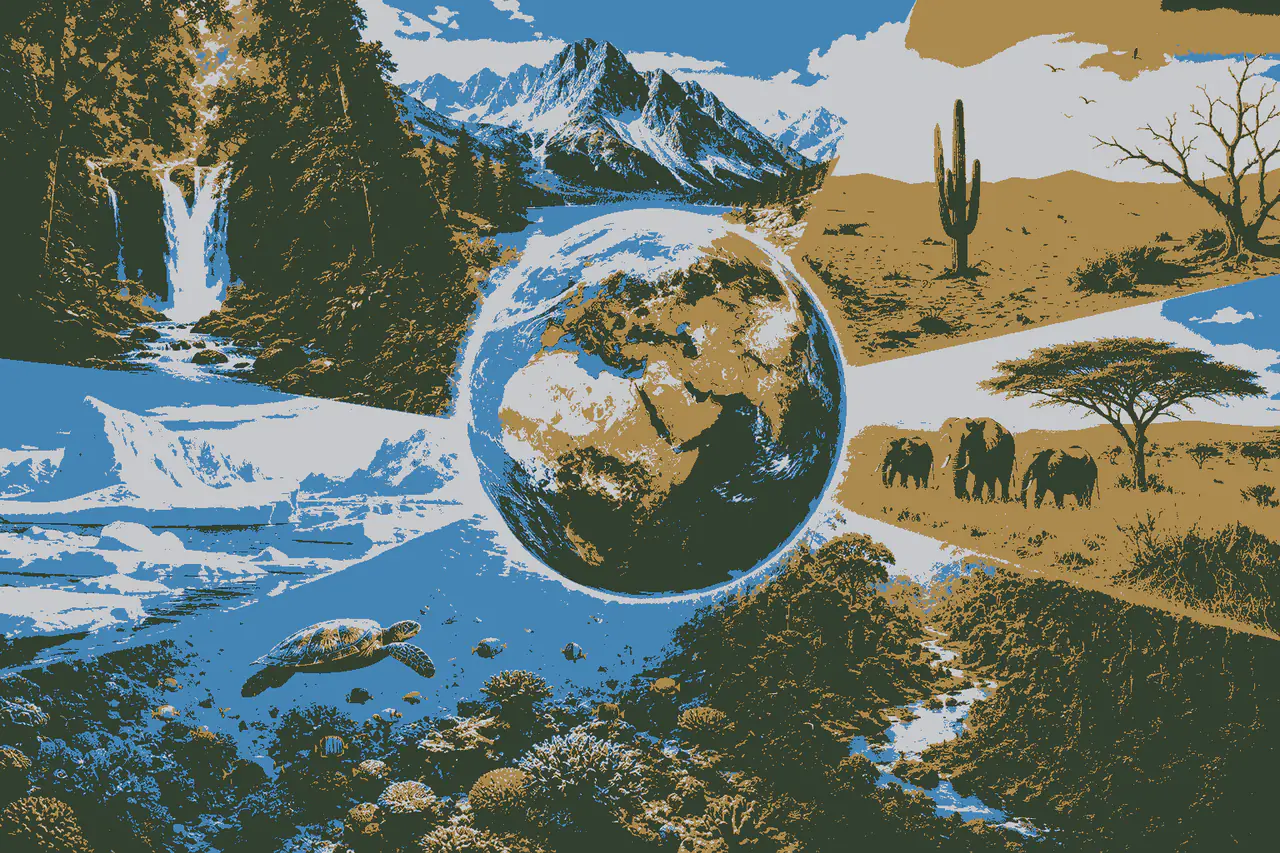
Biosphere and Biome MCQs with Answers is an important ecology topic for aspirants who want to understand the living world at a large scale, including the biosphere, biomes, ecosystems, climatic zones, biodiversity, habitats, and ecological adaptations. Biosphere and Biome MCQs with Answers helps aspirants revise how life exists on Earth through the interaction of land, water, air, organisms, and environmental factors. The biosphere is the global zone of life, while a biome is a major ecological region shaped by climate, vegetation, soil, and animal life. Biosphere and Biome MCQs with Answers is useful for Class 12 Biology, NEET, ecology revision, environmental science exams, and general life science preparation. Biosphere and Biome MCQs with Answers becomes easier when aspirants first understand the biosphere. The biosphere includes all parts of Earth where living organisms are found. Biosphere and Biome MCQs with Answers explains that the biosphere includes portions of the lithosphere, hydrosphere, and atmosphere. The lithosphere provides land and soil, the hydrosphere provides water bodies, and the atmosphere provides gases needed for life. These three physical regions support plants, animals, microbes, and humans. Biosphere and Biome MCQs with Answers helps aspirants remember that the biosphere is not a separate layer but a life-supporting zone spread across Earth. Biosphere and Biome MCQs with Answers is closely linked with the concept of biomes. A biome is a large ecological unit with a characteristic climate, vegetation, and animal community. Biosphere and Biome MCQs with Answers teaches aspirants that forests, grasslands, deserts, tundra, taiga, savannas, and aquatic regions are examples of major biomes. Each biome has unique temperature, rainfall, soil conditions, plant forms, and animal adaptations. For example, desert biomes have drought-resistant plants and water-conserving animals, while tropical rainforests have high rainfall, dense vegetation, and rich biodiversity. Biosphere and Biome MCQs with Answers also helps aspirants understand the difference between habitat, ecosystem, biome, and biosphere. A habitat is the place where an organism lives. An ecosystem is a functional unit where living organisms interact with abiotic factors. A biome is a larger region made up of similar ecosystems. The biosphere includes all ecosystems and biomes on Earth. Biosphere and Biome MCQs with Answers becomes stronger when aspirants arrange these levels in order: organism, population, community, ecosystem, biome, and biosphere. Biosphere and Biome MCQs with Answers is important for studying terrestrial biomes. Tropical rainforests are warm and wet, with high species richness. Temperate forests have moderate rainfall and seasonal changes. Grasslands have grasses as dominant vegetation and support grazing animals. Deserts have very low rainfall and extreme adaptations. Tundra has very cold conditions, permafrost, and short growing seasons. Biosphere and Biome MCQs with Answers helps aspirants connect climate with vegetation and animal life. Biosphere and Biome MCQs with Answers also includes aquatic biomes. Aquatic biomes are mainly divided into freshwater and marine ecosystems. Freshwater biomes include ponds, lakes, rivers, and wetlands. Marine biomes include oceans, coral reefs, estuaries, and coastal zones. Biosphere and Biome MCQs with Answers explains that aquatic life is influenced by salinity, light penetration, temperature, dissolved oxygen, and water movement. Coral reefs are highly productive marine ecosystems, while deep-sea zones have organisms adapted to darkness and high pressure. Biosphere and Biome MCQs with Answers is useful for understanding biodiversity. Different biomes support different kinds of organisms because climate and resources vary from place to place. Biosphere and Biome MCQs with Answers teaches aspirants that tropical regions usually have greater biodiversity than polar regions because of favorable temperature, rainfall, and productivity. Biodiversity within the biosphere includes genetic diversity, species diversity, and ecosystem diversity. Conservation of biomes is necessary because destruction of forests, wetlands, grasslands, and coral reefs affects the entire biosphere. Biosphere and Biome MCQs with Answers is also connected with biosphere reserves. Biosphere reserves are protected areas created for conservation, research, education, and sustainable development. Biosphere and Biome MCQs with Answers helps aspirants remember the three zones of a biosphere reserve: core zone, buffer zone, and transition zone. The core zone is strictly protected, the buffer zone allows limited research and education, and the transition zone permits sustainable human activities. This concept is important for understanding biodiversity conservation. Biosphere and Biome MCQs with Answers should be revised with keywords such as lithosphere, hydrosphere, atmosphere, biome, ecosystem, habitat, biodiversity, tundra, desert, grassland, rainforest, aquatic biome, biosphere reserve, core zone, and conservation. Biosphere and Biome MCQs with Answers becomes easier when aspirants compare each biome based on climate, dominant plants, animal adaptations, and ecological importance. Regular revision helps aspirants avoid confusion between biome and ecosystem.
Biosphere and Biome MCQs with Answers:
- Which step is not included in genetically modified organisms?
A. Identification of DNA with desirable genes B. Non-transfer of the DNA into its progeny C. Introduction of identified DNA into host D. Maintenance of introduced DNA in the host Answer: B. Non-transfer of the DNA into its progeny Explanation: The correct sequence in genetically modified organisms includes identification of DNA with desirable genes, introduction of the identified DNA into the host, maintenance of introduced DNA in the host, and transfer of the DNA to its progeny.
- What is a hinny in terms of interspecific hybridization?
A. Male horse and female donkey B. Male donkey and female horse C. Jack and jennet D. Mare and stallion Answer: A. Male horse and female donkey Explanation: A hinny is an interspecific hybrid produced by crossing a male horse with a female donkey. It is the reciprocal cross of a mule.
- Which statement is incorrect regarding bioresources and genetic engineering?
A. Human protein used to treat emphysema is alpha-1 antitrypsin B. Human insulin is being commercially produced from a transgenic species of Agrobacterium tumefaciens C. Rosie, the first transgenic cow, produced human protein-enriched milk D. Cry1Ab endotoxin obtained from Bacillus thuringiensis is effective against corn borers Answer: B. Human insulin is being commercially produced from a transgenic species of Agrobacterium tumefaciens Explanation: Human insulin is commercially produced using genetically engineered Escherichia coli, not Agrobacterium tumefaciens.
- What is the term used to refer to the unauthorized exploitation of a nation's biological resources by multinational companies?
A. Biowar B. Bioweapon C. Biopiracy D. Bioethics Answer: C. Biopiracy Explanation: Biopiracy refers to the unauthorized and unethical exploitation of a nation's biological resources or traditional knowledge by companies or individuals without proper permission or compensation.
- Who grants biopatents for biological entities in a country?
A. Government B. Educational institute C. Scientist D. Business Answer: A. Government Explanation: Biopatents are granted by the government authority of a country. They give the patent holder exclusive rights over a biological product, process, or resource.
- What is the study of organisms with their environment called?
A. Ecology B. Cytology C. Gene ecology D. None of these Answer: A. Ecology Explanation: Ecology is the branch of biology that deals with the relationship between organisms and their environment.
- What is a keystone species defined as in an ecological community?
A. A species which adds up to only a small proportion of the total biomass of a community, yet has a huge impact on the community's organization and survival B. A common species that has plenty of biomass, yet has a fairly low impact on the community's organization C. A rare species that has minimal impact on the biomass and on other species in the community D. A dominant species that constitutes a large proportion of the biomass and affects many other species Answer: A. A species which adds up to only a small proportion of the total biomass of a community, yet has a huge impact on the community's organization and survival Explanation: A keystone species may have low biomass but plays a major role in maintaining the structure, balance, and survival of an ecological community.
- What is the soil transported by wind known as?
A. Colluvial B. Aeolian C. Alluvial D. Glacial soil Answer: B. Aeolian Explanation: Aeolian soil is wind-blown soil that has been transported and deposited by wind action.
- In which type of plants are air spaces present?
A. Hydrophytes B. Xerophytes C. Mesophytes D. All of these Answer: A. Hydrophytes Explanation: Hydrophytes are plants that grow in water or very wet conditions. They have air spaces that help in buoyancy and gaseous exchange.
- How is the relation between species richness and area described on a logarithmic scale?
A. log S = log C - Z log A B. log S = Z log A C. log S = log C + Z log A D. log S = log C Answer: C. log S = log C + Z log A Explanation: On a logarithmic scale, the species-area relationship is represented as log S = log C + Z log A.
- What are ecotypes?
A. Only morphologically different B. Only genetically different C. Both A and B D. Both morphologically and genetically similar Answer: C. Both A and B Explanation: Ecotypes are populations of a species that differ morphologically and genetically due to adaptation to different environmental conditions.
- What is the cultivation of plants without the use of soil called?
A. Aquaculture B. Urban farming C. Sericulture D. Hydroponics Answer: D. Hydroponics Explanation: Hydroponics is the cultivation of plants without soil, using a nutrient-rich water solution.
- Which element acts as a catalyst in the degradation of ozone and release of molecular oxygen in the stratosphere?
A. Carbon B. Chlorine C. Oxygen D. Iron Answer: B. Chlorine Explanation: Chlorine acts as a catalyst in the breakdown of ozone in the stratosphere, leading to the release of molecular oxygen.
- Synecology refers to what in ecology?
A. Ecological study of individual species B. Study of ecological communities C. Plant ecology D. Physiological ecology Answer: B. Study of ecological communities Explanation: Synecology is the study of ecological communities and interactions among different species within a community.
- Plants growing in acidic soil are termed as
A. Halophytes B. Oxalophytes C. Acidophytes D. Hydrophytes Answer: C. Acidophytes Explanation: Plants that grow well in acidic soil are called acidophytes.
- What is important for speciation?
A. Seasonal isolation B. Reproductive isolation C. Behavioral isolation D. Temporal isolation Answer: B. Reproductive isolation Explanation: Reproductive isolation prevents interbreeding between populations and plays an important role in the formation of new species.
- In ecology, what is the basic unit of study?
A. Population B. Organism C. Community D. Species Answer: B. Organism Explanation: The organism is considered the basic unit of study in ecology because ecological interactions begin at the level of the individual organism.
- Different species residing in different geographical areas are known as
A. Allopatric B. Parapatric C. Sympatric D. None of these Answer: A. Allopatric Explanation: Allopatric species are found in different geographical regions and are separated by physical barriers.
- What is the Greek word related to ecology?
A. Ethology B. Oekologie C. Synecology D. Hexicology Answer: B. Oekologie Explanation: The word ecology comes from the Greek words “oikos,” meaning house or dwelling, and “logos,” meaning study or discourse.
- Two species occupying the same or overlapping area are called
A. Sympatric B. Allopatric C. Parapatric D. Ring species Answer: A. Sympatric Explanation: Sympatric species live in the same or overlapping geographical area.
- In which zone of the biosphere reserve is no human activity permitted?
A. Buffer zone B. Core zone C. Manipulation zone D. All of these Answer: B. Core zone Explanation: The core zone is the most strictly protected part of a biosphere reserve. Human activities are prohibited or highly restricted in this zone.
- The niche of a species means
A. Habitat and specific functions of a species B. Specific place where an organism lives C. Specific species function and its competitive power D. None of these Answer: A. Habitat and specific functions of a species Explanation: A niche includes the habitat, role, function, interactions, and resource use of a species in an ecosystem.
- Benthic animals are those which
A. Are submerged in area B. Float on the sea surface C. Are deep dwellers in sea D. Are floating free organisms Answer: C. Are deep dwellers in sea Explanation: Benthic animals live on or near the bottom of aquatic environments such as seas, lakes, and rivers.
- The abundance of a species population within its habitat is called
A. Relative density B. Regional density C. Absolute density D. Niche density Answer: D. Niche density Explanation: Niche density refers to the abundance of a species population occupying a particular ecological niche within its habitat.
- Which of the following statements are true related to ecology?
- Ecologically, habitat is the place in which an organism lives
- Niche is the functional role of an organism in an ecosystem
- Population is a group of organisms of different species in a specific area at a specific time
- An ecosystem is a functional unit of the biosphere
- Ecological organization consists of nine integrative levels, ranging from cell to ecosphere
Options: A. All are correct B. Except III, all are correct C. Except V, all are correct D. Except III and V, all are correct Answer: D. Except III and V, all are correct Explanation: A population is a group of organisms of the same species in a specific area at a specific time. Statement V is also considered incorrect according to the given answer key.
- Niche overlap indicates
A. Active cooperation between two species B. Two different parasites on the same host C. Sharing of one or more resources between two species D. Mutualism between two species Answer: C. Sharing of one or more resources between two species Explanation: Niche overlap occurs when two species use one or more of the same resources in a habitat.
- Hydroponics is a
A. Airless culture B. Waterless culture C. Soilless culture D. None of these Answer: C. Soilless culture Explanation: Hydroponics is a method of growing plants without soil, using nutrient-rich water.
- The part of earth and atmosphere supporting life is
A. Biota B. Biome C. Ecotone D. Biosphere Answer: D. Biosphere Explanation: The biosphere is the part of Earth and its atmosphere where life exists. It includes parts of the lithosphere, hydrosphere, and atmosphere.
- Earth has the maximum amount of oxygen in
A. Atmosphere B. Hydrosphere C. Lithosphere D. Biosphere Answer: C. Lithosphere Explanation: The maximum amount of oxygen on Earth is present in the lithosphere, mainly bound in minerals and rocks such as silicates and oxides.
- The term ecology was coined by
A. Lamarck
B. Bateson
C. Haeckel
D. Spencer
Answer: C. Haeckel
Explanation: The term ecology was coined by Ernst Haeckel. Ecology literally means the study of organisms in their home or environment.
Conclusion on Biosphere and Biome MCQs with Answers
In conclusion, Biosphere and Biome MCQs with Answers is a high-value topic for aspirants preparing ecology and environmental biology. It explains how life is distributed across Earth, how biomes are shaped by climate, and how different ecosystems together form the biosphere. Biosphere and Biome MCQs with Answers helps aspirants connect textbook ecology with real-world environmental issues such as habitat loss, climate change, conservation, and biodiversity protection. With consistent revision, this topic can help aspirants answer ecology-based questions with confidence, clarity, and accuracy.
Related reading
Ultimate Habitat Niche and Ecosystem MCQs with Answers to Boost Exam Success
Habitat Niche and Ecosystem MCQs with Answers is an important ecology topic for aspirants who want to understand how organisms live, interact, survive,…
Conquer Organisms Interactions MCQs Solved Answers for Competitive Exams
Revise Organisms Interactions MCQs Solved Answers covering mutualism, commensalism, predation, parasitism, competition, amensalis, ecology for competitive exams