When preparing for Class 12 Chemistry exams, students often search for reliable and easy study materials. One of the most helpful resources is Non Ionic Detergents Fuels MCQs Class 12 Chemistry With Answers Easy Set, which focuses on key concepts from everyday chemistry and fuel chemistry. This topic is especially important because it combines theoretical knowledge with real-life applications.
The concept of Non Ionic Detergents Fuels MCQs Class 12 Chemistry With Answers Easy Set is essential for understanding detergents and fuels. Non-ionic detergents are those which do not produce ions in aqueous solution. They are widely used in liquid dishwashing and laundry products due to their mild nature and effectiveness even in hard water.
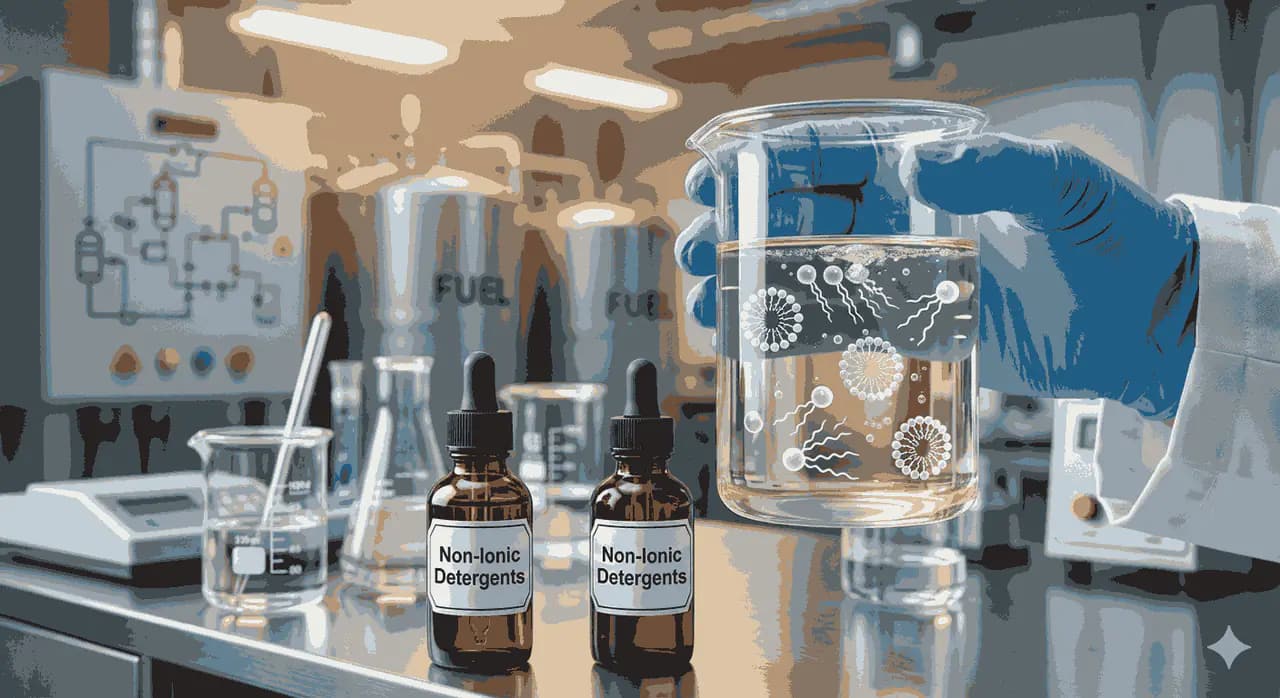
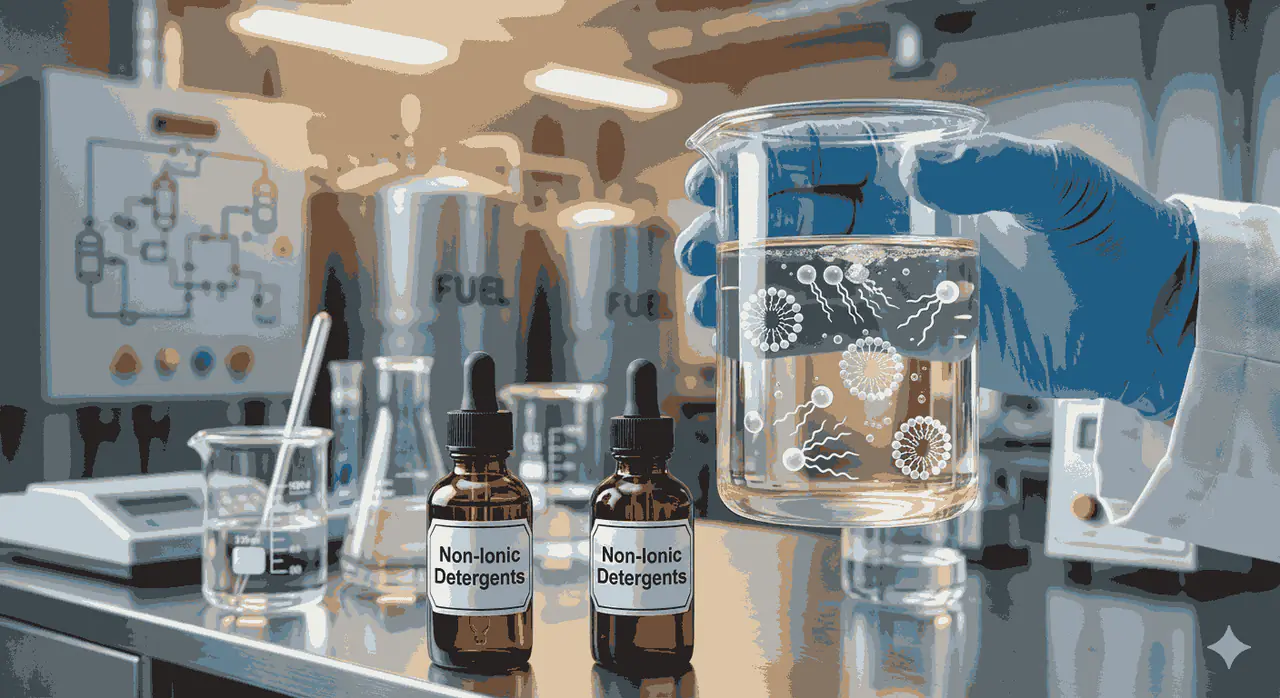
Aspirants studying Non Ionic Detergents Fuels MCQs Class 12 Chemistry With Answers Easy Set should focus on the structure of non-ionic detergents. These detergents usually contain long hydrocarbon chains and polar functional groups like alcohols or ethers. Their cleaning action is based on the formation of micelles, which trap dirt and grease.
The importance of Non Ionic Detergents Fuels MCQs Class 12 Chemistry With Answers Easy Set also extends to fuel chemistry. Fuels are substances that release energy when burned. Understanding different types of fuels, such as fossil fuels, gaseous fuels, and biofuels, is crucial for exam preparation.
When revising Non Ionic Detergents Fuels MCQs Class 12 Chemistry With Answers Easy Set, aspirants should remember that non-ionic detergents are less affected by hard water compared to soaps. This makes them highly useful in industrial and domestic cleaning processes.
Another key area in Non Ionic Detergents Fuels MCQs Class 12 Chemistry With Answers Easy Set is the classification of fuels. Fuels can be solid, liquid, or gaseous, and each type has its own advantages. For example, gaseous fuels like methane have high calorific value and burn cleanly.
The study of Non Ionic Detergents Fuels MCQs Class 12 Chemistry With Answers Easy Set also includes understanding calorific value, which measures the energy produced by a fuel. Hydrogen is known to have one of the highest calorific values among common fuels.
In Non Ionic Detergents Fuels MCQs Class 12 Chemistry With Answers Easy Set, aspirants often learn about the environmental impact of fuels. The use of cleaner fuels and green chemistry practices helps reduce pollution and supports sustainable development.
Non-ionic detergents discussed in Non Ionic Detergents Fuels MCQs Class 12 Chemistry With Answers Easy Set are also biodegradable, making them environmentally friendly. This is an important point frequently asked in exams.
While studying Non Ionic Detergents Fuels MCQs Class 12 Chemistry With Answers Easy Set, it is also important to understand the concept of octane number. This number indicates the anti-knocking property of petrol, which is crucial for engine performance.
The role of additives in fuels is another topic covered under Non Ionic Detergents Fuels MCQs Class 12 Chemistry With Answers Easy Set. Additives like tetraethyl lead improve fuel efficiency by reducing knocking.
Aspirants preparing from Non Ionic Detergents Fuels MCQs Class 12 Chemistry With Answers Easy Set should also focus on alternative fuels. Biofuels derived from biomass are considered greener alternatives to fossil fuels.
The concept of micelle formation in detergents is a key part of Non Ionic Detergents Fuels MCQs Class 12 Chemistry With Answers Easy Set. Above a certain concentration called the critical micelle concentration (CMC), detergent molecules aggregate to form micelles.
In Non Ionic Detergents Fuels MCQs Class 12 Chemistry With Answers Easy Set, understanding the difference between ionic and non-ionic detergents is crucial. Ionic detergents form ions in solution, whereas non-ionic detergents do not.
The topic of Non Ionic Detergents Fuels MCQs Class 12 Chemistry With Answers Easy Set also highlights the advantages of non-ionic detergents, such as their effectiveness in both acidic and alkaline conditions.
Aspirants often find Non Ionic Detergents Fuels MCQs Class 12 Chemistry With Answers Easy Set helpful for quick revision. These materials are designed to simplify complex concepts and improve exam performance.
Another important aspect of Non Ionic Detergents Fuels MCQs Class 12 Chemistry With Answers Easy Set is understanding green fuels. These fuels produce less pollution and are more sustainable compared to traditional fuels.
In the context of Non Ionic Detergents Fuels MCQs Class 12 Chemistry With Answers Easy Set, it is also important to study petroleum fractions. Different fractions like gasoline, kerosene, and diesel have different boiling points and uses.
The repeated practice of Non Ionic Detergents Fuels MCQs Class 12 Chemistry With Answers Easy Set helps students gain confidence in answering objective questions. It also improves their speed and accuracy.
The topic of Non Ionic Detergents Fuels MCQs Class 12 Chemistry With Answers Easy Set is highly scoring if prepared properly. It includes direct questions that test conceptual understanding.
By focusing on Non Ionic Detergents Fuels MCQs Class 12 Chemistry With Answers Easy Set, aspirants can easily revise key points such as detergent types, fuel properties, and environmental impact.
Non Ionic Detergents Fuels MCQs Class 12 Chemistry With Answers Easy Set:
1. Which among the following detergents is non-ionic in character?
A) Sodium lauryl sulphate
B) Pentaerythritol stearate
C) Cetyl trimethyl ammonium chloride
D) None of these
Answer: B
2. Which of the following is a cationic detergent?
A) Sodium lauryl sulphate
B) Sodium stearate
C) Cetyltrimethyl ammonium bromide
D) Sodium dodecylbenzene sulphonate
Answer: C
3. The artificial sweetener stable at cooking temperature and does not provide calories is:
A) Saccharin
B) Aspartame
C) Sucralose
D) Alitame
Answer: C
4. Bithional is generally added to soaps as an additive to function as an:
A) Buffering agent
B) Antiseptic
C) Softener
D) Dryer
Answer: B
5. The detergent which is used as germicide is:
A) Sodium lauryl sulphate
B) Cetyltrimethyl ammonium chloride
C) Lauryl alcohol ethoxylate
D) Sodium dodecyl benzene sulphonate
Answer: B
6. Which of the following is not used as a gaseous fuel?
A) Gasoline
B) Acetylene
C) Carbon monoxide
D) Methane
Answer: A
7. ‘Natalite’ is used as:
A) Anaesthetic
B) Substitute for petrol
C) Insecticide
D) Preservative
Answer: B
8. Among the fuels given, the fuel with the highest calorific value (kJ/mole) is:
A) H₂ gas
B) CH₄(g)
C) CNG (g)
D) LPG
Answer: A
9. A fuel has the same knocking property as a mixture of 70% isooctane and 30% n-heptane. The octane number is:
A) 100
B) 60
C) 80
D) 70
Answer: D
10. Out of the following fractions of petroleum, the one having the lowest boiling point is:
A) Kerosene oil
B) Diesel
C) Gasoline
D) Heavy oil
Answer: C
11. LPG is a mixture of:
A) CH₄ + C₃H₈
B) C₄H₁₀ + CH₄
C) C₃H₈ + C₄H₁₀
D) C₂H₄ + CH₄
Answer: C
12. The presence of fluoride ion up to 1 ppm in drinking water is:
A) Harmful for teeth
B) Harmful for bones
C) Safe for teeth
D) Safe for bones
Answer: C
13. Petrol for aviation purpose must contain:
A) Straight chain hydrocarbons
B) Aromatic hydrocarbons
C) Olefinic hydrocarbons
D) Highly branched chain paraffins
Answer: D
14. Hybrid rocket propellant consists of:
A) Acrylic rubber and liquid nitrogen tetroxide
B) Polyurethane and ammonium perchlorate
C) Nitroglycerine and nitrocellulose
D) Liquid hydrogen and liquid oxygen
Answer: A
15. Green fuel is obtained from:
A) Bio-waste
B) Metal waste
C) Plastic waste
D) Chemical waste
Answer: A
16. Which compound is present in diesel?
A) Cetane
B) Toluene
C) Cyclopentadienyl manganese carbonyl
D) Isooctane
Answer: A
17. Tetraethyl lead in petrol acts as:
A) Cooling agent
B) Anti-knocking agent
C) Bleaching agent
D) None of these
Answer: B
18. Fuel used in nuclear reactors is:
A) Plutonium
B) Thorium
C) Radium
D) Deuterium
Answer: A
19. Which of the following reactions is used in fuel cells?
A) Cd + Ni(OH)₃ → reaction
B) None of these
C) Fe + O₂ reaction
D) 2H₂ + O₂ → 2H₂O
Answer: D
20. When petroleum is heated gradually, the first vapours evolved are rich in:
A) Kerosene oil
B) Diesel oil
C) Lubricating oil
D) Petroleum ether
Answer: D
21. Which of the following cannot be used as a nuclear fuel?
A) ²³³U
B) ²³⁵U
C) ²³⁹Pu
D) ²³⁸U
Answer: D
22. Match the following:
| List-I | List-II |
|---|---|
| A. Methanoic acid | I. Textile |
| B. Ethanoic acid | II. Polymer |
| C. Hexanedioic acid | III. Food preservative |
| D. Sodium benzoate | IV. Vinegar |
Options:
A) A–I, B–IV, C–II, D–III
B) A–IV, B–II, C–III, D–I
C) A–I, B–IV, C–III, D–II
D) A–I, B–II, C–III, D–IV
Answer: A
Conclusion on Non Ionic Detergents Fuels MCQs Class 12 Chemistry With Answers Easy Set
In conclusion, mastering Non Ionic Detergents Fuels MCQs Class 12 Chemistry With Answers Easy Set is essential for Class 12 Chemistry exams. It provides a strong foundation in everyday chemistry concepts and helps aspirants perform better in both board and competitive exams.
Related reading
Ultimate Revision Guide: Butylated Hydroxyanisole MCQs Class 12 Chemistry With Answers
Master Butylated Hydroxyanisole MCQs Class 12 Chemistry With Answers through this easy practice set. Boost concepts , revise quickly, and score higher in board.

Avoid Common Mistakes: Soaps Detergents Dyes Sweeteners MCQs Class 12 With Answers
Soaps Detergents Dyes Sweeteners MCQs Class 12 With Answers help you revise faster. Practice important questions and enhance your exams preparation effectively.