
- iamal
- February 2, 2026
Master Freezing Point Depression Numericals MCQs for NEET, JEE & CUET
Freezing point depression numericals MCQs are among the most frequently tested problem types in physical chemistry, especially in Class 12 board exams, NEET, JEE Main, and other competitive examinations. These questions are based on colligative properties, where the change in freezing point depends only on the number of solute particles present and not on their chemical nature. Mastering freezing point depression numericals MCQs helps aspirants build strong conceptual clarity and numerical confidence.
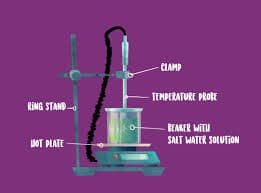
The principle behind freezing point depression numericals MCQs is that when a non-volatile solute is added to a solvent, the freezing point of the solvent decreases. This decrease is directly proportional to the molality of the solution and is given by the formula:
ΔT<sub>f</sub> = K<sub>f</sub> × m
where ΔT<sub>f</sub> is the depression in freezing point, K<sub>f</sub> is the molal depression constant, and m is the molality. Many freezing point depression numericals MCQs test the correct application of this formula.
A large number of freezing point depression numericals MCQs involve electrolytes such as NaCl, CaCl₂, or AlCl₃. In such cases, students must apply the Van’t Hoff factor (i) to account for dissociation. The modified equation becomes:
ΔT<sub>f</sub> = i × K<sub>f</sub> × m
Ignoring the Van’t Hoff factor is a common mistake while solving freezing point depression numericals MCQs.
Another important category of freezing point depression numericals MCQs includes association of solute molecules, such as benzoic acid dimerization in benzene. These problems require careful calculation of the effective number of particles. Understanding molecular association is essential to score well in freezing point depression numericals MCQs.
In many exams, freezing point depression numericals MCQs are used to determine molar mass of an unknown substance. By rearranging the freezing point depression formula and substituting experimental values, aspirants can calculate molar mass accurately. Such freezing point depression numericals MCQs often appear in assertion–reason or case-based formats.
Temperature units also matter in freezing point depression numericals MCQs. Since freezing point depression is expressed in Kelvin or degree Celsius (numerically same for differences),aspirants must ensure correct unit handling. Mistakes in units can easily lead to wrong answers in freezing point depression numericals MCQs.
Competitive exams frequently combine freezing point depression numericals MCQs with real-life applications. A common example is the use of ethylene glycol as an antifreeze in car radiators. Solving such freezing point depression numericals MCQs requires understanding both chemistry and practical context.
Conceptual clarity is equally important while practicing freezing point depression numericals MCQs. Questions may ask why electrolytes show greater freezing point depression than non-electrolytes at the same concentration. The answer lies in the increased number of particles, a concept repeatedly reinforced through freezing point depression numericals MCQs.
For exam preparation, aspirants should practice a wide range of freezing point depression numericals MCQs, including single-step calculations, multi-step problems, and conceptual MCQs. Repeated exposure improves speed, accuracy, and confidence in handling freezing point depression numericals MCQs.
Freezing Point Depression Numericals MCQs with Answers
- 1.00 g of a nonelectrolyte solute (molar mass 250 g/mol) was dissolved in 51.2 g of benzene. If the freezing point depression constant, KfK_f of benzene is 5.12 K kg/mol, the freezing point of benzene will be lowered by
A) 0.2 K
B) 0.4 K
C) 0.3 K
D) 0.5 K
Answer: B
-
The volume strength of 1.5 N H₂O₂ solution is:
A) 4.8
B) 8.4
C) 3
D) 8
Answer: B
-
At 25°C, the total pressure of an ideal solution obtained by mixing 3 moles of A and 2 moles of B, is 184 torr. What is the vapor pressure (in torr) of pure B at the same temperature? (Vapor pressure of pure A at 25°C is 200 torr).
A) 180
B) 160
C) 150
D) 140
Answer: B
-
Relative lowering of vapor pressure of a dilute solution is 0.2. What is the mole fraction of non-volatile solute?
A) 0.3
B) 0.5
C) 0.8
D) 0.2
Answer: D
-
Which of the following does not show negative deviation from Raoult’s law?
A) Acetone—Chloroform
B) Acetone—Benzene
C) Chloroform—Ether
D) Chloroform—Benzene
Answer: B
-
Which of the following is incorrect?
A) Relative lowering of vapor pressure is independent of the nature of the solute and the solvent
B) Vapor pressure is a colligative property
C) Vapor pressure of a solution is lower than the vapor pressure of the solvent
D) Relative lowering of vapor pressure is directly proportional to the original pressure
Answer: D
-
A solution of urea (mol. mass 56 g/mol) boils at 100.18°C at the atmospheric pressure. If KfK_f and KbK_b for water are 1.86 and 0.512 K kg/mol respectively the above solution will freeze at
A) 0.545°C
B) -0.545°C
C) 0.654°C
D) -0.654°C
Answer: D
-
If a solution containing 0.072 g atom of sulphur in 100 g of solvent (KfK_f = 7.0) gave a freezing point depression of 0.84°C, the molecular formula of sulfur in the solutions is:
A) S₆
B) S₇
C) S₉
D) S₈
Answer: A
-
Which has the minimum freezing point?
A) One molal NaCl aq. solution
B) One molal CaCl₂ aq. solution
C) One molal KCl aq. solution
D) One molal urea aq. solution
Answer: B
-
Which one is not correct mathematical equation for Dalton’s law of partial pressure? Here P = total pressure of gaseous mixture.
A) pi=xipi0p_i = x_i p_i^0 where xix_i = mole fraction of ith gas in gaseous mixture; pi0p_i^0 = pressure of ith gas in pure state
B) p=p1+p2+p3p = p_1 + p_2 + p_3
C) p=n1RTV+n2RTV+n3RTVp = n_1\frac{RT}{V} + n_2\frac{RT}{V} + n_3\frac{RT}{V}
D) pi=xipp_i = x_i p where pip_i = partial pressure of ith gas; xix_i = mole fraction of ith gas in gaseous mixture
Answer: A
-
What is the effect of external pressure on the osmotic pressure (OP) of a solution?
A) OP decreases with increases of pressure
B) OP decreases initially, then increases
C) OP remained nearly same with increase/decrease of external pressure
D) OP increases with increase of pressure
Answer: C
-
Which of the following condition is correct for reverse osmosis?
C = Concentration of solution in mol L⁻¹; T = Temperature in Kelvin scale; n = no of moles of solute
A) Pext=nRTP_{ext} = nRT
B) Pext>CRTP_{ext} > CRT
C) Pext<CRTP_{ext} < CRT
D) Pext>nRTP_{ext} > nRT
Answer: B
-
During osmosis, flow of water through a semipermeable membrane is
A) From both sides of semipermeable membrane
B) From solution having lower concentration only
C) From solution having higher concentration only
D) None of the above
Answer: B
-
The osmotic pressure of a 5% (wt/vol) solution of cane sugar at 150°C is
A) 3.078 atm
B) 4.078 atm
C) 5.078 atm
D) 2.45 atm
Answer: C
-
A 3 mL of solution was made by dissolving 20 mg of protein at 0°C. The osmotic pressure of the resulting solution is 3.8 torr. The molecular weight of the protein is approximately (in g/mol)
A) 30
B) 60
C) 3 × 10⁴
D) 3 × 10⁵
Answer: C
-
pH of a 0.1M monobasic acid is 2. Its osmotic pressure at a given temperature T(K) is (Given that the effective concentration for osmotic pressure is (1+α).x concentration of acid: α is the dissociation factor)
A) RT
B) 0.11 RT
C) 0.01 RT
D) 0.001 RT
Answer: B
-
1.46 g of a biopolymer dissolved in a 100 mL of water at 300 K exerted an osmotic pressure of 2.42 × 10⁻³ bar. The molar mass of the biopolymer is _______ × 10⁴ g mol⁻¹.
A) 15
B) 13
C) 10
D) 20
Answer: A
-
At 37°C osmotic pressure of human blood is 7.65 atm. Tell how much glucose can be used in 1 litre of water for intravenous injection so that osmotic pressure of this glucose solution becomes equal to osmotic pressure of human blood.
A) 22.2 g
B) 15 g
C) 54.2 g
D) 59.8 g
Answer: C
-
The osmotic pressure of a solution of NaCl is 0.10 atm and that of a glucose solution is 0.20 atm. The osmotic pressure of a solution formed by mixing 1L of the sodium chloride solution with 2L of the glucose solution is X * 10⁻³ atm. X is ______ (nearest integer).
A) 167
B) 157
C) 107
D) 177
Answer: A
-
The size of a raw mango shrinks to a much smaller size when kept in a concentrated salt solution. Which one of the following processes can explain this?
A) Osmosis
B) Diffusion
C) Dialysis
D) Reverse osmosis
Answer: A
-
The osmotic pressure of a dilute solution of an ionic compound XY in water is four times that of a solution of 0.01 M BaCl₂ in water. Assuming complete dissociation of the given ionic compounds in water, the concentration of XY (in mol L⁻¹) in solution is
A) 4 × 10⁻²
B) 6 × 10⁻²
C) 4 × 10⁻¹
D) 6 × 10⁻¹
Answer: B
-
Molal depression constant for a solvent is 4.0 K kg mol⁻¹. The depression in the freezing point of the solvent for 0.03 mol kg⁻¹ solution of K₂SO₄ is (Assume complete dissociation of the electrolyte)
A) 0.18 K
B) 0.36 K
C) 0.12 K
D) 0.24 K
Answer: B
-
A solution is prepared by dissolving 0.6 g of urea (molar mass = 60 g mol⁻¹) and 1.8 g of glucose (molar mass = 180 g mol⁻¹) in 100 mL of water at 27°C. The osmotic pressure of the solution is (R = 0.08206 L atm K⁻¹ mol⁻¹)
A) 2.46 atm
B) 4.92 atm
C) 2.64 atm
D) 1.64 atm
Answer: B
-
18 gram glucose (Molar mass = 180) is dissolved in 100 mL of water at 300 K. If R = 0.0821 L atm mol⁻¹ K⁻¹, what is the osmotic pressure of the solution?
A) 2.46 atm
B) 24.63 atm
C) 2.64 atm
D) 8.21 atm
Answer: B
-
Assertion: Reverse osmosis is used for desalination of sea water.
Reason: Reverse osmosis occurs when a pressure larger than the osmotic pressure is applied to the solution.
A) If both Assertion and Reason are correct and Reason is the correct explanation of Assertion.
B) If both Assertion and Reason are correct, but Reason is not the correct explanation of Assertion.
C) If Assertion is correct but Reason is incorrect.
D) If both Assertion and Reason are incorrect.
Answer: A
-
pH of a 0.1 M monobasic acid is found to be 2. Hence, its osmotic pressure at a given temperature T is
A) 0.01 RT
B) 0.11 RT
C) 1.1 RT
D) 0.011 RT
Answer: B
-
If osmotic pressure of 4% (w/v) solution of sucrose is same as 2% (w/v) solution of ‘X’, then the molecular mass of ‘X’ (in g mol⁻¹) is
A) 171
B) 205.2
C) 342
D) 570
Answer: A
-
Sea water is converted into fresh water based on the phenomenon of
A) diffusion
B) osmosis
C) plasmolysis
D) reverse osmosis
Answer: D
-
1 g of polymer having molar mass 160,000 g mol⁻¹ dissolves in 800 mL water. So calculate osmotic pressure in Pascal at 27°C
A) 0.78
B) 0.9
C) 0.5
D) 19.4
Answer: D
-
The osmotic pressure of 0.2 molar solution of urea at 300 K is (R = 0.082 L atm mol⁻¹ K⁻¹)
A) 4.92 atm
B) 1 atm
C) 0.25 atm
D) 27 atm
Answer: A
Conclusion
In conclusion, freezing point depression numericals MCQs form a vital part of solution chemistry. A strong grasp of formulas, Van’t Hoff factor, molality, and particle behavior ensures high scores. Regular practice of freezing point depression numericals MCQs not only boosts exam performance but also strengthens fundamental understanding of colligative properties.