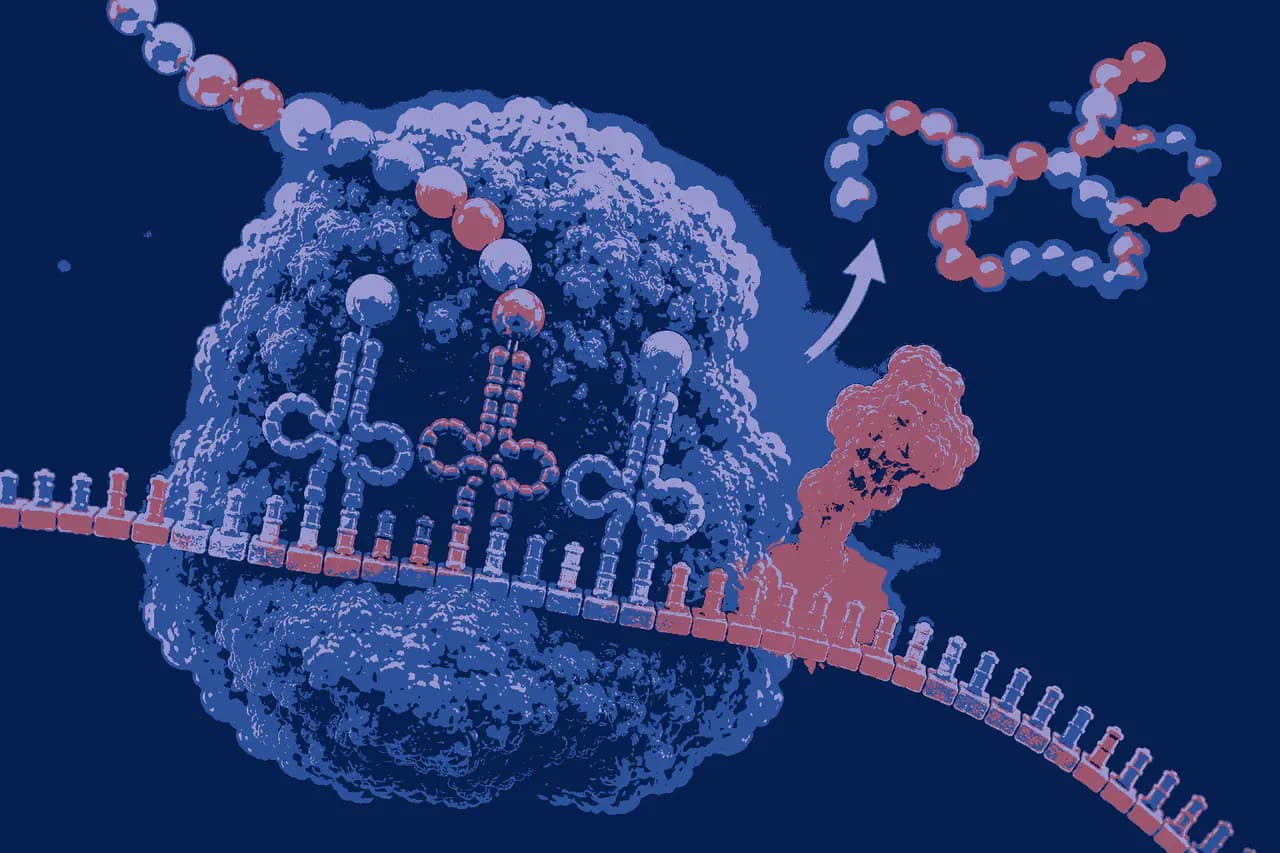
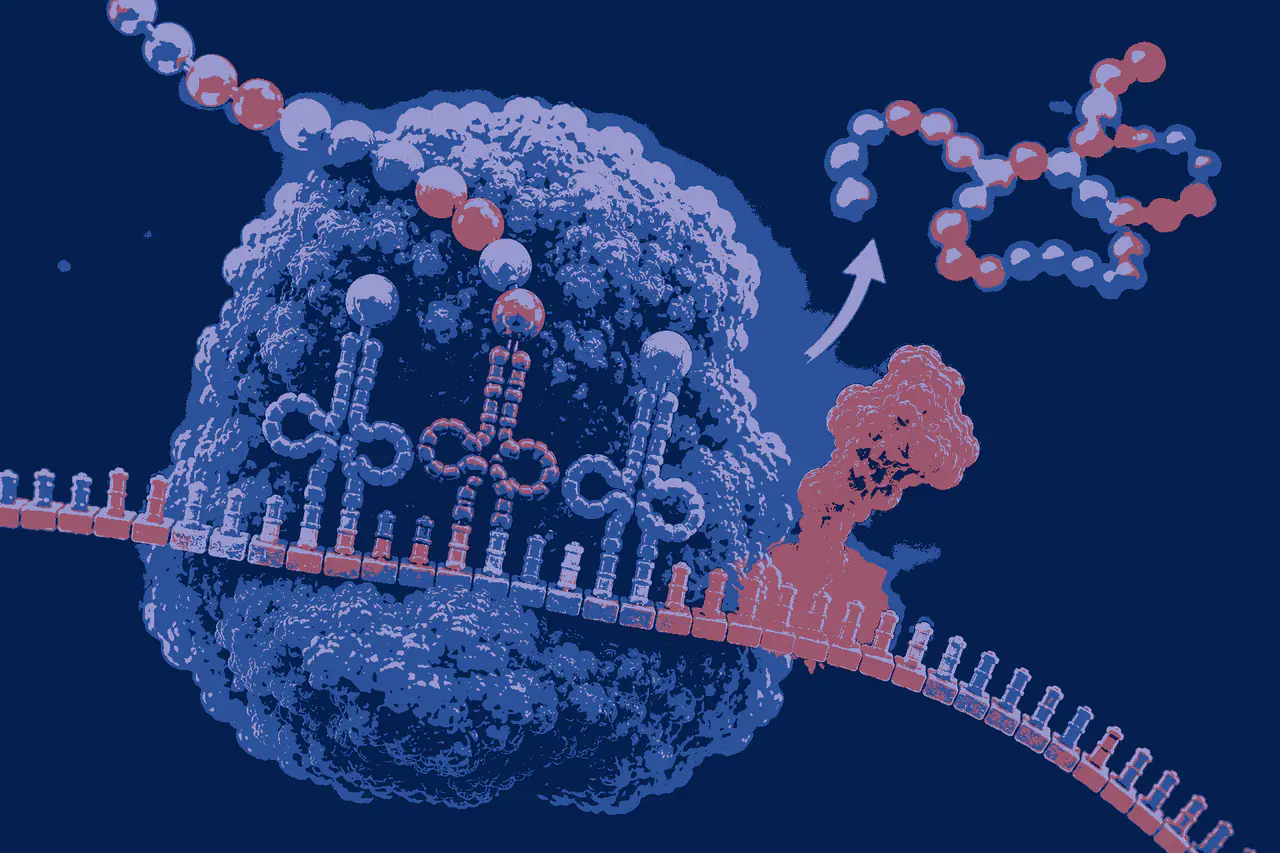
Chain Termination Codon MCQs Biology Class 12 is one of the most important topics for aspirants preparing for board examinations and competitive entrance exams like NEET. The concept of stop codons plays a major role in understanding protein synthesis and genetic coding. Chain Termination Codon MCQs Biology Class 12 helps aspirants understand how the process of translation ends during protein synthesis. Since molecular genetics is highly important in modern biology, practicing Chain Termination Codon MCQs Biology Class 12 regularly improves conceptual understanding and exam performance.
In genetics, codons are sequences of three nitrogen bases present on messenger RNA. These codons specify particular amino acids during protein synthesis. However, not every codon codes for an amino acid. Chain Termination Codon MCQs Biology Class 12 explains that certain codons act as stop signals during translation. These are called chain termination codons or stop codons. The three stop codons are UAA, UAG, and UGA. Chain Termination Codon MCQs Biology Class 12 frequently focuses on these codons because they are essential for terminating the synthesis of a polypeptide chain.
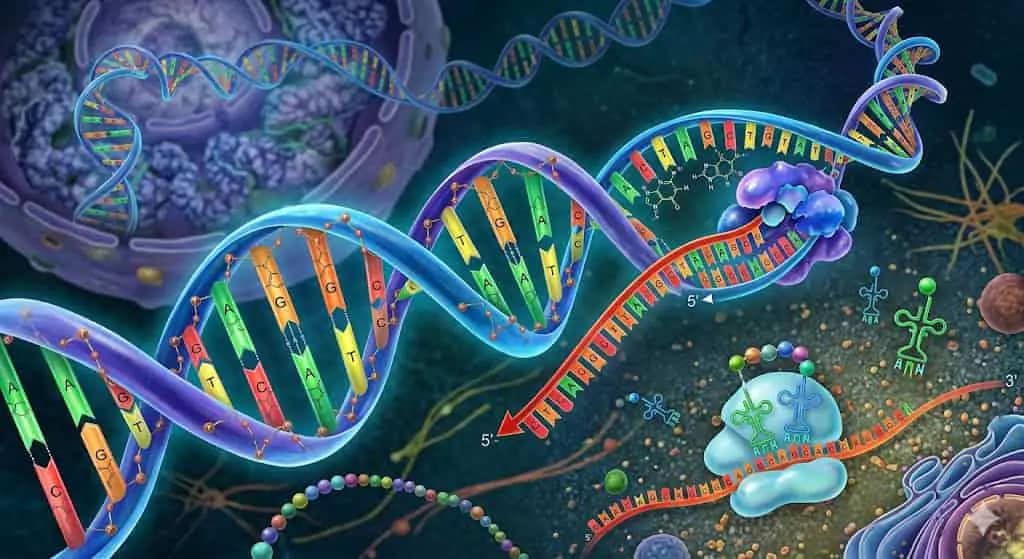
During translation, ribosomes move along mRNA and read codons sequentially. Transfer RNA molecules bring amino acids corresponding to each codon. Chain Termination Codon MCQs Biology Class 12 helps aspirants understand that when a ribosome encounters a stop codon, no corresponding tRNA molecule binds to it. Instead, release factors attach to the ribosome and terminate translation. This results in the release of the completed polypeptide chain. Chain Termination Codon MCQs Biology Class 12 therefore provides a strong understanding of the final stage of protein synthesis.
The stop codon UAA is commonly known as ochre codon, UAG is called amber codon, and UGA is called opal codon. Chain Termination Codon MCQs Biology Class 12 often includes these alternative names because they are frequently asked in competitive examinations. Aspirants who revise Chain Termination Codon MCQs Biology Class 12 carefully can easily remember these details and avoid confusion during exams.
One of the major reasons why Chain Termination Codon MCQs Biology Class 12 is important is because it strengthens understanding of the genetic code. The genetic code contains 64 codons in total. Out of these, 61 codons code for amino acids, while three act as termination codons. Chain Termination Codon MCQs Biology Class 12 explains how these stop codons ensure accurate completion of protein synthesis and prevent unnecessary elongation of polypeptide chains.
Mutations involving stop codons are another important topic discussed in Chain Termination Codon MCQs Biology Class 12. Sometimes a mutation may convert a codon coding for an amino acid into a stop codon. Such mutations are called nonsense mutations. These mutations result in premature termination of protein synthesis and produce incomplete proteins. Chain Termination Codon MCQs Biology Class 12 helps aspirants understand the biological consequences of such mutations and their role in genetic disorders.
The topic is also important in biotechnology and genetic engineering. Chain Termination Codon MCQs Biology Class 12 often explains how scientists use knowledge of stop codons while designing recombinant DNA experiments and gene expression systems. Proper understanding of start and stop codons is essential for producing functional proteins in host organisms. Aspirants preparing for advanced biology studies benefit greatly from practicing Chain Termination Codon MCQs Biology Class 12.
Another advantage of solving Chain Termination Codon MCQs Biology Class 12 is that it improves logical thinking and analytical ability. Questions based on codons, anticodons, mutations, and translation sequences require careful observation and interpretation. Regular practice of Chain Termination Codon MCQs Biology Class 12 allows aspirants to become familiar with pattern-based and application-oriented questions commonly asked in NEET examinations.
Chain Termination Codon MCQs Biology Class 12 also supports revision of related molecular biology topics such as transcription, translation, ribosomes, tRNA, mRNA, and protein synthesis. Since these concepts are interconnected, understanding stop codons becomes easier when aspirants practice questions consistently. Chain Termination Codon MCQs Biology Class 12 therefore serves as an effective revision tool for both board examinations and entrance tests.
Chain Termination Codon MCQs Biology Class 12:
- The process of translation of mRNA to proteins begins as soon as
A. The tRNA is activated and the larger subunit of ribosome encounters mRNA
B. The small subunit of ribosome encounters mRNA
C. The larger subunit of ribosome encounters mRNA
D. Both the subunits join together to bind with mRNA
Answer: B. The small subunit of ribosome encounters mRNA
Explanation:
The process of translation of mRNA to proteins begins as soon as the small subunit of ribosome encounters mRNA.
- After a mutation at a genetic locus, the character of an organism changes due to the change in
A. DNA replication
B. Protein synthesis pattern
C. RNA transcription pattern
D. Protein structure
Answer: D. Protein structure
Explanation:
After a mutation at a genetic locus, the character of an organism changes due to the change in protein structure.
- In a mutational event, when adenine is replaced by guanine, it is a case of
A. Transcription
B. Transition
C. Transversion mutation
D. Frameshift
Answer: B. Transition
Explanation:
Replacement of adenine by guanine is a transition mutation because both are purine bases.
- What is the first phase of translation in protein synthesis?
A. Recognition of DNA molecule
B. Aminoacylation of tRNA
C. Recognition of an anti-codon
D. Binding of mRNA to ribosome
Answer: B. Aminoacylation of tRNA
Explanation:
The first phase of translation is aminoacylation of tRNA, where amino acids attach to tRNA molecules.
- What is the equivalent of a structural gene?
A. Muton
B. Cistron
C. Operon
D. Recon
Answer: B. Cistron
Explanation:
A cistron is a DNA segment that codes for a polypeptide and is equivalent to a structural gene.
- Which feature of the genetic code allows bacteria to produce human insulin by recombinant DNA technology?
A. Genetic code is redundant
B. Genetic code is nearly universal
C. Genetic code is specific
D. Genetic code is not ambiguous
Answer: B. Genetic code is nearly universal
Explanation:
Because the genetic code is nearly universal, bacteria can read human genes and produce insulin.
- Identify the correct combination of salient features of the Genetic Code.
A. Degenerate, Non-overlapping, Non-ambiguous
B. Universal, Non-ambiguous, Overlapping
C. Degenerate, Overlapping, Commaless
D. Universal, Ambiguous, Degenerate
Answer: A. Degenerate, Non-overlapping, Non-ambiguous
Explanation:
The genetic code is degenerate, non-overlapping, and non-ambiguous.
- If a protein with 333 amino acids has the base at position 901 deleted, resulting in a RNA length of 998 bases, how many codons will be altered?
A. 1
B. 11
C. 33
D. 333
Answer: C. 33
Explanation:
Deletion causes a frameshift mutation, altering multiple downstream codons.
- Which triplet code is correctly matched with its specificity for an amino acid in protein synthesis or as 'start' or 'stop' codon?
A. UCG – Start
B. UUU – Stop
C. UGU – Leucine
D. UAC – Tyrosine
Answer: D. UAC – Tyrosine
Explanation:
UAC codes for the amino acid tyrosine.
- What is the main reason for the degeneration of a genetic code according to the provided passage?
A. First member of a codon
B. Second member of a codon
C. Entire codon
D. Third member of a codon
Answer: D. Third member of a codon
Explanation:
Degeneracy mainly occurs because the third base of many codons can vary.
- How many codons are used in the genetic code dictionary to code for all the 20 essential amino acids?
A. 20
B. 64
C. 61
D. 60
Answer: C. 61
Explanation:
Out of 64 codons, 61 code for amino acids and 3 are stop codons.
- Which of the following sequences are stop codons?
A. AUG, GUG
B. UAA, UGA, UAG
C. UAC, UGG
D. AGU, AGA, UAC
Answer: B. UAA, UGA, UAG
Explanation:
UAA, UGA, and UAG are termination codons.
- Which of the following is not a stop codon?
A. UAA
B. UAC
C. UAG
D. UGA
Answer: B. UAC
Explanation:
UAC codes for tyrosine and is not a stop codon.
- What is the RNA molecule called that picks up specific amino acids from the cytoplasm to the ribosome during protein synthesis?
A. rRNA
B. RNA
C. mRNA
D. tRNA
Answer: D. tRNA
Explanation:
tRNA carries amino acids to the ribosome during translation.
- Which codons cause chain termination during protein synthesis?
A. AGT, TAG, UGA
B. UAG, UGA, UAA
C. TAG, TAA, TGA
D. GAT, AAT, AGT
Answer: B. UAG, UGA, UAA
Explanation:
These are the three stop codons responsible for chain termination.
- Which of the following serves as a terminal codon?
A. UAG
B. AGA
C. AUG
D. GCG
Answer: A. UAG
Explanation:
UAG is a stop codon and serves as a terminal codon.
- If the DNA codons are ATGATGATG and a cytosine base is inserted at the beginning, what will be the result?
A. CAT, GAT, GAT, G
B. A nonsense mutation
C. C, ATG, ATG, ATG
D. CA, TGA, TGA, TG
Answer: A. CAT, GAT, GAT, G
Explanation:
Insertion shifts the reading frame and changes all downstream codons.
- Where is the anticodon located in the molecular structure?
A. tRNA
B. mRNA
C. rRNA
D. both (b) and (c)
Answer: A. tRNA
Explanation:
Anticodon is present in tRNA and pairs with mRNA codons.
- What is the initiation codon for protein synthesis in eukaryotes?
A. GUA
B. GCA
C. CCA
D. AUG
Answer: D. AUG
Explanation:
AUG acts as the initiation codon and codes for methionine.
- How many codons are present in the genetic dictionary?
A. 64 amino acids are to be coded
B. 64 types of tRNAs are present
C. There are 44 nonsense codons and 20 sense codons
D. Genetic code is triplet
Answer: D. Genetic code is triplet
Explanation:
Since the genetic code is triplet in nature, 64 codons are possible.
- What does the genetic code consist of?
A. Adenine and guanine
B. Cytosine and uracil
C. Cytosine and guanine
D. All of these
Answer: D. All of these
Explanation:
The genetic code consists of different nitrogen bases including adenine, guanine, cytosine, thymine, and uracil.
- Which codons code for the amino acid alanine?
A. CUC, CUA, CUG
B. GGG, GGU, GGA
C. GUG, GUC, GUA
D. GCU, GCC, GCG
Answer: D. GCU, GCC, GCG
Explanation:
Alanine is coded by GCU, GCC, GCA, and GCG.
- In the given DNA sequence 5' GTTCGAGTC -3', what will be the sequence of bases in its transcript during transcription?
A. 5'-GACUCGAAC-3'
B. 5'-CAAGCUCAG-3'
C. 5'-GUUCGAGUC-3'
D. 5'-CUGAGCUUG-3'
Answer: C. 5'-GUUCGAGUC-3'
Explanation:
The transcript formed during transcription is complementary to the DNA template.
- Which group of codons can bring about the halt in protein synthesis during chain termination?
A. UUU, UCC, UAU
B. UUC, UUA, UAC
C. UAG, UGA, UAA
D. UUG, UCA, UCG
Answer: C. UAG, UGA, UAA
Explanation:
These codons terminate translation.
- What is correct regarding the genetic code?
A. UUU is the initiation codon which also codes for phenylalanine
B. There are 64 triplet codons and only 20 amino acids
C. Three random nitrogen bases specify the placement of one amino acid
D. UAA is the nonsense codon which also codes for methionine
Answer: B. There are 64 triplet codons and only 20 amino acids
Explanation:
The genetic code contains 64 codons but only 20 amino acids.
- Transcription and translation occur in the same compartment for prokaryotes.
A. True
B. False
C. Not mentioned
D. Not applicable
Answer: A. True
Explanation:
In prokaryotes, transcription and translation both occur in the cytoplasm.
- The binding site of tRNA with mRNA and amino acids respectively are:
A. mRNA with DHU loop and amino acid with CCA end
B. mRNA with CCA end and amino acid with anticodon loop
C. mRNA with anticodon loop and amino acid with DHU loop
D. mRNA with anticodon loop and amino acid with CCA end
Answer: D. mRNA with anticodon loop and amino acid with CCA end
Explanation:
The anticodon loop binds mRNA while the CCA end binds amino acids.
- Which of the following is a palindromic sequence?
A. 5' - CGTATG -3' / 3' - GCATAC -5'
B. 5' - CGAATG -3' / 3' - CGAATG -5'
C. 5' - GAATTC - 3' / 3' - CTTAAG -5'
D. 5' - TACGAC -3' / 3' - TACGAC -5'
Answer: C. 5' - GAATTC - 3' / 3' - CTTAAG -5'
Explanation:
GAATTC is a classic palindromic sequence recognized by EcoRI.
- Select the correct option regarding the genetic code of Glycine:
A. GUU, GUC, GUA
B. GAU, GAC, GAA
C. GGU, GGA, GGC
D. GGU, GGA, GCU
Answer: C. GGU, GGA, GGC
Explanation:
Glycine is coded by GGU, GGC, GGA, and GGG.
- What would happen if in a gene encoding a polypeptide of 50 amino acids, the 25th codon (UAU) is mutated to UAA?
A. A polypeptide of 49 amino acids will be formed
B. A polypeptide of 25 amino acids will be formed
C. A polypeptide of 24 amino acids will be formed
D. Two polypeptides of 24 and 25 amino acids will be formed
Answer: C. A polypeptide of 24 amino acids will be formed
Explanation:
Mutation of UAU to UAA introduces a stop codon, terminating translation early.
Conclusion on Chain Termination Codon MCQs Biology Class 12
In conclusion, Chain Termination Codon MCQs Biology Class 12 is an essential resource for mastering one of the most fundamental concepts in molecular genetics. The topic explains how protein synthesis ends accurately and efficiently inside living cells. By continuously practicing Chain Termination Codon MCQs Biology Class 12, aspirants can strengthen conceptual clarity, improve memory retention, enhance problem-solving ability, and achieve excellent scores in Biology examinations.
Related reading
Ultimate Palindromic Sequence MCQs Class 12 Biology for Smart Revision
Master Palindromic Sequence MCQs Class 12 Biology with key concept on DNA sequences, restriction enzymes, biotechnology, genetic engineering, molecular genetics
Essential DNA Structure and Function MCQs for Class 12 Biology - Ultimate Practice Challenge
Master DNA Structure and Function MCQs for Class 12 Biology with clear concepts on DNA replication, genes, nucleotides, heredity and molecular genetics for NEET