
- Amal Augustine
- January 2, 2026
Capillary Action and Surface Phenomena MCQs: Strengthen Your Concepts in Fluid Physics
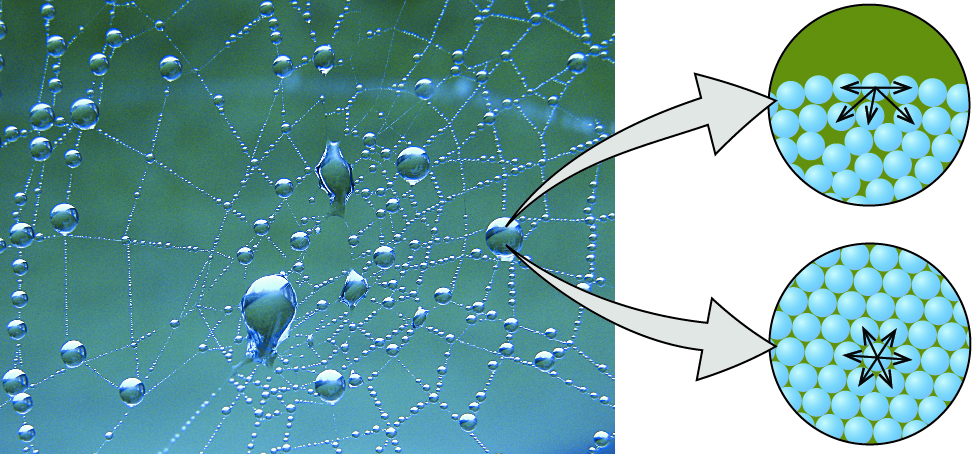
Capillary Action and Surface Phenomena MCQs are designed to test a student’s understanding of how liquids behave due to intermolecular forces acting at their surfaces. These capillary action and surface phenomena mcqs concepts explain why liquids rise or fall in capillary tubes, why oil spreads on water, how soap bubbles and liquid drops maintain their shape, and how pressure is transmitted through fluids. Such capillary action and surface phenomena MCQs commonly involve surface tension, angle of contact, capillary rise, excess pressure, and Pascal’s law, making them highly important for physics examinations.
By solving Capillary Action and Surface Phenomena MCQs, students learn to connect theoretical principles with observable physical behavior. These capillary action and surface phenomena mcqs questions sharpen conceptual clarity, improve numerical accuracy, and help students confidently tackle both conceptual and application-based problems in competitive exams.
30 Capillary Action and Surface Phenomena MCQs –
1. A liquid will not wet the surface of a solid if its angle of contact is
A. Zero
B. Less than 90°
C. More than 90°
D. 90°
Answer: C
2. Mercury does not wet glass. This property of mercury is caused by
A. Adhesion
B. Surface tension
C. Compressibility
D. Viscosity
Answer: A
3. Find the height of liquid in a capillary tube if surface tension is SS, radius is rr, density is ρρ, and acceleration due to gravity is gg:
A. 2Scosθρrg\frac{2S\cos\theta}{ρrg}
B. Sρrg\frac{S}{ρrg}
C. 2Ssinθρrg\frac{2S\sin\theta}{ρrg}
D. None of these
Answer: A
4. A cylindrical tube is dipped vertically into a liquid, angle of contact = 140°. If dipped at an inclination of 40°, the angle of contact is
A. 100°
B. 140°
C. 180°
D. 60°
Answer: B
5. A liquid does not wet a solid surface if the angle of contact is
A. Zero
B. 45°
C. 90°
D. Greater than 90°
Answer: D
6. A hydrophilic surface is characterized by a contact angle
A. > 90°
B. < 90°
C. 90°
D. 180°
Answer: B
7. Capillary rise will increase if the setup is placed in
A. Lift moving upward
B. Accelerating train
C. Satellite rotating close to Earth
D. Lift moving downward with acceleration < g
Answer: D
8. Two capillary tubes of different diameters are dipped in water. Rise of water is
A. More in larger diameter tube
B. Zero in both
C. Same in both
D. More in smaller diameter tube
Answer: D
9. A liquid does not wet a solid surface if angle of contact is
A. 45°
B. 60°
C. Greater than 90°
D. Zero
Answer: C
10. Two soap bubbles of different radii are connected. Air flows
A. From larger to smaller
B. No change
C. From smaller to larger
D. Randomly
Answer: C
11. When many small drops coalesce into one drop, the temperature
A. Increases
B. Decreases
C. Remains unchanged
D. Depends on size
Answer: A
12. When a drop splits into many drops
A. Area increases
B. Volume increases
C. Energy is absorbed
D. Energy is liberated
Answer: C
13. Two liquid drops coalesce into one big drop. In this process
A. Energy is released
B. Energy is absorbed
C. Energy unchanged
D. Depends on liquid
Answer: A
14. Oil spreads on water because
A. Oil becomes spherical
B. Surface tension of water is greater
C. Equal surface tension
D. Oil is lighter
Answer: B
15. Two soap bubbles connected by a tube
A. Air flows from bigger to smaller
B. Sizes interchange
C. Air flows from smaller to bigger
D. No flow
Answer: C
16. Soap bubbles can form but water bubbles cannot because
A. Excess pressure is higher due to large surface tension
B. Lower excess pressure
C. High viscosity
D. Low viscosity
Answer: A
17. Terminal velocity of a spherical raindrop depends on radius as
A. r2r^2
B. r3r^3
C. rr
D. r4r^4
Answer: C
18. Statements:
A: Excess pressure is greater in smaller drop
B: Aeroplane wings have higher pressure above
Correct option:
A. Both true
B. A true, B false
C. A false, B true
D. Both false
Answer: B
19. Sudden fall in barometer reading indicates
A. Stormy weather
B. Calm weather
C. Cold & dry weather
D. Hot & sunny weather
Answer: A
20. Bubbles during boiling are mainly
A. Air
B. Hydrogen & oxygen
C. Nitrogen
D. Water vapour
Answer: D
21. Rotating U-shaped tube filled with water
A. Both levels rise
B. A rises, B falls
C. A falls, B rises
D. No change
Answer: A
22. Pressure at bottom of tank does NOT depend on
A. Height
B. Area of bottom
C. Density
D. Gravity
Answer: B
23. Pascal’s law is NOT applied in
A. Hydraulic jack
B. Atomizer
C. Hydraulic press
D. Hydraulic lift
Answer: B
24. Weight of liquid column in capillary is supported by
A. Surface tension
B. Atmospheric pressure + surface tension
C. Atmospheric pressure
D. Partial surface tension
Answer: A
25. Hydraulic wheelchair works on
A. Pascal’s principle
B. Archimedes’ principle
C. Bernoulli’s principle
D. Stefan–Boltzmann law
Answer: A
26. Pressure at the bottom of containers of same liquid
A. Depends on shape
B. Different in each
C. Greater in wider base
D. Same at same depth
Answer: D
27. Soap film experiment: thread becomes
A. Concave towards punctured side
B. Convex
C. Depends on size
D. Unchanged
Answer: A
28. Stones unloaded from a floating boat
A. Water level rises
B. Water level falls
C. Same level
D. Half rise
Answer: B
29. Hydraulic lift works on
A. Bernoulli
B. Torricelli
C. Pascal
D. Magnus
Answer: C
30. Steel ball dropped in oil
A. Attains constant velocity
B. Stops
C. Keeps accelerating
D. None
Answer: A
Conclusion on Capillary action and surface phenomena MCQs
Practicing Capillary Action and Surface Phenomena MCQs provides a strong conceptual foundation in fluid physics. These capillary action and surface phenomena mcqs questions reinforce the understanding of how molecular forces influence macroscopic effects such as wetting, capillary rise, pressure differences, and fluid equilibrium. Consistent practice of capillary action and surface phenomena mcqs helps students recognize patterns, apply formulas effectively, and approach exam questions with confidence. For aspirants preparing for JEE, NEET, and board exams, mastering Capillary Action and Surface Phenomena MCQs is a key step toward scoring high in physics.
Amal Augustine is the founder of ExQuizMe, a dynamic learning and quiz platform built to make education engaging, competitive, and fun. A passionate learner and an academic achiever, Amal completed his schooling at Government HSS Manjapra, graduating with 92.5% in Computer Science. He later earned his degree from St. Stephen’s College, University of Delhi, one of India’s most prestigious arts and science institutions.
Currently, Amal is pursuing his Master’s degree at National Sun Yat-sen University, Taiwan, where he continues to deepen his interest in research and technology. Throughout his school and college years, he won 50+ national-level interschool and collegiate quiz competitions, was
Beyond academics, Amal Augustine is an avid reader of science journals, a dedicated research student, and a technology enthusiast who loves programming and exploring the world of Computer Science. Through ExQuizMe, he aims to make learning accessible, enjoyable, and empowering for students across the globe.