
- iamal
- December 31, 2025
Fluid Mechanics Without Confusion : Properties of Liquids & Matter MCQs Simplified
Fluid Mechanics is a fundamental branch of physics that deals with the behavior of liquids and gases at rest and in motion. Topics on fluid mechanics such as viscosity, surface tension, buoyancy, pressure variation, and fluid flow play a crucial role in understanding natural phenomena and engineering applications. Practicing Fluid Mechanics MCQs helps aspirants strengthen conceptual clarity, apply formulas accurately, and develop problem-solving speed required for competitive exams like JEE, NEET, and board examinations.
Fluid mechanics examines how substances that can flow behave under different physical conditions, emphasizing the response of these substances to applied forces and environmental constraints. It deals with both liquids and gases, analyzing their motion, equilibrium, and interaction with solid boundaries. Instead of focusing on individual particles, this field treats matter as a continuous medium, allowing the use of mathematical models to predict large-scale behavior with accuracy.
One of the central ideas in fluid mechanics is pressure, which acts equally in all directions within a fluid and varies with depth due to gravitational effects. This fluid mechanics concept is crucial for understanding phenomena such as atmospheric pressure, hydraulic systems, and the functioning of devices like barometers and pressure gauges. Closely related is buoyancy, which explains why objects float or sink and forms the basis of Archimedes’ principle, widely applied in ship design and density measurements.
MCQs on Fluid Mechanics –
1. By increasing the temperature of a liquid its volume and density decrease because:
A. Volume and density increase
B. Volume increases and density decreases
C. Volume decreases and density increases
D. Volume decreases and density increases
Answer: C
2. Viscosity is the property of a liquid due to which it:
A. Occupies minimum surface area
B. Opposes relative motion between adjacent layers
C. Becomes spherical
D. Regains original shape
Answer: B
3. The surface temperature of a lake is 2°C. Find the temperature at the bottom.
A. 5°C
B. 3°C
C. 4°C
D. 1°C
Answer: C
4. Two water droplets merge to form a larger droplet. In this process:
A. Energy is liberated
B. Energy is absorbed
C. No energy change
D. Mass converts to energy
Answer: A
5. Two soap bubbles of radii 2 mm and 4 mm coalesce. Radius of internal interface is:
A. 4 mm
B. 2 mm
C. 6 mm
D. 3 mm
Answer: B
6. Streamline flow is more likely for liquids with:
A. High density, low viscosity
B. Low density, low viscosity
C. High density, high viscosity
D. Low density, high viscosity
Answer: D
7. Retarding viscous force on a spherical ball is:
A. ∝ R / v
B. ∝ R and v
C. ∝ 1 / (R v)
D. ∝ v / R
Answer: B
8. Coefficient of viscosity of an ideal fluid is:
A. 1
B. 0
C. Infinite
D. >1
Answer: B
9. Decrease in volume due to pressure p with compressibility σ is:
A. σV / p
B. σpV
C. σ / pV
D. σp / V
Answer: B
10. Velocity–distance graph of a lead shot falling in glycerin is:
A. Graph (a)
B. Graph (b)
C. Graph (c)
D. Graph (d)
Answer: A
11. Colloidal solution with liquid dispersed in liquid is called:
A. Emulsion
B. Gel
C. Foam
D. Liquid crystal
Answer: A
12. Ice with embedded stone melts in water. Water level:
A. Remains unchanged
B. Rises
C. Falls
D. Falls then rises
Answer: C
13. With increase in temperature, viscosity of:
A. Gases ↓, liquids ↑
B. Gases ↑, liquids ↓
C. Both ↑
D. Both ↓
Answer: B
14. At dew point temperature, relative humidity is:
A. 100%
B. 0%
C. 70%
D. 85%
Answer: A
15. Velocity–time graph for a body in viscous liquid is:
A. Graph (a)
B. Graph (b)
C. Graph (c)
D. Graph (d)
Answer: C
16. Without gravity, which will not exist in a fluid?
A. Viscosity
B. Surface tension
C. Pressure
D. Archimedes’ thrust
Answer: D
17. Water does not wet oily glass because:
A. Oil cohesion > adhesion
B. Oil cohesion > water cohesion
C. Oil repels water
D. Water cohesion > adhesion with oil
Answer: D
18. Shape distortion of a body is due to:
A. Volume strain
B. Longitudinal strain
C. Shearing strain
D. Metallic strain
Answer: C
19. Height of liquid barometer (ρ = 760 kg/m³) when mercury reads 76 cm:
A. 1.36 m
B. 13.6 m
C. 136 m
D. 0.76 m
Answer: B
20. States of matter include:
A. Solids, liquids, gases
B. Gases and plasma
C. Plasma and BEC
D. All options
Answer: D
21. ______ have a definite shape and a definite volume
A. Solids
B. Liquids
C. Gases
D. Plasmas
Answer: A
22. If the length of tube is less and cannot accommodate the maximum rise of liquid then
A. Liquid will form a fountain
B. Liquid will not rise
C. The meniscus will adjust itself so that the water does not spill
D. None of these
Answer: C
23. When temperature is increased:
(A) Viscosity of gas increases
(B) Viscosity of gas decreases
(C) Viscosity of liquid decreases
(D) Viscosity of liquid increases**
A. A and C
B. B and C
C. B and D
D. A and D
Answer: B
24. The density of kerosene is 800 kg m⁻³. Its relative density is
A. 1.6
B. 3.2
C. 1
D. 0.8
Answer: D
25. A pressure cooker cooks food faster by
A. Increasing the boiling point of water
B. Decreasing the boiling point of water
C. Increasing melting point of water
D. Decreasing melting point of water
Answer: A
26. Flow velocities in an incompressible fluid can be measured using
A. Barometer
B. Venturi tube
C. Strain gauge
D. Manometer
Answer: B
27. Kinematic viscosity of a liquid is the ratio of
A. Coefficient of viscosity to density
B. Coefficient of viscosity to surface tension
C. Density to coefficient of viscosity
D. Surface tension to coefficient of viscosity
Answer: A
28. Which statements are correct for a fluid at rest in a cup?
-
Pressure is same at all points
-
Pressure is exerted on the walls
-
Pressure exists everywhere in the fluid**
A. 1 and 2 only
B. 1 and 3 only
C. 2 and 3 only
D. 1, 2 and 3
Answer: B
29. The cause of viscosity in liquids is
A. Diffusion
B. Osmosis
C. Cohesive force
D. Elasticity
Answer: C
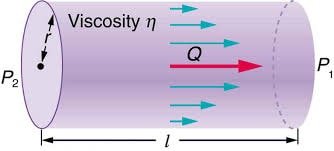
Conclusion on Fluid Mechanics :
Mastering Fluid Mechanics requires a strong grasp of both theoretical concepts and numerical applications. Regular practice of fluid mechanics MCQs on viscosity, density, Bernoulli’s principle, surface tension, and fluid statics improves analytical thinking and exam confidence. These Fluid Mechanics MCQs serve as an effective revision tool, helping aspirants identify weak areas and refine their understanding for achieving higher accuracy in physics examinations.
In fluid mechanics concepts like laminar and turbulent flow, Bernoulli’s principle, and continuity equations help describe real-world applications ranging from blood circulation and weather systems to aircraft lift, pipelines, and hydraulic machines. Mastery of fluid mechanics builds strong conceptual understanding and problem-solving skills, making it essential for students preparing for competitive exams and for engineers designing efficient and safe fluid-based systems.