Interactive Practice Section
Organic Chemistry Reaction Based MCQs With Answers Class 12
Practice this interactive set of Organic Chemistry reaction based MCQs with answers class 12 to improve product prediction, reaction mechanism understanding, named reaction recall, and exam speed for Class 12 Chemistry, NEET, and JEE preparation.
What This Quiz Helps You Revise
Named Reactions Sandmeyer, Balz–Schiemann, Hoffmann bromamide degradation, and more. Amines + Diazonium Chemistry Carbylamine test, diazotization, nitrous acid reactions, Gabriel synthesis. Exam-Oriented Accuracy Reveal answers instantly, jump to any question, and revise weak areas faster.
Quick Navigator
Jump straight to any question and revise this full set of organic chemistry reaction-based MCQs faster with full-width visibility.
Showing 30 of 30 questions Use filters or search to focus on one reaction family at a time.
This interactive block is optimized for users searching Organic Chemistry reaction based MCQs with answers class 12, especially aspirants preparing for Class 12 board exams, NEET, and JEE chemistry revision.Quiz Questions and Answers
Tap any question to expand it, then reveal the answer instantly.
1 Assertion–Reason Amines Named Reaction
Assertion: Acetamide reacts with Br₂ in presence of methanolic CH₃ONa to form methyl N-methylcarbamate. Reason: Methyl isocyanate is formed as an intermediate which reacts with methanol.
a) Both correct and Reason explains Assertion b) Both correct but Reason not explanation c) Assertion correct, Reason incorrect d) Both incorrect Answer: a 2 Amines HNO₂
Which compound gives a product without nitrogen with HNO₂?
a) 1° amine b) 2° amine c) 3° amine d) Aniline Answer: a 3 Carbylamine Test Amines
Positive carbylamine test is given by: I. N,N-dimethylaniline II. 2,4-dimethylaniline III. N-methyl-o-methylaniline IV. p-methylbenzylamine
a) II and IV b) II and III c) III and IV d) I and III Answer: a 4 Aniline Amines
Nitration of aniline in ice-cold condition gives:
a) p-nitroaniline b) 2,4-dinitroaniline c) o-nitroaniline d) m-nitroaniline Answer: a 5 Identification Reaction Product
Identify compound A:
a) N-methylmethanamide b) N-ethylmethanamide c) Acetonitrile d) Methyl isocyanide Answer: c 6 Carbylamine Test Amines
Positive carbylamine test is shown by:
a) N,N-dimethyl aniline b) N-ethyl aniline c) p-methylbenzyl amine d) Dimethyl amine Answer: c 7 Gabriel Synthesis Named Reaction
Source of nitrogen in Gabriel synthesis is:
a) Na₃N b) Potassium phthalimide c) NaCN d) KNO₃ Answer: b 8 Hoffmann Bromamide Amines
Which gives amine on heating with amide?
a) Br₂ + aqueous KOH b) Br₂ + alcoholic KOH c) Cl₂ + Na d) Na + ether Answer: a 9 Reduction Amines
Which gives primary amine on reduction?
a) CH₃CH₂NO₂ b) CH₃CH₂–ONO c) C₆H₅N=NC₆H₅ d) CH₃CH₂NC Answer: a 10 Diazonium Balz–Schiemann
Final product after diazotization and Balz–Schiemann reaction:
a) p-bromoaniline b) p-bromofluorobenzene c) 1,3,5-tribromoaniline d) 2,4,6-tribromofluorobenzene Answer: d 11 Basicity Amines
Two amines: one more basic and one less basic than NH₃:
a) N-methyl ethanamine & N-dimethyl ethanamine b) Aniline & N-methyl aniline c) N-methyl aniline & aniline d) Dimethyl aniline & aniline Answer: a 12 Identification Reaction Product
Identify compound A:
a) CH₃CH₂CH₂NC b) CH₃CH₂CH₂CN c) CH₃CH₂CH₂ONO d) CH₃CH₂CH₂CON(CH₃)₂ Answer: a 13 Concept Check Amines
Incorrect reaction among the following:
a) [Image] b) CH₃CH₂NH₂ + HNO₂ → alcohol c) CH₃NH₂ + C₆H₅SO₂Cl → sulfonamide d) (CH₃)₂NH + HNO₂ → nitroso compound Answer: a 14 Aniline Product Prediction
Product D formed from aniline reactions is:
a) C₆H₅CH₂NH₂ b) C₆H₅NHCH₂CH₃ c) C₆H₅NHOH d) C₆H₅CH₂OH Answer: d 15 Mechanism Carbonyl Chemistry
Reaction RCHO + NH₂NH₂ → RCH=N–NH₂ is:
a) Electrophilic addition-elimination b) Radical reaction c) Substitution d) Nucleophilic addition-elimination Answer: d 16 Conversion Amides
Benzamide + POCl₃ gives:
a) Aniline b) Chlorobenzene c) Phenylamine d) Phenyl nitrile Answer: d 17 Orientation Aniline
m-Nitroaniline formation occurs because:
a) NH₂ is meta-directing b) Nitro always meta c) Anilinium ion formation d) None Answer: c 18 Amines Alkylation
Maximum CH₃I reacting with methylamine:
a) 4 b) 3 c) 2 d) 1 Answer: b 19 HNO₂ Amines
Amine not liberating N₂ with HNO₂:
a) Ethylamine b) Methylamine c) Dimethylamine d) 2-Aminopropane Answer: c 20 Carbylamine Test Aniline
Phenyl isocyanide is formed from:
a) Benzaldehyde b) Aniline c) Phenol d) Nitrobenzene Answer: b 21 Oxime Product Prediction
Reaction product C is:
a) Acetaldoxime b) Formaldoxime c) Ethanitrile d) Acetoxime Answer: d 22 Sandmeyer Reaction Diazonium
In the Sandmeyer reaction, an aromatic diazonium salt reacts with CuCl/HCl to form:
a) Chlorobenzene b) Phenol c) Benzene d) Nitrobenzene Answer: a 23 Diazonium Hydrolysis
Benzene diazonium chloride on heating with water gives:
a) Chlorobenzene b) Phenol c) Benzene d) Nitrobenzene Answer: b 24 Carbylamine Test Named Reaction
Pungent smell due to formation of:
a) Phenyl isocyanate b) Phenyl cyanide c) Phenyl isocyanide d) Phenyl isothiocyanate Answer: c 25 Classification Amines
Secondary amine is:
a) 2-Butanamine b) N-methylpiperidine c) N-methyl-2-pentanamine d) p-Anisidine Answer: c 26 Gabriel Synthesis Amines
Cannot be prepared by Gabriel synthesis:
a) Butylamine b) Isobutylamine c) 2-Phenylethylamine d) N-methylbenzylamine Answer: d 27 Concept Check Amines
Incorrect statement:
a) Primary amines show H-bonding b) tert-Butylamine is primary c) Tertiary amines do not show H-bonding d) Isopropylamine is secondary Answer: d 28 Identification Product Prediction
Identify compound A:
a) CH₃COOH b) CH₃CH₂CH₂COOH c) None d) CH₃CH₂COOH Answer: d 29 Carbylamine Reaction Aniline
In the carbylamine reaction, aniline reacts with chloroform and alcoholic KOH to form:
a) Benzonitrile b) Phenyl isocyanide c) Phenol d) Nitrobenzene Answer: b 30 Basicity Amines
Basic character in chlorobenzene is:
a) C₂H₅NH₂ < (C₂H₅)₂NH < (C₂H₅)₃N b) C₂H₅NH₂ < (C₂H₅)₃N < (C₂H₅)₂NH c) (C₂H₅)₂NH < C₂H₅NH₂ < (C₂H₅)₃N d) None Answer: a Class 12 Chemistry • NEET • JEE
Why Organic Chemistry Reaction-Based MCQs Matter in Class 12 Preparation
Organic chemistry is one of the most important and scoring units in Class 12 Chemistry, especially for aspirants preparing for competitive exams like NEET and JEE. Among all question formats, Organic Chemistry reaction based MCQs with answers class 12 remain one of the most effective ways to strengthen conceptual understanding, improve application skills, and build genuine confidence for exam day.
Why This Topic is Important
High Exam Relevance Reaction-based problems are common in Class 12 board exams, NEET, and JEE chemistry practice. Concept + Speed These questions train both reaction understanding and quick option elimination. Strong Revision Value MCQ practice helps revise named reactions, products, reagents, and conditions faster.
Build Reaction Intelligence, Not Just Memory
Reaction-based questions focus on how reactants transform into products under specific conditions. These may involve substitution, addition, elimination, oxidation, and reduction. When aspirants solve Organic Chemistry reaction based MCQs with answers class 12, they learn to identify reagents, intermediates, and final products more quickly and more accurately.
This approach does much more than train memory. It teaches aspirants to understand why a reaction happens, what factors influence the outcome, and how to interpret conditions such as temperature, catalyst, solvent, or reagent strength. That deeper understanding is what helps students handle unfamiliar exam questions with confidence.
Exam Focus + Study
Students searching for Organic Chemistry reaction based MCQs with answers class 12 are usually looking for more than just answers. They want clarity on reaction mechanisms, named reactions, product prediction, and exam-oriented preparation. This section is designed to match exactly that search intent while keeping the layout visually engaging and easy to scan.
Why Aspirants Should Practice Reaction-Based Organic Chemistry MCQs Regularly
Improves Conceptual Clarity
Regular practice of Organic Chemistry reaction based MCQs with answers class 12 helps aspirants move beyond rote learning. Instead of memorizing outcomes, they begin to understand reaction pathways, mechanism logic, and reagent behavior.
Strengthens Pattern Recognition
From simple conversions to multi-step reactions, students become familiar with recurring reaction patterns. This makes it easier to identify likely products and solve similar questions quickly in competitive exams.
Boosts Exam Speed and Accuracy
Repeated exposure trains aspirants to eliminate wrong options faster, compare likely products more efficiently, and answer reaction-based MCQs with better accuracy under time pressure.
Clarifies Reaction Mechanisms
Organic chemistry often requires product prediction through electron movement and intermediate formation. Practicing these questions helps aspirants visualize mechanism steps in topics like haloalkanes, alcohols, aldehydes, ketones, and amines.
Supports Named Reaction Mastery
Important reactions such as Hoffmann bromamide degradation, Sandmeyer reaction, Reimer-Tiemann reaction, and Aldol condensation become easier to revise when students practice them through targeted MCQ formats.
Makes Revision More Effective
Instead of revising long notes repeatedly, aspirants can use Organic Chemistry reaction based MCQs with answers class 12 to quickly revisit reagents, products, exceptions, and common traps in a more engaging way.
Strong Foundations Lead to Better Results
Another major advantage of practicing Organic Chemistry reaction based MCQs with answers class 12 is that aspirants begin to identify common mistakes, such as confusing similar reactions or ignoring key reaction conditions. Over time, this practice also prepares them for multiple exam patterns, including assertion-reason, match-the-following, and case-based chemistry questions. With consistency, students build a stronger foundation, improve retention, and become more confident in solving complex organic chemistry reaction problems in both board and entrance examinations.
Final Takeaway
Conclusion on Organic Chemistry Reaction Based MCQs With Answers
Organic Chemistry reaction based MCQs with answers class 12 do much more than help aspirants memorize reactions. They train students to think analytically, connect concepts, and solve chemistry questions with stronger logic, higher confidence, and better exam readiness.
Why This Matters
- Improves analytical thinking in organic chemistry
- Strengthens logical application of reaction concepts
- Supports revision, accuracy, and exam performance
Analytical Thinking Beyond Memorization
Furthermore, Organic Chemistry reaction based MCQs with answers class 12 encourage analytical thinking. Instead of simply recalling information, aspirants learn to analyze the given data, predict outcomes, and apply concepts logically. This develops a stronger command over reaction-based chemistry and builds skills that remain valuable not only in school and entrance exams, but also in higher studies.
Consistent Practice Brings Better Results
The real strength of reaction-based MCQs lies in repeated exposure. As aspirants practice more, they begin to connect reagents, mechanisms, products, and conditions more naturally, which makes solving even unfamiliar questions faster and more accurate.
A Strong Finish for Effective Exam Preparation
Finally, the importance of Organic Chemistry reaction based MCQs with answers class 12 cannot be overstated. They serve as a powerful tool for learning, practice, and revision. By consistently solving these questions, aspirants can improve their understanding, enhance their accuracy, and achieve better results in exams.
Revise • Practice • Score Better
Related reading
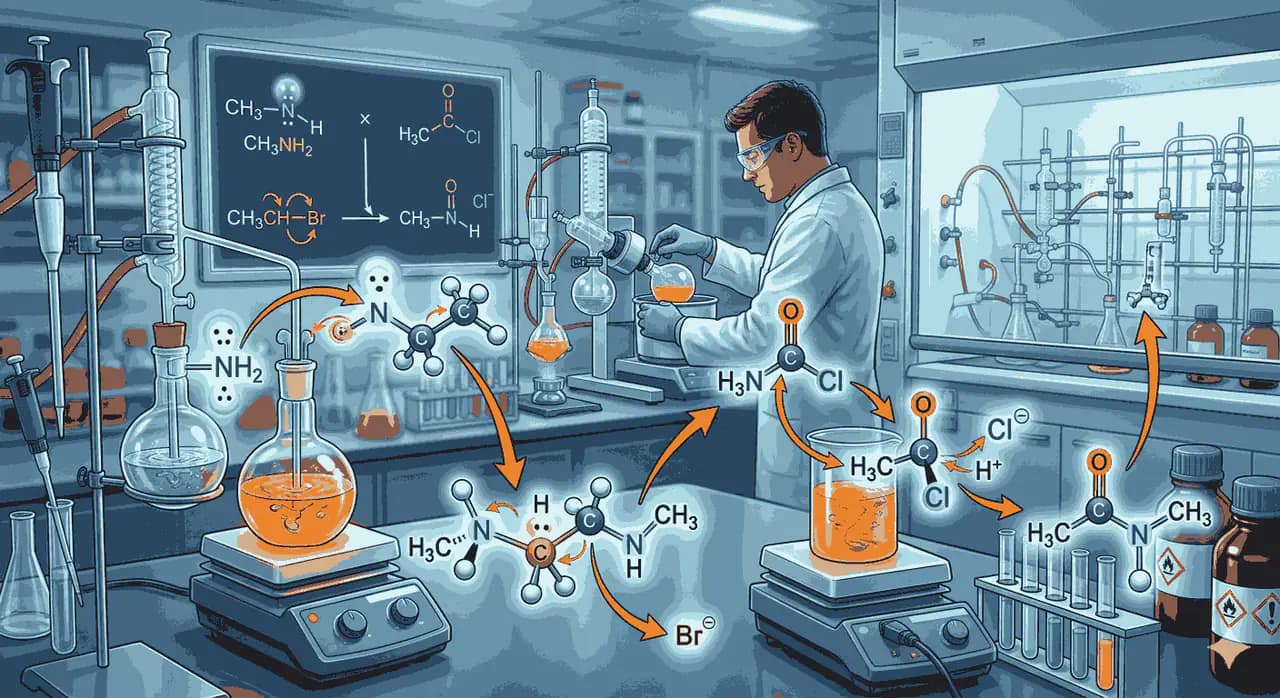
30 Best Organic Chemistry Amines Mechanism Practice MCQs With Answers for Competitive Exams: Master Reactions Fast
Organic Chemistry Amines Mechanism Practice MCQs With Answers help you master reaction pathways, concepts with clear explanations to boost your exam performance
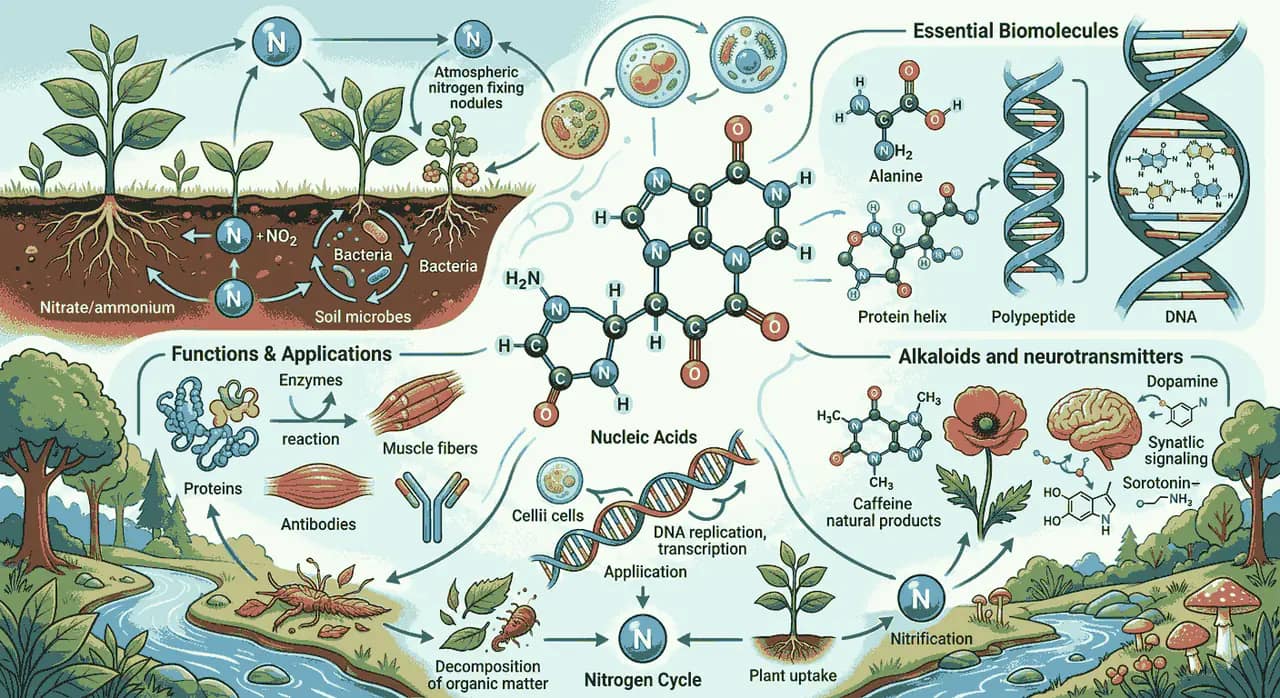
30 Organic Nitrogen Compounds MCQs with Answers and Explanations - Boost Your Score Fast
Organic Nitrogen Compounds MCQs with Answers and Explanations for quick exam preparation. Practice important questions, improve concepts, and boost your scores.