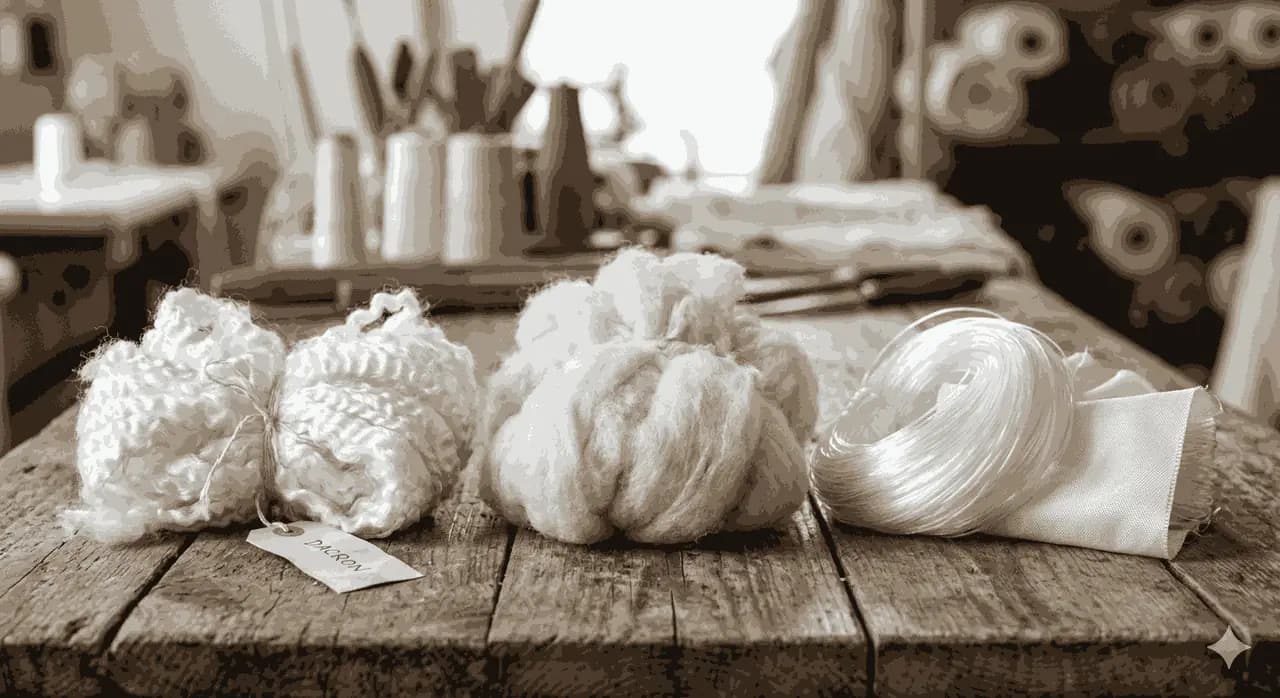
When it comes to mastering polymer chemistry, aspirants often look for structured resources that simplify learning and improve exam performance. One of the most effective resources available today is the Dacron Orlon rayon Nylon MCQs questions answers pdf, which provides a comprehensive way to revise key concepts related to synthetic and semi-synthetic fibres.
Understanding polymers like Dacron, Orlon, rayon, and Nylon is essential for students preparing for competitive exams such as NEET, JEE, and various board exams. The Dacron Orlon rayon Nylon MCQs questions answers pdf serves as a valuable tool that helps aspirants grasp the fundamental differences between these fibres, their structures, properties, and industrial applications.
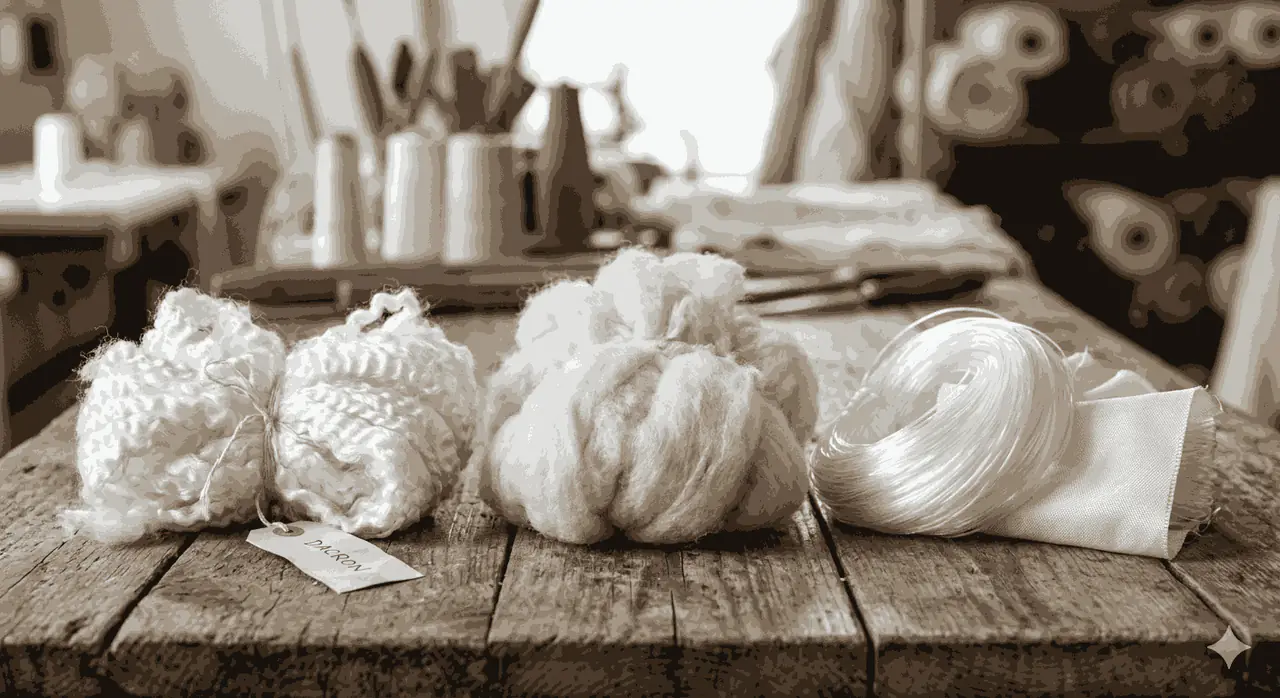
Dacron, a polyester, is known for its strength and wrinkle resistance, while Orlon, made from polyacrylonitrile, is widely used as a wool substitute. Rayon, a semi-synthetic fibre derived from cellulose, and Nylon, a polyamide, are equally important in both academic and practical contexts. By regularly practicing from a Dacron Orlon rayon Nylon MCQs questions answers pdf, aspirants can build strong conceptual clarity.
One of the biggest advantages of using a Dacron Orlon rayon Nylon MCQs questions answers pdf is that it promotes active learning. Instead of passively reading theory, aspirants engage with questions that challenge their understanding and application of concepts. This approach not only improves retention but also boosts confidence during exams.
Moreover, the Dacron Orlon rayon Nylon MCQs questions answers pdf helps aspirants identify common exam patterns. Questions related to polymer classification, monomers, intermolecular forces, and uses are frequently asked in exams. Practicing these through a well-structured Dacron Orlon rayon Nylon MCQs questions answers pdf ensures better preparedness.
Another key benefit of the Dacron Orlon rayon Nylon MCQs questions answers pdf is time efficiency. Aspirants can quickly revise multiple topics in a short period, making it ideal for last-minute preparation. The concise format allows learners to focus on important points without getting overwhelmed.
In addition, the Dacron Orlon rayon Nylon MCQs questions answers pdf is extremely useful for self-assessment. By attempting questions and checking answers, aspirants can evaluate their performance and identify areas that need improvement. This targeted approach enhances learning outcomes significantly.
Consistency plays a crucial role in exam success, and regularly practicing with a Dacron Orlon rayon Nylon MCQs questions answers pdf ensures continuous improvement. Over time, aspirants develop a better understanding of concepts such as condensation polymerization, addition polymerization, and fibre properties.
The Dacron Orlon rayon Nylon MCQs questions answers pdf also helps in strengthening problem-solving skills. Aspirants learn how to analyze questions, eliminate incorrect options, and arrive at the correct answer efficiently. These skills are essential for performing well in competitive exams.
Furthermore, using a Dacron Orlon rayon Nylon MCQs questions answers pdf allows aspirants to connect theoretical knowledge with real-world applications. For example, understanding why Nylon is used in textiles or why Dacron is preferred in industrial applications becomes easier through practice-based learning.
Teachers and educators often recommend the Dacron Orlon rayon Nylon MCQs questions answers pdf as a reliable revision tool. It provides a structured approach to learning and ensures that all important topics are covered comprehensively.
Another important aspect is revision. Revisiting concepts through a Dacron Orlon rayon Nylon MCQs questions answers pdf reinforces memory and helps aspirants retain information for a longer period. This is especially beneficial during the final stages of exam preparation.
The Dacron Orlon rayon Nylon MCQs questions answers pdf is also accessible and convenient. Aspirants can use it anytime, anywhere, making it a flexible learning resource. Whether studying at home or revising on the go, this resource proves to be highly effective.
Additionally, the Dacron Orlon rayon Nylon MCQs questions answers pdf caters to different levels of learners. Beginners can use it to build basic understanding, while advanced learners can use it to practice higher-level questions and improve accuracy.
Dacron Orlon rayon Nylon MCQs questions answers pdf:
1. Which of the following statements about low-density polythene is false?
a) It is a poor conductor of electricity
b) Its synthesis requires dioxygen or a peroxide initiator as a catalyst
c) It is used in the manufacture of buckets, dustbins etc.
d) Its synthesis requires high pressure
Answer: c
2.The repeating unit of Nylon-6 is:
a) –[NH–(CH₂)₆–NH–CO–(CH₂)₄–CO]–
b) –[CO–(CH₂)₅–NH]–
c) –[CO–(CH₂)₆–NH]–
d) –[NH–(CH₂)₄–CO]–
Answer: b
3. Which statement is correct?
a) Buna-N is a natural polymer
b) Buna-S is a synthetic and linear thermosetting polymer
c) Neoprene is an addition copolymer used in plastic bucket manufacturing
d) Synthesis of Buna-S needs nascent oxygen
Answer: d
4. Which polymer is used in the manufacture of paints and lacquers?
a) Bakelite
b) Polypropene
c) Glyptal
d) Polyvinyl chloride
Answer: c
5. The polymer containing strong intermolecular forces (e.g., hydrogen bonding) is
a) Teflon
b) Nylon 66
c) Polystyrene
d) Natural rubber
Answer: b
6. In polymer Buna-S: ‘S’ stands for
a) Sulphonation
b) Strength
c) Sulphur
d) Styrene
Answer: d
7. Match List-I with List-II
A. Caprolactam → III. Nylon-6
B. 2-chloro buta-1,3-diene → IV. Neoprene
C. Isoprene → I. Natural rubber
D. Acrylonitrile → II. Buna-N
a) A–III, B–IV, C–I, D–II
b) A–III, B–IV, C–II, D–I
c) A–III, B–I, C–II, D–IV
d) A–II, B–I, C–III, D–IV
Answer: a
8. Match Item-I with Item-II
A. Natural rubber → IV. Isoprene
B. Neoprene → III. Chloroprene
C. Buna-N → II. 1,3-butadiene + acrylonitrile
D. Buna-S → I. 1,3-butadiene + styrene
a) A–IV, B–III, C–II, D–I
b) A–III, B–IV, C–II, D–I
c) A–III, B–I, C–II, D–IV
d) A–III, B–IV, C–I, D–II
Answer: a
9. Orlon fibers are made up of
a) Polyacrylonitrile
b) Polyester
c) Polyamide
d) Cellulose
Answer: a
10. Assertion (A) and Reason (R)
(A): Ethene polymerised with Ziegler-Natta catalyst is used to make buckets
(R): High density polymers are closely packed and inert
a) (A) correct, (R) wrong
b) Both correct but (R) not explanation
c) Both correct and (R) is correct explanation
d) Both wrong
Answer: c
11. Thermoplastic polymers among the following are
i. PVC
ii. Urea-formaldehyde
iii. Polystyrene
iv. Bakelite
a) i and iv
b) ii and iv
c) i and iii
d) ii and iii
Answer: c
12. The process of formation of polymers from monomers is called
a) Polyacrylonitrile
b) Copolymerisation
c) Polymerisation
d) None
Answer: c
13. Select the correct match
a) Melamine: cross-linked; PVC: linear; glycogen: branched
b) PVC: cross-linked; melamine: linear; glycogen: branched
c) None
d) None
Answer: a
14. Which of the following is a characteristic of LDPE?
a) Stronger than HDPE
b) Unbranched molecules
c) High crystallinity
d) Contains branches hindering crystallisation
Answer: d
15. Ratio of butadiene to styrene in SBR is
a) 2:1
b) 3:1
c) 1:3
d) 1:2
Answer: b
16. Which of the following is not a thermoplastic?
a) Polystyrene
b) Teflon
c) PVC
d) Nylon-6,6
Answer: d
17. The monomer of Teflon is
a) CHF=CH
b) CF₂=CF₂
c) CHCl=CHCl
d) CHF=CH₂
Answer: b
18. The polydispersity index of polymer is always
a) 1
b) 1 or >1
c) <1
d) 2
Answer: b
19. Which statement is false?
a) Natural rubber unit is isoprene
b) Starch & cellulose from glucose
c) Artificial silk from cellulose
d) Nylon-6,6 is elastomer
Answer: d
20. Plexiglass is
a) Glyptal
b) Polymethyl methacrylate
c) Polystyrene
d) Polyacrylonitrile
Answer: b
21. Weakest intermolecular force polymer is
a) Nylon
b) PVC
c) Natural rubber
d) Cellulose
Answer: c
22. Monomer used to produce Orlon is
a) CH₂=CHF
b) CH₂=CCl₂
c) CH₂=CHCl
d) CH₂=CHCN
Answer: d
23. Fully fluorinated polymer is
a) Neoprene
b) Teflon
c) Thiokol
d) PVC
Answer: b
24. Fibre made of polyamide is
a) Dacron
b) Orlon
c) Nylon
d) Rayon
Answer: c
25. Increasing order of intermolecular forces
a) Neoprene < buna-S < nylon-6,6 < polythene
b) Neoprene < buna-S < polythene < nylon-6,6
c) Polythene < nylon-6,6 < buna-S < neoprene
d) Polythene < buna-S < nylon-6,6 < neoprene
Answer: b
26. Polymer with strongest intermolecular force
a) Neoprene
b) Terylene
c) Polythene
d) Polystyrene
Answer: d
27. Polymer containing five methylene groups
a) Nylon-6,6
b) Nylon-6
c) Dacron
d) Bakelite
Answer: b
28. Polyamide polymer is
a) Terylene
b) Nylon-6,6
c) Buna-S
d) Bakelite
Answer: b
29. Noble gas diffusing through materials is
a) Kr
b) Ne
c) Ar
d) He
Answer: d
30. Terylene is not a
a) Copolymer
b) Polyester fibre
c) Chain growth polymer
d) Step growth polymer
Answer: c
Conclusion on Dacron Orlon rayon Nylon MCQs questions answers pdf
In conclusion, the Dacron Orlon rayon Nylon MCQs questions answers pdf is an essential resource for aspirants aiming to excel in polymer chemistry. It enhances conceptual clarity, improves speed and accuracy, and builds confidence. By consistently practicing with the Dacron Orlon rayon Nylon MCQs questions answers pdf, aspirants can achieve excellent results and develop a strong foundation in chemistry.
Related reading
Boost Your Score with Powerful Nylon Terylene Bakelite Practice Questions With Answers
Practice Nylon Terylene Bakelite Practice Questions With Answers.Perfect for class 12 chemistry exams, revise key concepts,improve accuracy and boost your score
Proven Smart Prep Chloroprene and Isoprene MCQs Questions Answers to Score Higher Fast
Practice smart with Chloroprene and Isoprene MCQs Questions Answers. Explore important questions with answers, strengthen concepts and boost your score for NEET